Market Summary
Executive Summary and Global Market Analysis
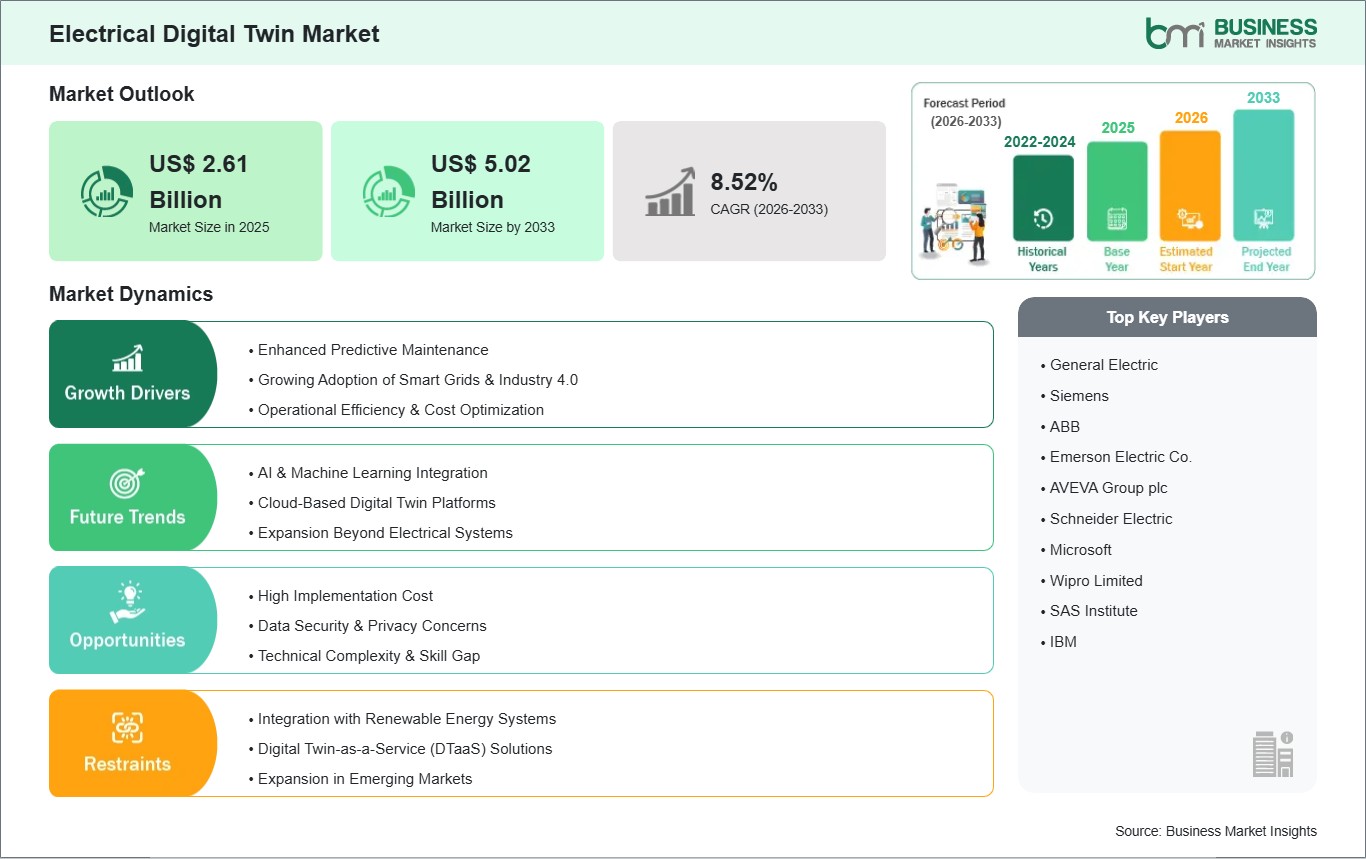
The Electrical Digital Twin Market represents the use of virtual replicas of electrical systems, assets, and processes to simulate, monitor, and optimize real-world operations. These digital twins enable organizations to improve asset performance, reduce operational risks, and enhance decision-making through real-time data and predictive insights. The technology is widely applied in power generation, grid systems, and industrial operations.
The market is experiencing strong momentum due to increasing digital transformation across the energy and industrial sectors. Organizations are adopting digital twin solutions to improve system efficiency, enable predictive maintenance, and support lifecycle management of complex electrical infrastructure. Integration with advanced technologies such as IoT, artificial intelligence, and cloud computing is further strengthening adoption.
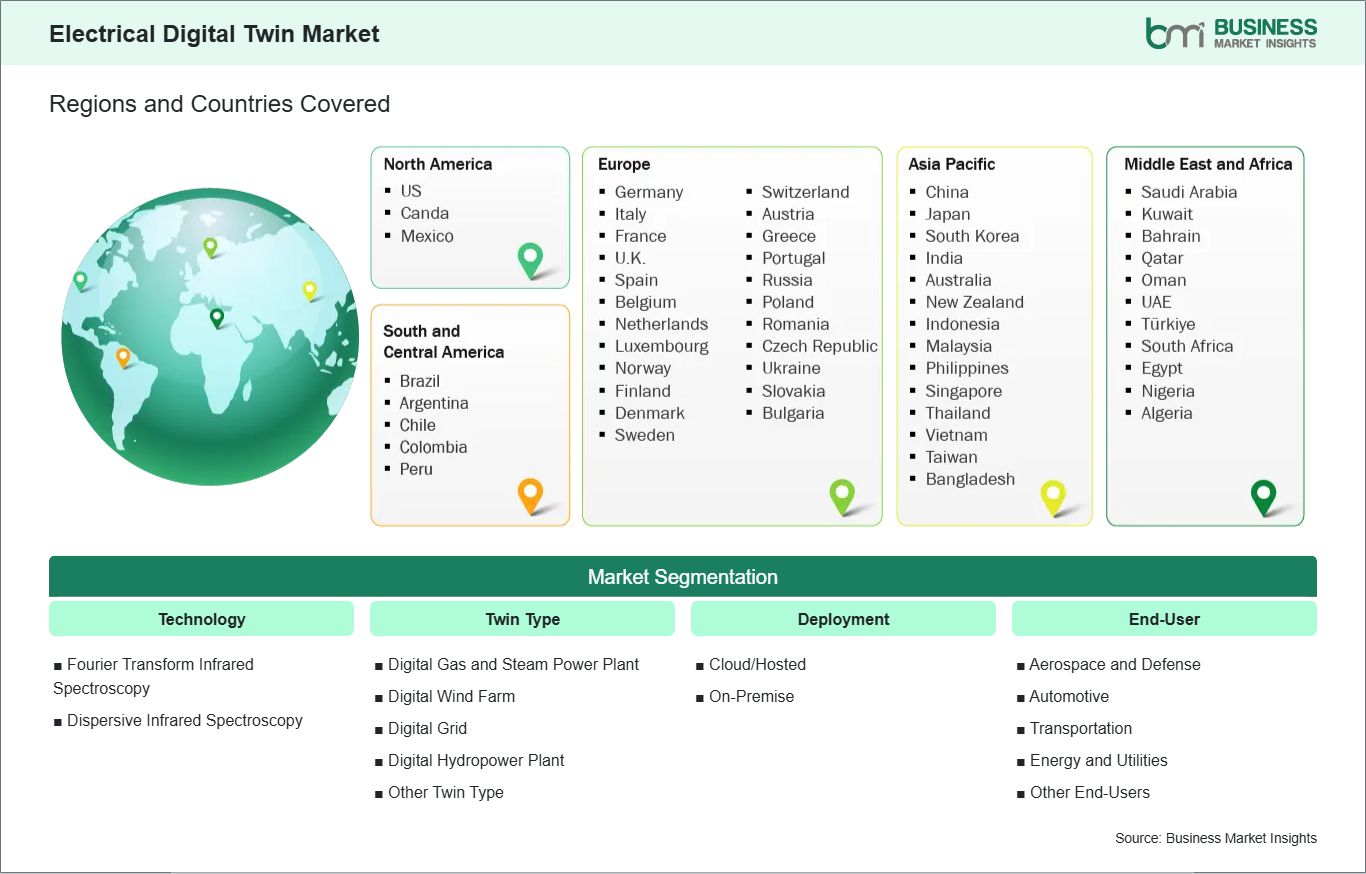
Segmental analysis reveals that digital grid and digital wind farm twins are gaining traction as renewable energy deployment expands. Digital gas and steam power plant twins remain relevant for optimizing traditional power generation systems. In terms of deployment, cloud-hosted solutions are increasingly preferred due to scalability and remote accessibility, while on-premise deployments are used in environments requiring higher data control.
Market Forces
Electrical Digital Twin Market Drivers and Opportunities
Increasing Need for Real-Time Monitoring and Predictive Capabilities
The increasing complexity of electrical infrastructure is creating a need for real-time monitoring solutions. Electrical digital twins can facilitate this, which would improve the efficiency of the industry by reducing any unexpected failures.
Industries are looking to improve their efficiencies by reducing any unexpected failures. This is creating a strong market for simulation tools, which can offer valuable insights for industries. The development of regulations for energy efficiency is creating a strong market for digital twin technologies.
Growth of Smart Grids and Renewable Energy Integration
The expansion of renewable energy sources such as wind and hydro power is creating the demand for advanced system modeling tools. Electrical digital twins assist in the management of variability and optimization of the overall performance of the energy systems. The development of the smart grid is creating the demand for intelligent monitoring and control systems.
Digital twins are improving the stability of the grid and the efficiency of the overall energy distribution. The advancements in AI, IoT, and cloud technologies are creating the demand for digital twin technologies.
Size and Share Analysis
Electrical Digital Twin Market Size and Share Analysis
The Electrical Digital Twin Market is projected to grow from US$ 2.61 billion in 2025 to US$ 5.02 billion by 2033, at a CAGR of 10.8%. This growth reflects increasing adoption of digital technologies across energy, industrial, and transportation sectors.
By twin type, digital grid and digital wind farm segments are gaining an increasing share due to the rising focus on renewable energy and smart infrastructure. Digital gas and steam power plant twins continue to hold a stable position in conventional energy systems.
In terms of deployment, cloud/hosted solutions are expanding rapidly due to their scalability and ease of integration. On-premise solutions maintain relevance in sectors requiring strict data security and regulatory compliance.
By application, asset performance management holds a major share as organizations prioritize efficiency and system reliability. Business and operations optimization is also growing, supported by the need for data-driven strategies. Digital twin aggregate solutions are emerging as integrated platforms.
Based on end-user, the energy and utilities sector dominates, followed by increasing adoption in automotive, aerospace and defense, and transportation industries.
Geographic Insights
Electrical Digital Twin Market Geographic Insights
The Electrical Digital Twin Market demonstrates diverse regional adoption patterns influenced by infrastructure development, digital readiness, and energy transition initiatives.
North America is one of the prominent markets due to the presence of advanced technological infrastructure and the early adoption of digital technologies. The United States and Canada are the countries in this region with robust investment in the development of the smart grid and digital technologies. The region is focused on the modernization of the old electrical infrastructure and the integration of renewable energy systems. The adoption of cloud-based technologies and advanced analytics is supporting the development of electrical digital twin solutions.
Asia Pacific is experiencing rapid growth in the adoption of electrical digital twin solutions due to the development in the industrial sector and the increasing demand for energy. The countries in this region, such as China, India, and Japan, are investing in the development of the smart grid and renewable energy systems. The region is experiencing robust growth in the development of infrastructure and the adoption of digital technologies. The adoption of IoT and data analytics technologies is supporting the development and implementation of electrical digital twin solutions.
Both regions continue to drive innovation and adoption in the Electrical Digital Twin Market through investments in infrastructure, digital technologies, and energy efficiency initiatives.
Industry Activity
Recent Developments
The Electrical Digital Twin Market is analyzed using a mix of primary and secondary research sources, including corporate publications, industry associations, and verified databases. This approach ensures accurate tracking of innovation trends and strategic developments shaping the market.
- In March 2024, Siemens Energy introduced enhanced digital twin capabilities for power grid systems, focusing on real-time analytics and predictive maintenance. This innovation supports utilities in improving grid stability and optimizing operational efficiency, contributing to the broader adoption of digital twin technologies.
- In September 2026, Synopsys launched an Electronics Digital Twin platform to enable virtual simulation of electronic systems, helping accelerate AI-driven product development. The platform allows early software validation and collaboration, reducing development time and improving efficiency, especially in automotive and AI applications.
Trust & Transparency
Research Methodology
The market analysis combines proprietary research with secondary data from government agencies, company disclosures, regulatory filings, industry databases and expert interviews. Market estimates are validated through data triangulation, cross-market benchmarking and analyst
review.
View Full Research Methodology
Key Sources Referred:
International Energy AgencyInternational Electrotechnical CommissionInstitute of Electrical and Electronics EngineersInternational Renewable Energy AgencyNational Energy Regulatory AuthoritiesSmart Grid and Energy AssociationsGovernment Energy DepartmentsEngineering Research InstitutionsIndustry Trade JournalsCompany Annual Reports and Technical Documentation