Market Summary
Executive Summary and Global Market Analysis
Electric hybrid vehicle drivelines are integrated propulsion systems that combine internal combustion engines with electric motors, power electronics, batteries, and transmission technologies to optimize vehicle efficiency and performance. These systems enable vehicles to operate using electric power, combustion power, or a combination of both, depending on driving conditions and energy requirements. Hybrid driveline architectures have emerged as a critical bridge technology supporting transportation electrification while addressing range limitations associated with fully electric vehicles.
The market is experiencing robust growth due to increasing consumer demand for fuel-efficient transportation solutions and tightening global emissions regulations. Hybrid driveline systems provide a practical pathway toward reduced fuel consumption and lower greenhouse gas emissions without requiring complete dependence on charging infrastructure. Consequently, automakers are expanding hybrid vehicle offerings across multiple vehicle categories to meet evolving regulatory and customer requirements.
Rising fuel prices and growing environmental awareness are influencing vehicle purchasing decisions worldwide. Consumers are increasingly adopting hybrid vehicles to reduce operating costs while benefiting from improved fuel economy and lower emissions. Commercial fleet operators are also integrating hybrid technologies to enhance efficiency and support corporate sustainability objectives.
Technological advancements in batteries, electric motors, power management systems, and transmission architectures are significantly improving driveline performance. Modern hybrid systems deliver enhanced energy recovery, smoother power delivery, and optimized energy utilization. Integration of intelligent control systems is further improving operational efficiency and driving dynamics across various vehicle platforms.
Segment Analysis
Electric Hybrid Vehicle Driveline Market Segmentation
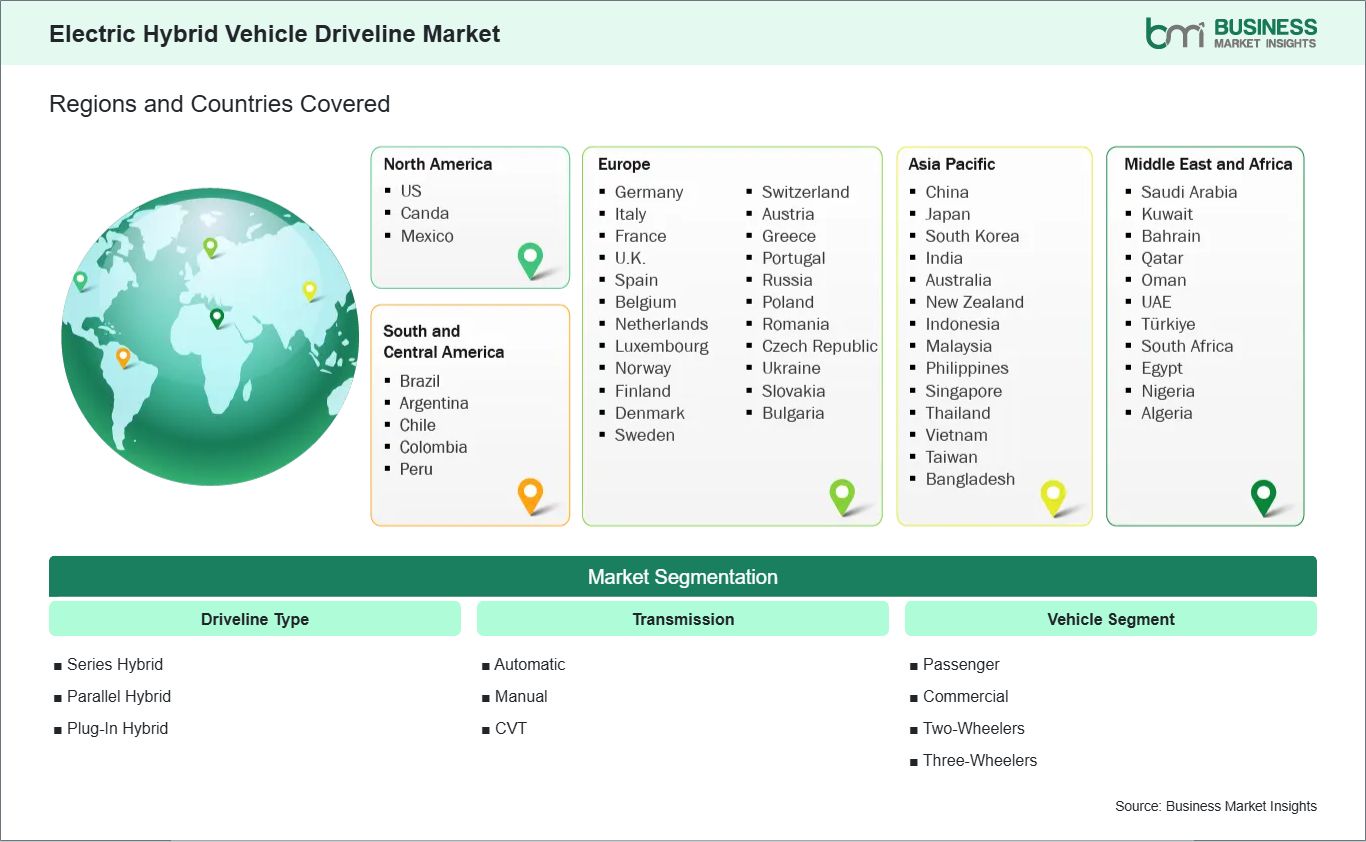
The electric hybrid vehicle driveline market is segmented based on driveline type, transmission, and vehicle segment, reflecting the growing adoption of hybrid propulsion technologies across global transportation sectors.
By Driveline Type
- Series Hybrid: Utilizes an electric motor as the primary propulsion source while the internal combustion engine functions as a generator to recharge the battery and supply electrical power.
- Parallel Hybrid: Enables both the engine and electric motor to directly drive the vehicle, offering improved fuel efficiency and operational flexibility.
- Plug-In Hybrid: Combines hybrid functionality with external charging capability, allowing extended electric-only driving range and reduced fuel consumption.
By Transmission
- Automatic: Dominates market adoption due to improved driving convenience, seamless power delivery, and compatibility with advanced hybrid control systems.
- Manual: Maintains limited adoption in selected markets where manual transmission preferences continue to exist.
- CVT: Increasingly utilized in hybrid vehicles because of its ability to optimize engine efficiency and deliver smooth power transitions.
By Vehicle Segment
- Passenger: Represents the largest market share owing to widespread consumer adoption of hybrid passenger cars and sport utility vehicles.
- Commercial: Experiencing increasing deployment as fleet operators seek fuel-efficient transportation solutions and emissions reduction benefits.
- Two-Wheelers: Gaining traction in urban mobility applications where efficiency and sustainability are key purchasing considerations.
- Three-Wheelers: Expanding in emerging economies due to rising demand for economical and environmentally friendly transportation alternatives.
Market Forces
Electric Hybrid Vehicle Driveline Market Drivers and Opportunities
Rising Fuel Prices Boosting Hybrid Adoption
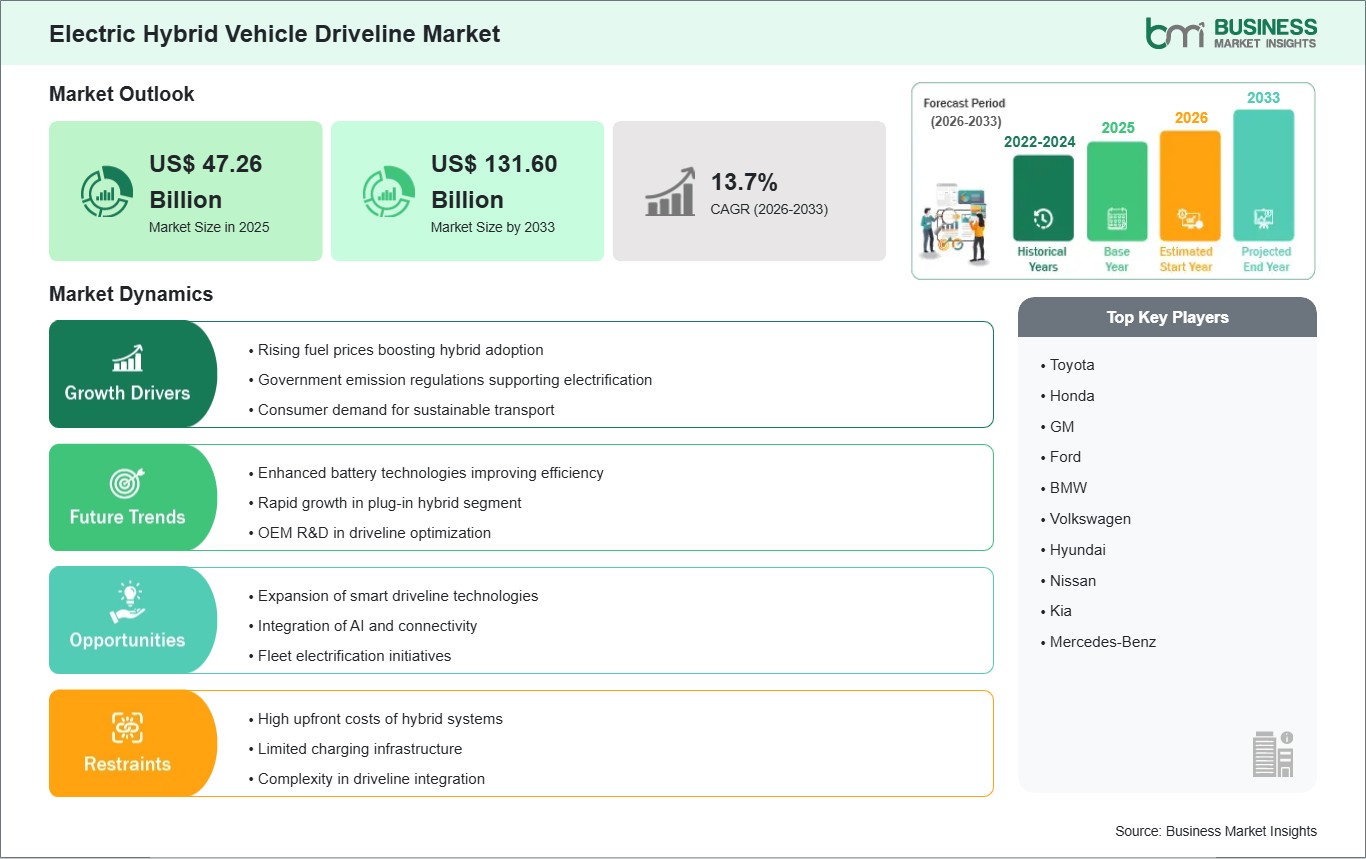
As the price of conventional fuels continues to increase, it is becoming a driving force behind the move toward hybrid vehicle driveline technology. Consumers and fleet operators alike are looking for ways to reduce fuel usage and operating costs while still providing the level of performance and driving range they expect from their vehicles.
Hybrid driveline systems use regenerative braking, intelligent energy management, and electric motor assist during acceleration and low-speed operations to provide significant increases in fuel economy versus their conventional counterparts. All of these factors contribute to a reduction in reliance on gasoline and diesel fuels, making hybrid vehicles particularly appealing in jurisdictions experiencing volatility in fuel pricing.
Commercial fleets pay close attention to total operating cost and energy use efficiency. Deploying hybrid vehicles provides significant fuel savings to fleet organizations and supports the goals of environmentally sustainable transportation. As fuel prices continue to be a primary driver of transportation economics, hybrid driveline technology will continue to experience increased demand.
Expansion of Smart Driveline Technologies
New developments in smart driveline technology, which is defined by sophisticated sensor-equipped hybrid vehicles, offer extensive growth potential for the segment. These hybrid driveline systems are now utilizing advanced sensor technology to combine high-performance driveline components with advanced connectivity technologies (such as the internet of things or IoT) to provide improved performance and higher levels of energy usage.
Artificial intelligence (AI) and real-time analytics are providing the necessary tools to enable a hybrid vehicle to dynamically change the amount of power that is distributed between its electric and combustion engines based on real-time conditions (such as traffic congestion, driving habits, and the road condition). The result will be increased efficiency, improved battery usage, and an enhanced overall driving experience.
Automakers are aggressively investing in new software-defined vehicle (SDV) architectures and new connectivity technologies that allow for optimization of next-generation driveline systems. As an increasing amount of digital technologies are being incorporated into hybrid powertrains, opportunities for improved performance, predictive maintenance, and energy management will significantly increase.
Size and Share Analysis
Electric Hybrid Vehicle Driveline Market Size and Share Analysis
The electric hybrid vehicle driveline market is projected to grow from US$ 47.26 billion in 2025 to US$ 131.60 billion by 2033, registering a CAGR of 13.7% from 2026 to 2033.
By driveline type, parallel hybrid systems account for a substantial share due to their balance of efficiency, performance, and cost-effectiveness. Plug-in hybrid systems are witnessing rapid growth driven by increasing consumer demand for extended electric driving capability and government incentives supporting vehicle electrification. Series hybrid systems continue to find application in selected vehicle categories.
By transmission, automatic transmission systems dominate the market due to widespread consumer preference and compatibility with advanced hybrid architectures. CVT technology is also gaining traction as manufacturers seek to maximize fuel economy and driveline efficiency.
By vehicle segment, passenger vehicles represent the largest market share due to extensive hybrid vehicle adoption globally. Commercial vehicle demand is expanding steadily as businesses pursue fleet efficiency and emissions reduction objectives, while two-wheelers and three-wheelers are gaining momentum in urban mobility markets.
Report Coverage
Electric Hybrid Vehicle Driveline Market Report Coverage and Deliverables
The "Electric Hybrid Vehicle Driveline Market Size and Forecast (2022 - 2033)" report provides a detailed analysis of the market covering below areas:
- Market size and forecast at global, regional, and country levels for all key market segments covered under the scope
- Market trends, along with market dynamics such as drivers, restraints, and key opportunities
- Market analysis covering key trends, global and regional frameworks, major players, regulations, and recent developments
- Industry landscape and competitive analysis covering market concentration, heat map analysis, prominent players, and recent developments
- Detailed company profiles, including SWOT analysis
Geographic Insights
Electric Hybrid Vehicle Driveline Market Geographic Insights
There are major differences in the rate of growth for the electric hybrid vehicle driveline market regionally. These differences result from various factors such as regulations, fuel prices, consumer preferences, vehicle electrification policies and vehicle production capabilities. Despite these differences, electric hybrid vehicle driveline market development is linked closely with global initiatives to decarbonize transportation.
In North America, the market continues to grow at a significant rate due to increased consumer demand for fuel efficient vehicles and increasing investments by automakers on electrified powertrains. Also, fleet operators within North America have been increasingly adopting electric hybrids as a way to increase fuel economy and reduce operating costs.
In Europe, the electric hybrid vehicle driveline market remains strong because of strict emissions regulations, aggressive climate change goals, and high levels of adoption of low emission and alternative fuel vehicles. For automakers, the electric hybrid vehicle driveline provides much needed help on meeting their compliance obligations under new environmental requirements while also satisfying consumer demand for practical electric vehicle options.
Asia Pacific is expected to be the fastest region to grow in terms of electric hybrid vehicle driveline adoption. This is due in part to the large number of vehicles being produced in that region and rapidly growing urban populations, increasing fuel prices, and government support for vehicle electrification. Countries such as China, Japan, South Korea, and India have made significant investments in hybrid and electric vehicle technologies.
In addition, the Middle East and Africa and South and Central America markets are seeing a gradual increase in the number of electric hybrid vehicles being sold as their respective governments continue to promote and implement fuel saving and sustainable transportation programs.
Industry Activity
Recent Developments
The electric hybrid vehicle driveline market is evaluated by gathering qualitative and quantitative data post primary and secondary research, which includes important corporate publications, association data, and databases. Recent developments and news in the market include:
- In March 2025, AISIN announced that its hybrid drive unit was adopted for the Mitsubishi Xforce HEV. The system combines a drive motor and gearbox in a series-parallel hybrid architecture and will be produced in Thailand.
- In April 2025, ZF secured a major order for its AxTrax 2 electric axle for commercial vehicles in India. It demonstrates growing adoption of electrified driveline and e-axle technologies, a key segment adjacent to hybrid driveline systems.
Trust & Transparency
Research Methodology
The market analysis combines proprietary research with secondary data from government agencies, company disclosures, regulatory filings, industry databases and expert interviews. Market estimates are validated through data triangulation, cross-market benchmarking and analyst
review.
View Full Research Methodology
Key Sources Referred:
International Energy Agency (IEA)International Organization of Motor Vehicle Manufacturers (OICA)International Monetary Fund (IMF)World Bank - Global Transport IndicatorsInternational Trade Administration (ITA)World Trade Organization (WTO)European Automobile Manufacturers Association (ACEA)International Council on Clean Transportation (ICCT)