Technological advancements in laser-based rejuvenation devices
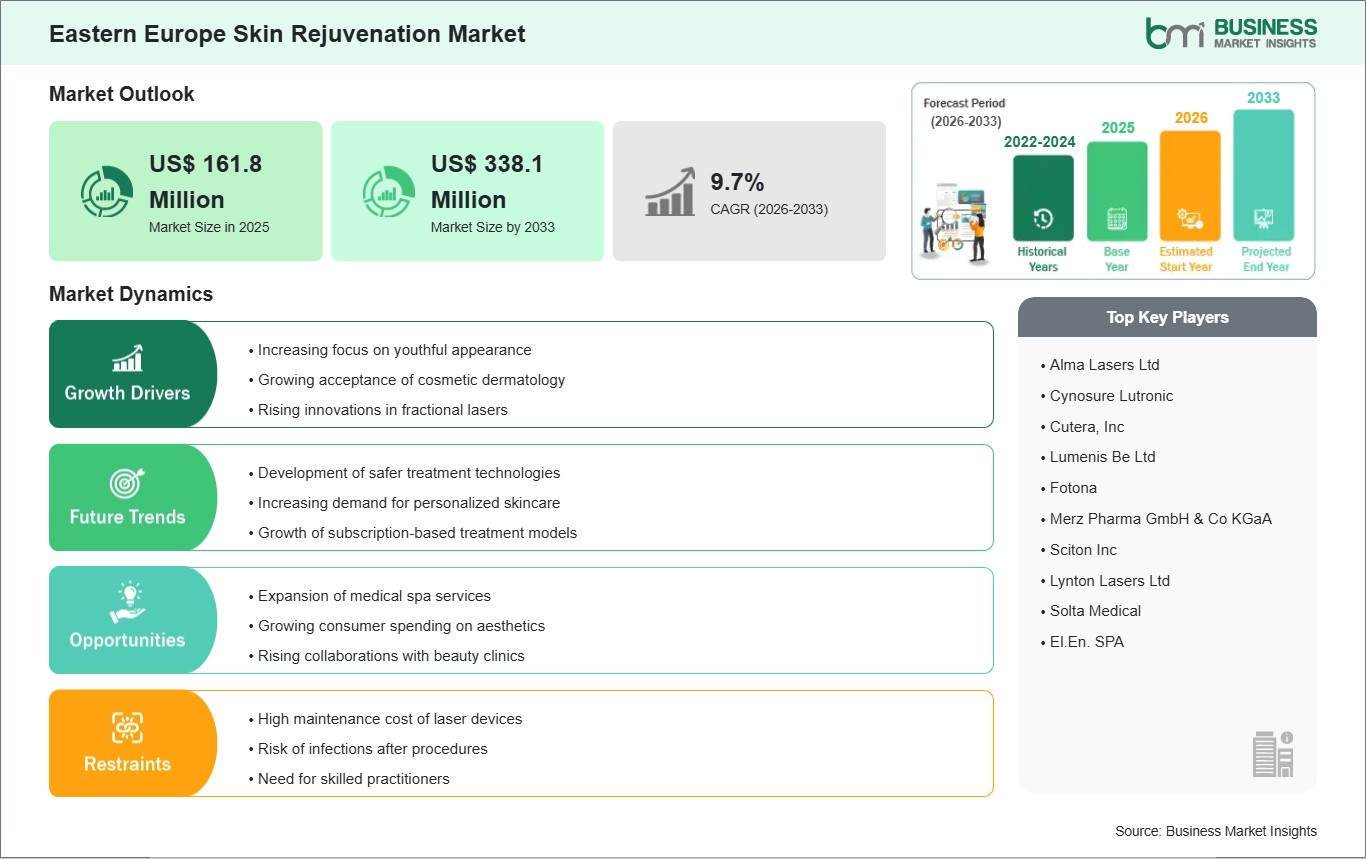
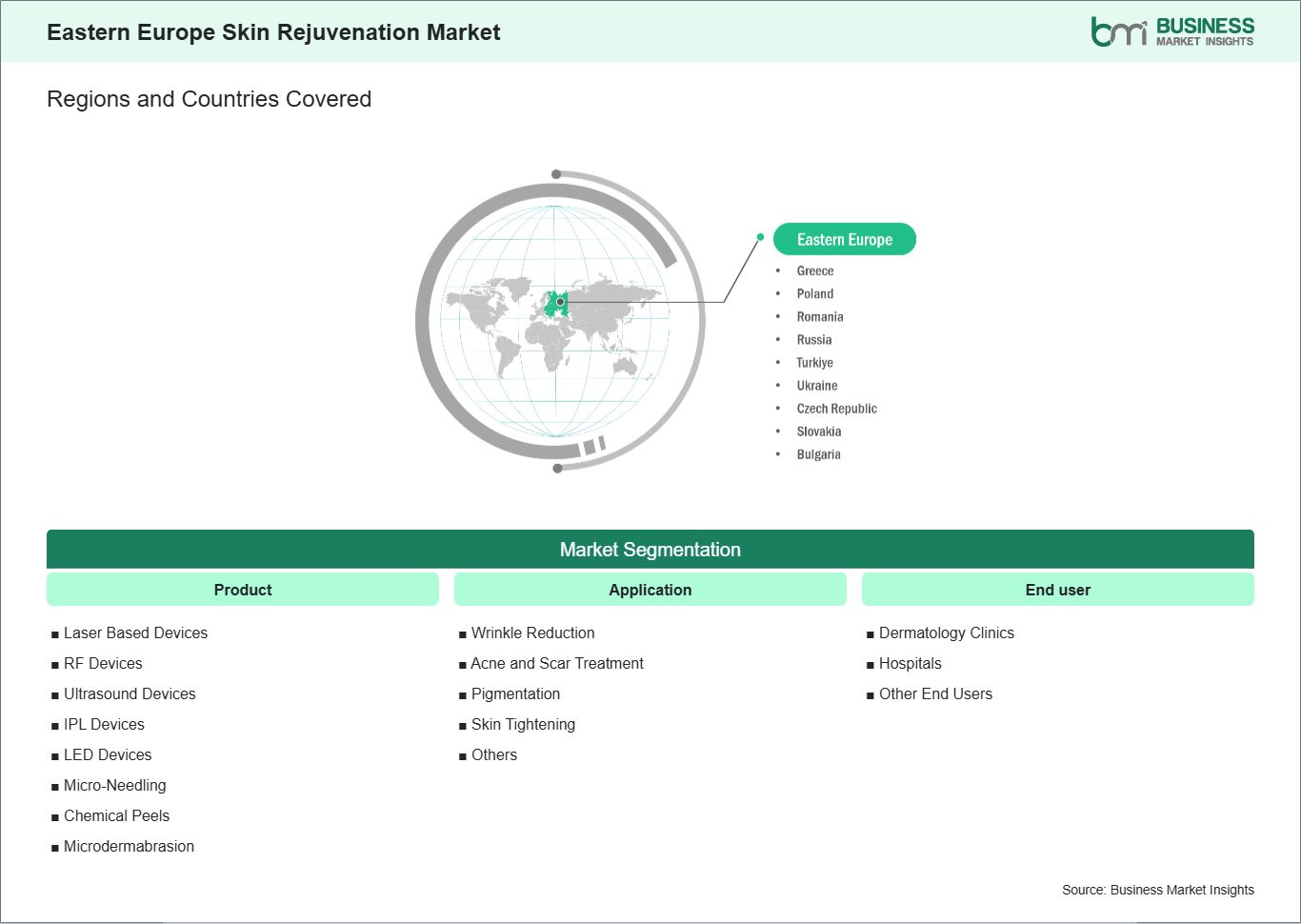
The Eastern Europe skin rejuvenation market is undergoing significant transformation due to continuous advancements in laser-based rejuvenation devices. Laser treatment facilities in other countries like Poland, Romania, Hungary, and the Czech Republic are now employing advanced lasers that offer benefits of precision and reduced down time, as well as suitability for many different kinds of skin conditions. The laser treatments are employed in skin resurfacing, correcting skin pigmentation, reducing scars, and improving skin texture in general.
There are gradual improvements being made in replacing older generations of laser treatment methods with advanced multi-functional machines that integrate various types of energy sources in one system. This makes it easier for practitioners to handle several types of skin disorders within a short time and customize treatments according to individual patients' requirements. The major cities such as Warsaw, Bucharest, and Prague have been at the forefront of the adoption of dermatology technology, mainly due to their highly competitive market environment.
On the other hand, the cost-effectiveness of technology imports from Western Europe and Asia is also increasing access to sophisticated lasers among mid-range clinics. This is extending the range of skin rejuvenation services from high-end urban centers to smaller cities. As a consequence, the use of lasers is becoming increasingly uniform in the region, enhancing the efficiency and effectiveness of operations and contributing to the development of the skin rejuvenation industry in Eastern Europe.
Increasing partnerships between clinics and technology providers
The Eastern Europe skin rejuvenation market is also being shaped by increasing partnerships between aesthetic clinics and global technology providers. The manufacturers of dermatological and aesthetic medical equipment are collaborating with clinics in nations like Poland, Romania, Bulgaria, and Hungary in order to introduce innovative systems for treatment purposes. The collaboration includes the provision of medical equipment, training programs, and technical assistance to facilitate the introduction of the innovations.
The need for such cooperation is even more apparent in an area where there is already a good reputation for clinical skills yet there might be some deficiencies in the use of the most advanced technologies in aesthetic medicine. Cooperation with technology companies will allow clinics to offer state-of-the-art services based on internationally approved techniques. This kind of cooperation has already allowed clinics in cities like Budapest and Bucharest to become key centers for aesthetic medicine in Europe.
Moreover, technology companies are making more efforts in terms of providing local training and certification in order to use high-tech devices in a safer and more consistent way. It helps both improve the treatment effectiveness and increase the level of trust between the patient and the clinic. The increasing number of alliances in the sphere contributes to the rapid adoption of innovations and differentiation of services provided by clinics. In the long run, these relationships will be instrumental in forming the future skin rejuvenation industry in Eastern Europe.