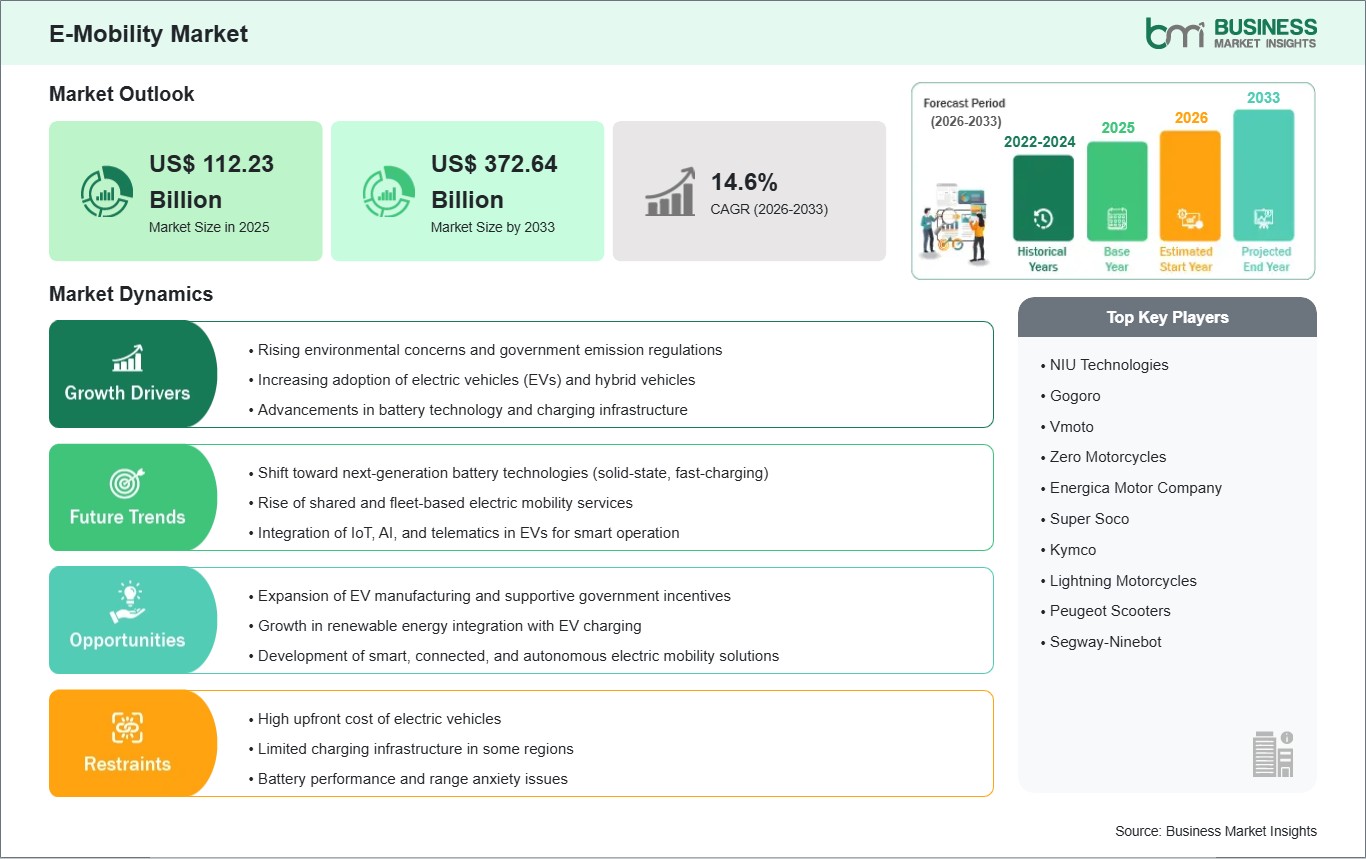
The E-Mobility market size is expected to reach US$ 372.64 billion by 2033 from US$ 112.23 billion in 2025. The market is estimated to record a CAGR of 14.6% from 2026 to 2033.
Electric mobility is basically the use of electric, powered means of transport like electric cars, scooters, bikes, buses, and any other transport modes that run on electricity. The amount of electric energy consumed comes from the battery of the vehicle instead of the traditional fossil fuel, which in return helps in limiting carbon dioxide emissions, diminishing the operational costs, and creating the conditions for efficient and renewable, at, the, source transport systems. E, mobility is also about the development and deployment of user, friendly recharging stations, efficient battery management systems, and the implementation of intelligent or connected vehicle technologies.A range of driving factors, such as government regulations and policies aimed at decreasing the level of carbon emissions, a growing consumer awareness regarding the environment, increased fuel prices, technological advances in battery and charging systems, are driving rapid growth in the E-mobility (EV) industry. Rapidly emerging market opportunities in the form of increased adoption of electric two-wheelers, scooters, and electric passenger cars in developing nations, integration of smart and connected vehicle systems, development of modular and scalable EV platforms, as well as strategic partnerships among vehicle manufacturers, technology suppliers, and electric vehicle charging infrastructure developers are also providing significant opportunities for the E-mobility (EV) industry and will continue to drive innovation and growth.

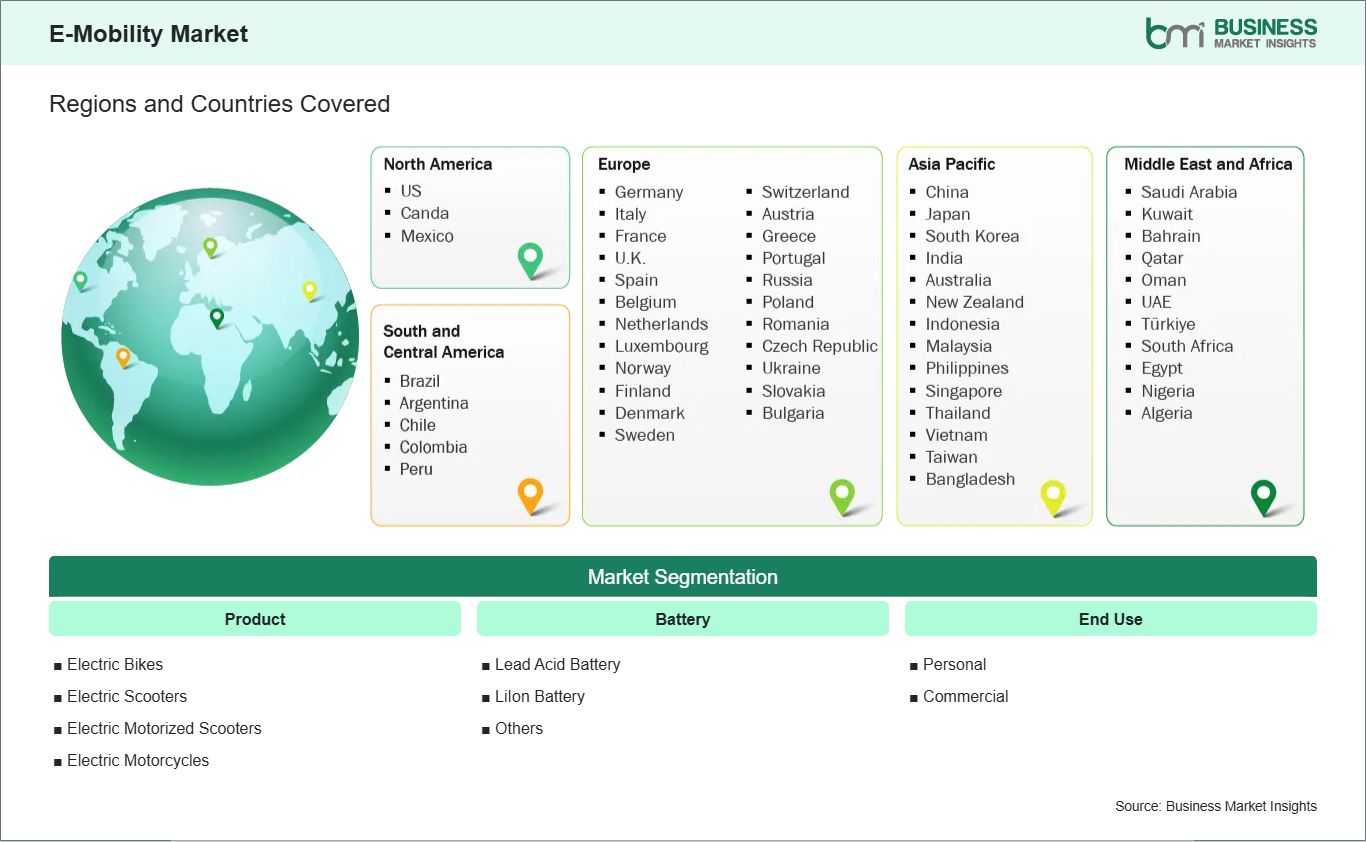
Key segments that contributed to the derivation of the E-Mobility market analysis are component , battery, and end user.
Growing awareness of environmental issues is a key driver for the E-Mobility market. Consumers and businesses are increasingly focused on reducing greenhouse gas emissions and minimizing air pollution, which is accelerating the adoption of electric vehicles (EVs). Governments worldwide are introducing stringent emission standards and supportive policies to encourage cleaner transportation solutions, promote urban sustainability, and reduce dependence on fossil fuels. This regulatory environment, combined with heightened public interest in green mobility, is fostering strong demand for electric vehicles and related infrastructure.
The rapid expansion of electric vehicle manufacturing, coupled with government incentives, is significantly boosting the E-Mobility market. Automakers are increasing production capacities and investing in EV technology, including battery innovation, powertrain systems, and charging infrastructure, to meet growing consumer demand. Governments are supporting this growth through subsidies, tax rebates, grants, and investments in charging networks, which lower adoption barriers for consumers and accelerate EV penetration across passenger and commercial segments.
Additionally, advancements in vehicle technologies such as connected EV platforms, energy-efficient batteries, and smart charging solutions are enhancing the overall ecosystem. Collaborations between automakers, technology providers, and governments are fostering innovation, improving operational efficiency, and expanding infrastructure deployment. This comprehensive support is driving market growth, enabling the transition toward sustainable mobility, and positioning the E-Mobility sector as a central component of future transportation systems.
By component, the E-Mobility market is segmented into Electric Bikes, Electric Scooters, Electric Motorized Scooters, and Electric Motorcycles. The Electric Bikes segment dominated the market in 2024, driven by their affordability, ease of use, and suitability for short urban commutes. Growing environmental awareness, government incentives for clean transportation, and rising fuel costs have further accelerated adoption. Electric bikes are particularly popular among young consumers and daily commuters who seek cost-effective, eco-friendly, and convenient alternatives to traditional two-wheelers. While electric scooters and motorcycles are gaining traction in urban areas, electric bikes continue to hold the largest market share due to their broad accessibility and versatile applications.
By battery, the market is segmented into Lead Acid Battery, Li-Ion Battery, and Others. The Lead Acid Battery segment held the largest share in 2024, primarily because of its low cost, ease of availability, and established manufacturing infrastructure. Lead acid batteries remain widely used in entry-level electric two-wheelers and commercial e-mobility vehicles. However, Li-Ion batteries are rapidly gaining popularity due to their higher energy density, longer lifespan, lighter weight, and faster charging capabilities, making them ideal for premium electric bikes, scooters, and motorcycles. The market is expected to gradually shift toward Li-Ion technology as production scales up and costs decrease.
By end use, the market is bifurcated into Personal and Commercial segments. The Personal segment held the larger share in 2024, driven by increasing consumer adoption for daily commuting, last-mile connectivity, and recreational purposes. Rising urban congestion, environmental concerns, and the availability of government subsidies for personal electric vehicles have further fueled demand. Meanwhile, the Commercial segment, including delivery services, logistics, and shared mobility operators, is also growing steadily as businesses increasingly adopt electric two-wheelers and scooters to reduce operating costs, meet sustainability targets, and comply with emission regulations.
| Report Attribute | Details |
|---|---|
| Market size in 2025 | US$ 112.23 Billion |
| Market Size by 2033 | US$ 372.64 Billion |
| Global CAGR (2026 - 2033) | 14.6% |
| Historical Data | 2022-2024 |
| Forecast period | 2026-2033 |
| Segments Covered | By Product
|
|
Regions and Countries Covered
| |
| North America | US, Canada, Mexico |
| Europe | Belgium, Austria, Finland, Denmark, Greece, Poland, Romania, Russia, Ukraine, Czech Republic, Slovakia, Bulgaria, Italy, Luxembourg, Germany, Switzerland, France, Netherlands, Norway, Portugal, Spain, Sweden, United Kingdom |
| Asia-Pacific | Australia, China, India, Japan, South Korea, Indonesia, Malaysia, Philippines, Singapore, Thailand, Vietnam, Bangladesh, New Zealand, Taiwan |
| South and Central America | Brazil, Argentina, Peru, Chile, Colombia |
| Middle East and Africa | Bahrain, Kuwait, Oman, Qatar, Saudi Arabia, United Arab Emirates, Turkiye, South Africa, Egypt, Algeria, Nigeria |
| Market leaders and key company profiles |
|
The E-Mobility Market Size and Forecast (2022–2033) report provides a detailed analysis of the market covering below areas:
The geographical scope of the E-Mobility market report is divided into five major regions: North America, Asia Pacific, Europe, Middle East & Africa, and South & Central America. Among these, the Asia Pacific region is expected to witness significant growth during the forecast period, driven by increasing adoption of electric vehicles, supportive government policies, and expanding manufacturing capabilities.
The Asia Pacific E-Mobility market includes key countries such as China, Japan, South Korea, India, Australia, New Zealand, Indonesia, Malaysia, the Philippines, Singapore, Thailand, Vietnam, Taiwan, Bangladesh, and the Rest of Asia. Growth in the region is supported by strong demand from both personal and commercial mobility segments, coupled with investments in EV infrastructure, battery production, and smart charging solutions. Major economies like China, Japan, South Korea, and India are leading the adoption of electric vehicles and related technologies, leveraging advancements in battery technology, power electronics, AI, and IoT to enhance vehicle performance, efficiency, and safety.
China remains the dominant market due to its large consumer base, robust EV manufacturing capabilities, and strong government incentives promoting electric mobility. Japan and South Korea are pioneering in EV technology innovation, including battery development, powertrain systems, and smart vehicle platforms. India is emerging as a high-growth market, supported by a growing middle-class population, rising urbanization, increasing government subsidies, and expanding EV adoption across personal and commercial segments. These factors collectively position Asia Pacific as a key growth hub for the global E-Mobility market.

The E-Mobility market is evaluated by gathering qualitative and quantitative data post primary and secondary research, which includes important corporate publications, association data, and databases. A few of the key developments in the E-Mobility market are:
The E-Mobility Market is valued at US$ 112.23 Billion in 2025, it is projected to reach US$ 372.64 Billion by 2033.
As per our report E-Mobility Market, the market size is valued at US$ 112.23 Billion in 2025, projecting it to reach US$ 372.64 Billion by 2033. This translates to a CAGR of approximately 14.6% during the forecast period.
The E-Mobility Market report typically cover these key segments-
The historic period, base year, and forecast period can vary slightly depending on the specific market research report. However, for the E-Mobility Market report:
The E-Mobility Market is populated by several key players, each contributing to its growth and innovation. Some of the major players include:
The E-Mobility Market report is valuable for diverse stakeholders, including:
Essentially, anyone involved in or considering involvement in the E-Mobility Market value chain can benefit from the information contained in a comprehensive market report.
Please tell us your area of interest
(Market Segments/ Regions and Countries/ Companies)