Increasing Infrastructure Repair and Maintenance Activities
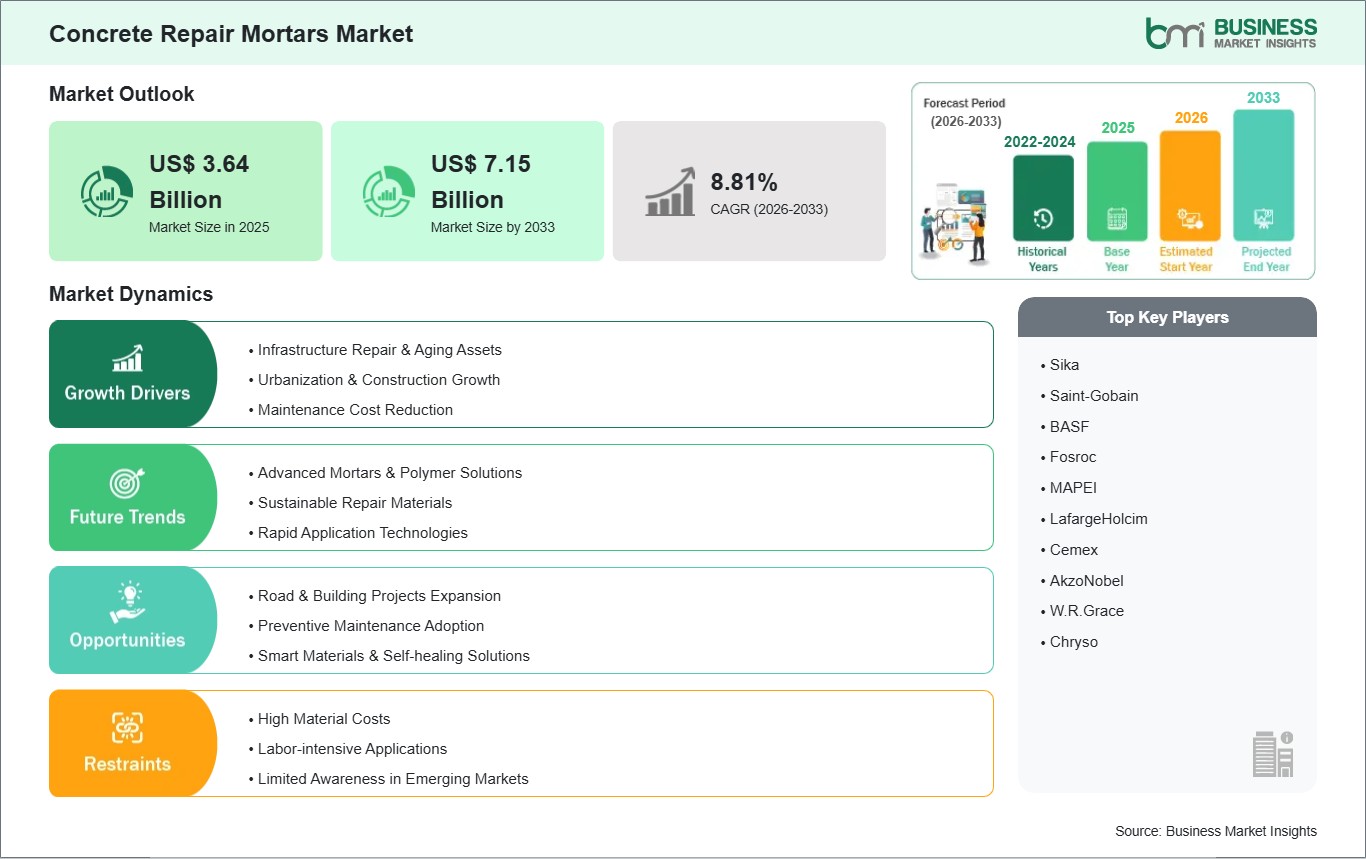
The demand for concrete repair mortar is driven largely by the increasing need to maintain infrastructure in good condition and reduce the costs associated with building new structures. There are many aging structures, including roads, buildings, bridges, and marine infrastructure that require regular maintenance in order to remain safe and usable. As concrete structures age over time, they will suffer deterioration from many different types of sources including weather, chemicals, and physical loads; consequently, there is a high demand for repair materials.
Concrete repair mortars are an important means of improving repaired and damaged structures through the provision of additional strength, durability, and resistance to various environmental influences. High-stress applications where structural integrity is essential such as highway bridges, parking buildings, and industrial buildings rely heavily upon the use of concrete repair mortars for successful repairs. With government and infrastructure funding agencies continuing to budget for repair and refurbishment projects, the demand for concrete repair mortars will remain strong.
New construction costs are increasing as well; therefore, property owners are looking at ways to maintain and repair their existing assets rather than replacing them with new ones. Since using repair mortars is more cost-effective than new construction, they will be increasingly selected for both public and private sector construction projects. Expanding the use of preventive maintenance strategies will also impact the growth of the concrete repair mortar market. Many organizations want to reduce long-term operational costs; as a result, preventive maintenance is becoming a popular way to reduce long-term operations cost.
Advanced Materials and Sustainable Construction
As there is an increasing focus on sustainability and innovative building technologies; considerable changes are happening within the concrete repair mortar market. Environmental issues and regulatory requirements are leading contractors and product manufacturers to develop eco-friendly repair products which have low negative environmental impact while providing high performance.
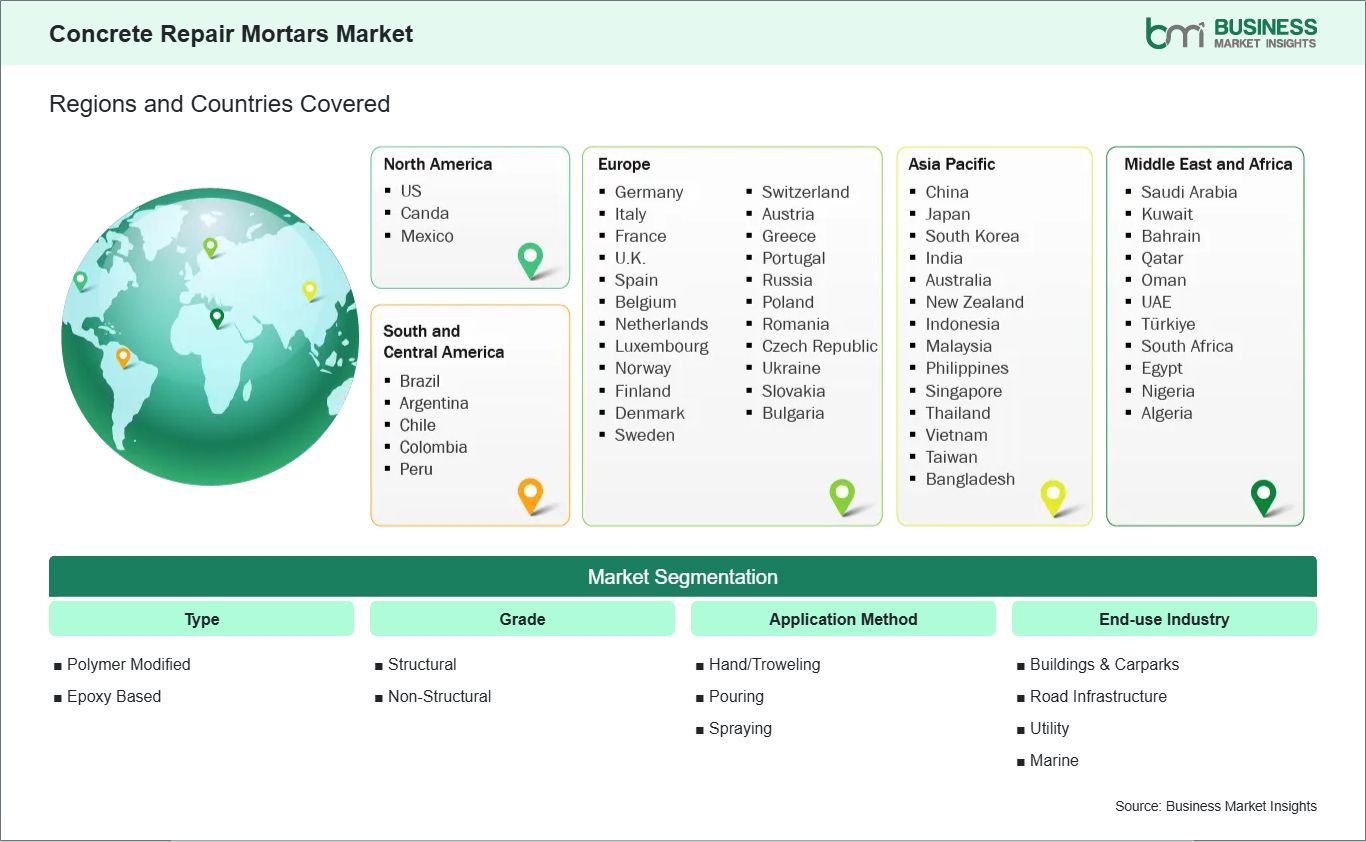
Polymer-modified cementitious (PMM) mortars have been increasingly preferred due to their increased durability, flexibility, and resistance to water. PMMs provide long-life repairs and thereby decrease maintenance frequency, making them an element of sustainable construction. Epoxy-based mortars are popular for use in high-strength applications with quick curing characteristics, such as industrial flooring and heavy traffic.
Through technological improvement, smart repair materials with enhanced characteristics, including self-healing properties, as well as improved adhesion, are being developed. Furthermore, the improved use of automated applications, including spray applications, results in better efficiency and lower labor requirements.
There is a significant amount of growth potential in Asia Pacific, Latin America, and the Middle East & Africa regions due to the development of the cities in these areas and the increase in infrastructure-related investments. The governments of the Asia-Pacific, Latin America, and Middle East & Africa will continue to fund the development of transportation networks, utilities, and residential buildings, increasing demand for repair mortars. To sum up, the continuing evolution of material science and the adoption of sustainable construction practices will continue to shape the future of the industry.