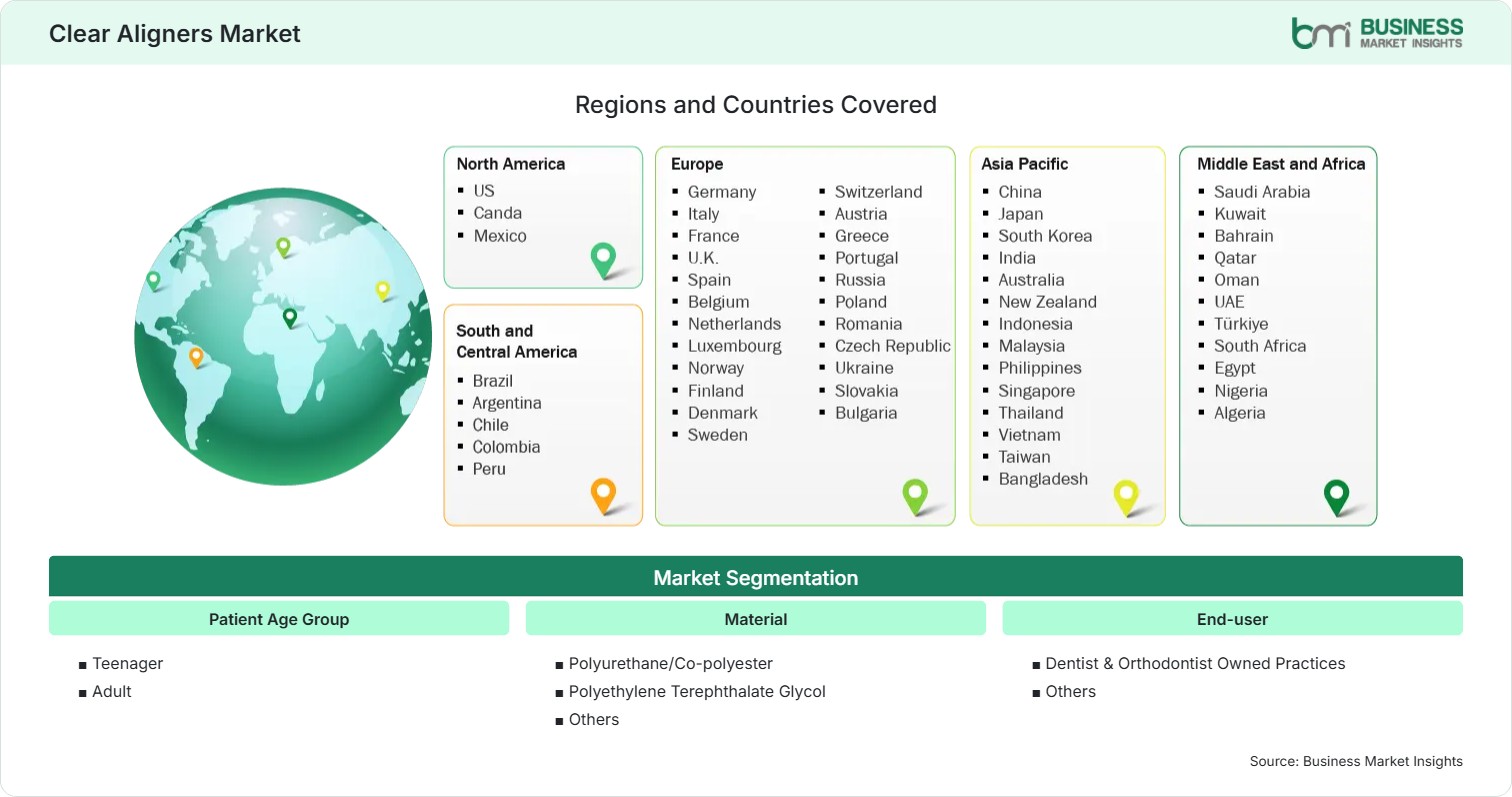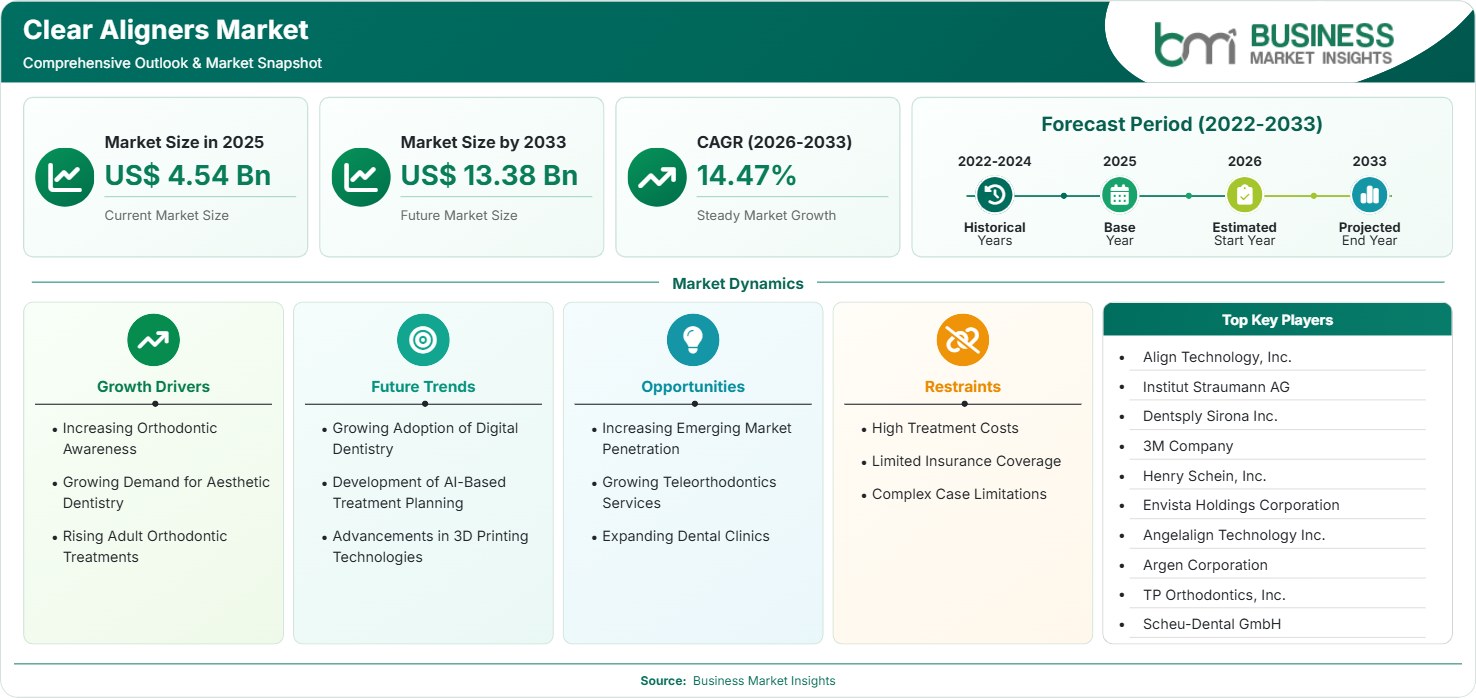
Clear Aligners Market Regional Highlights
North America Clear Aligners Market
North America represents a 38%–42% share in 2025 and is expected to expand at a CAGR of 13.80%–14.30% during 2026–2033. The region benefits from advanced orthodontic infrastructure, strong insurance-supported dental services, and high adoption of digital treatment platforms. The Clear Aligners Market share remains supported by established manufacturers, widespread dental clinic networks, and consumer preference for aesthetic orthodontic solutions across the United States and Canada.
- Increasing adoption of intraoral scanners and digital treatment planning platforms is improving workflow efficiency for orthodontists while reducing dependency on traditional dental impression methods across advanced healthcare facilities.
- Premium orthodontic solutions are gaining traction among adults seeking discreet treatments, supported by higher disposable incomes, professional appearance requirements, and increasing awareness of cosmetic dentistry benefits.
- Dental service organizations are expanding partnerships with aligner manufacturers to improve patient access, streamline treatment processes, and integrate technology-driven orthodontic services across multiple locations.
- Sustainability initiatives are encouraging manufacturers to develop efficient production processes, recyclable materials, and optimized supply chains for modern orthodontic device manufacturing.
US Clear Aligners Market
The US market accounts for a 32%–35% share within North America in 2025 and is projected to grow at a CAGR of 14.00%–14.40% between 2026–2033. The region demonstrates strong demand due to high dental expenditure, technology adoption, and consumer acceptance of cosmetic orthodontics. The Clear Aligners Market growth is supported by digital dentistry expansion, increasing orthodontic consultations, and growing availability of personalized treatment programs.
- The United States continues leading adoption through established orthodontic practices, advanced dental technology infrastructure, and strong consumer preference for convenient alternatives to conventional braces.
- Direct-to-consumer and hybrid treatment models are evolving through remote monitoring platforms, enabling improved accessibility while maintaining professional oversight during orthodontic treatment journeys.
- Dental professionals are increasingly adopting AI-supported treatment planning tools to improve prediction accuracy, optimize aligner design, and enhance clinical decision-making processes.
Europe Clear Aligners Market
Europe holds a 26%–30% share in 2025 and is anticipated to register a CAGR of 13.20%–13.70% during 2026–2033. Germany, the United Kingdom, France, Italy, and Spain are important contributors due to developed dental systems, increasing aesthetic treatment demand, and growing digital healthcare adoption. The region demonstrates strong regulatory compliance, advanced clinical capabilities, and increasing investment in orthodontic technologies.
- Germany is expanding through advanced dental laboratories, technology-focused orthodontic clinics, and increasing adoption of digital workflows supporting customized aligner manufacturing.
- The United Kingdom is witnessing higher demand due to cosmetic dentistry awareness, private dental services expansion, and increasing acceptance of minimally visible orthodontic treatments.
- France benefits from growing aesthetic healthcare preferences, premium dental services, and increased utilization of personalized orthodontic solutions among younger and adult patients.
- Italy and Spain are experiencing growth through expanding dental tourism, improved clinic infrastructure, and increasing availability of digitally enabled orthodontic procedures.
- European manufacturers are focusing on material improvements, regulatory compliance, and research initiatives to enhance aligner performance and patient comfort.
Asia Pacific Clear Aligners Market
Asia Pacific represents a 22%–26% share in 2025 and is projected to grow at a CAGR of 15.50%–16.10% during 2026–2033. China, India, Japan, South Korea, and Southeast Asian economies are driving regional expansion through rising dental awareness, increasing disposable income, and expanding private healthcare facilities. The Clear Aligners Market growth is supported by technology adoption and demand for affordable aesthetic dental treatments.
- China is witnessing increased adoption through expanding dental chains, local aligner manufacturing capabilities, and rising consumer interest in digitally planned orthodontic treatments.
- India is emerging as a high-growth market due to increasing dental awareness, urban healthcare expansion, and growing demand among young professionals seeking aesthetic treatment options.
- Japan maintains steady demand through advanced dental technology adoption, aging population considerations, and preference for minimally invasive orthodontic procedures.
- South Korea benefits from strong cosmetic healthcare trends, technology-oriented consumers, and increasing integration of digital orthodontic solutions within dental practices.
- Southeast Asian markets are attracting investment through healthcare modernization, expanding dental tourism, and increasing availability of affordable aligner treatment programs.
Rest of World Clear Aligners Market
South America, the Middle East, and Africa collectively represent a 7%–10% share in 2025 and are forecast to grow at a CAGR of 12.50%–13.20% during 2026–2033. Brazil, Mexico, UAE, and South Africa are emerging markets supported by improving healthcare infrastructure, expanding dental clinics, and rising awareness of aesthetic procedures. The Clear Aligners Market share in these regions is gradually increasing as digital orthodontic solutions become more accessible.
Brazil and Mexico are experiencing increased adoption through private dental practices, expanding middle-class populations, and rising interest in cosmetic dental treatments.
- Brazil is developing as a regional orthodontic hub due to established dental professionals, growing aesthetic treatment demand, and increasing technology investments.
- Mexico benefits from dental tourism growth, improving clinic capabilities, and rising international demand for affordable orthodontic procedures.
- UAE markets are expanding through premium healthcare investments, luxury dental services, and adoption of advanced orthodontic technologies.
- South Africa is witnessing gradual growth through specialized dental clinics, healthcare modernization programs, and increasing awareness of aesthetic dental solutions.
- Regional manufacturers and distributors are exploring partnerships to improve product availability, strengthen supply chains, and address unmet orthodontic treatment needs.