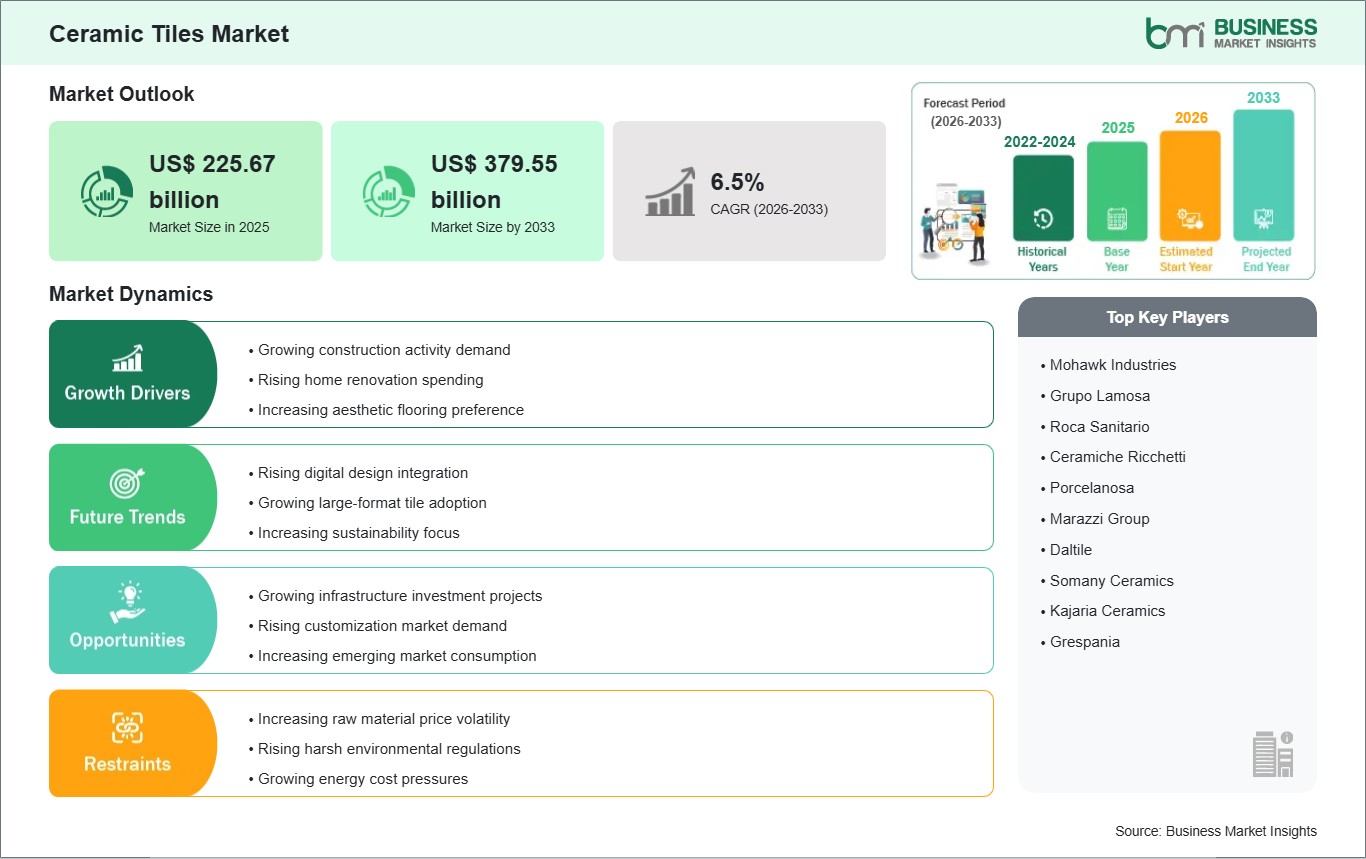
The ceramic tiles market size is expected to reach US$ 379.55 billion by 2033 from US$ 225.67 billion in 2025. The market is estimated to record a CAGR of 6.5% from 2026 to 2033.
Ceramic tiles are made from natural clay, minerals, and other raw materials. They are fired at high temperatures to create surfaces that are durable, long-lasting, and visually appealing. These tiles are commonly used in homes, businesses, and industry for flooring, walls, countertops, and decorative uses. Ceramic tiles come in many sizes, textures, colors, and finishes, including glazed, unglazed, porcelain, and mosaic, making them suitable for different design tastes and practical needs.
The market is growing due to rapid urbanization, increased construction and renovation projects, and a rising consumer preference for durable, low-maintenance, and attractive surfaces. The expansion of the residential, commercial, and hospitality sectors, along with higher disposable incomes and trends in lifestyle-focused interior design, boosts demand. Technological improvements in printing, glazing, and digital design enable manufacturers to create tiles that resemble natural materials like wood and stone, enhancing product appeal. Moreover, greater awareness of eco-friendly and water-saving options, along with the rising popularity of modular and customizable tiles, is driving market growth.

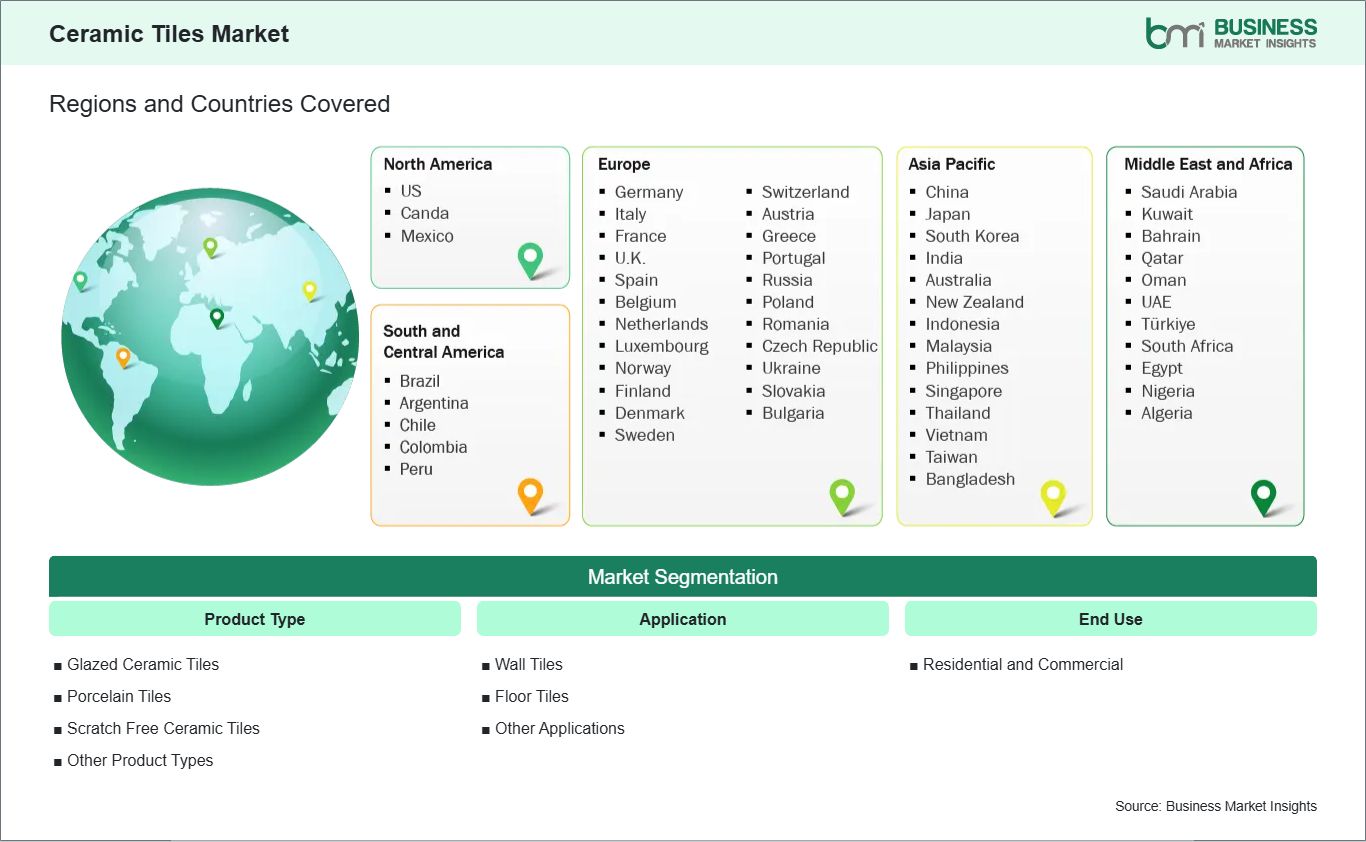
Key segments that contributed to the derivation of the ceramic tiles market analysis are product type, application, and end use.
The rise in construction and renovation work is a key factor driving the ceramic tiles market. More people are moving to cities, earning higher incomes, and changing how they live. This shift increases the demand for quality flooring and wall finishes in homes, businesses, and hotels. Ceramic tiles are popular because they last long, require little upkeep, and come in various designs. They also resist stains, moisture, and wear. The growth in housing construction, such as apartments, villas, and gated communities, along with major commercial projects like offices, shopping malls, and hotels, is pushing bulk purchases of ceramic tiles. Renovation work in existing buildings, especially in cities, is also boosting demand, as more people choose to upgrade from traditional flooring to modern, durable tiles.
Additionally, government-led infrastructure projects, smart city programs, and upgrades to public facilities are promoting the use of high-quality ceramic finishes. The move towards stylish, functional, and eco-friendly interior options is driving manufacturers to create new designs, textures, and sizes. Together, these factors are likely to keep the ceramic tiles market strong across different construction sectors worldwide.
Technological innovation and product customization offer substantial growth opportunities for the ceramic tiles market. Digital printing, 3D designs, and improved glazing techniques enable manufacturers to create tiles that imitate natural materials like wood, stone, and marble. This meets changing aesthetic preferences. Modular and customizable tile solutions give flexibility for both residential and commercial projects. Better surface finishes boost durability, stain resistance, and slip resistance. There is a growing demand for eco-friendly and water-efficient tiles, including options made from recycled and low-energy production methods. This trend supports sustainability and provides manufacturers with ways to stand out.
E-commerce and direct-to-consumer sales channels help reach more customers and make high-end, customized products more accessible. Moreover, partnerships with interior designers, architects, and contractors can promote designer collections and valuable solutions. Emerging markets, with quick urbanization, rising construction activity, and a greater awareness of quality and design, show more potential for adopting innovative ceramic tiles. The combination of design innovation, sustainability, and technology is likely to drive long-term growth opportunities worldwide.

The ceramic tiles market demonstrates steady growth, with size and share analysis revealing evolving trends and competitive positioning among key players. The report examines subsegments categorized within product type, application, and end use, offering insights into their contribution to overall market performance. By product type, the porcelain tiles segment has the largest market share. This is because porcelain tiles are widely used in residential and commercial buildings for flooring and wall applications. People value porcelain tiles for their durability, scratch resistance, ease of maintenance, and long lifespan compared to other tile materials. The industry prefers porcelain tiles since they blend functionality with visual appeal, resist moisture, and meet modern design standards. The growth in this segment is fueled by rising construction activities, increasing consumer demand for high-quality and long-lasting flooring options, and more people adopting stylish and practical interior designs in homes, offices, and commercial spaces.
| Report Attribute | Details |
|---|---|
| Market size in 2025 | US$ 225.67 billion |
| Market Size by 2033 | US$ 379.55 billion |
| Global CAGR (2026 - 2033) | 6.5% |
| Historical Data | 2022-2024 |
| Forecast period | 2026-2033 |
| Segments Covered | By Product Type
|
|
Regions and Countries Covered
| |
| North America | US, Canada, Mexico |
| Europe | Belgium, Austria, Finland, Denmark, Greece, Poland, Romania, Russia, Ukraine, Czech Republic, Slovakia, Bulgaria, Italy, Luxembourg, Germany, Switzerland, France, Netherlands, Norway, Portugal, Spain, Sweden, United Kingdom |
| Asia-Pacific | Australia, China, India, Japan, South Korea, Indonesia, Malaysia, Philippines, Singapore, Thailand, Vietnam, Bangladesh, New Zealand, Taiwan |
| South and Central America | Brazil, Argentina, Peru, Chile, Colombia |
| Middle East and Africa | Bahrain, Kuwait, Oman, Qatar, Saudi Arabia, United Arab Emirates, Turkiye, South Africa, Egypt, Algeria, Nigeria |
| Market leaders and key company profiles |
|
The " Ceramic Tiles Market Size and Forecast (2022 - 2033)" report provides a detailed analysis of the market covering below areas:
The geographical scope of the ceramic tiles market report is divided into five regions: North America, Asia Pacific, Europe, the Middle East & Africa, and South & Central America. Asia Pacific holds a significant share of the ceramic tiles market. This is due to large-scale production, plenty of raw materials, and increasing domestic and international demand. Countries like China, India, and Vietnam are major manufacturers and exporters of high-quality ceramic and porcelain tiles, catering to both regional and global markets. Rapid urban growth, population increases, and rising disposable incomes have boosted the demand for residential, commercial, and hospitality construction projects, leading to higher tile consumption. The region takes advantage of cost-effective manufacturing, skilled workers, and established supply chains, which help maintain competitive pricing and high production volumes.
Advances in digital printing, glazing, and surface finishing improve product variety and appeal, further solidifying the region's dominance. Greater awareness of environmentally friendly and water-saving options, along with the popularity of designer and customizable tiles, drives consumer interest in both urban and semi-urban areas. Additionally, government programs that support infrastructure development, smart cities, and modern public facilities encourage the use of high-quality ceramic tiles. Strong export demand from Europe, North America, and the Middle East also strengthens Asia-Pacific's role as the largest and fastest-growing market.

The ceramic tiles market is evaluated by gathering qualitative and quantitative data post-primary and secondary research, which includes important corporate publications, association data, and databases. A few of the key developments in the ceramic tiles market are:
The Ceramic Tiles Market is valued at US$ 225.67 billion in 2025, it is projected to reach US$ 379.55 billion by 2033.
As per our report Ceramic Tiles Market, the market size is valued at US$ 225.67 billion in 2025, projecting it to reach US$ 379.55 billion by 2033. This translates to a CAGR of approximately 6.5% during the forecast period.
The Ceramic Tiles Market report typically cover these key segments-
The historic period, base year, and forecast period can vary slightly depending on the specific market research report. However, for the Ceramic Tiles Market report:
The Ceramic Tiles Market is populated by several key players, each contributing to its growth and innovation. Some of the major players include:
The Ceramic Tiles Market report is valuable for diverse stakeholders, including:
Essentially, anyone involved in or considering involvement in the Ceramic Tiles Market value chain can benefit from the information contained in a comprehensive market report.
Please tell us your area of interest
(Market Segments/ Regions and Countries/ Companies)