Market Summary
Executive Summary and Global Market Analysis
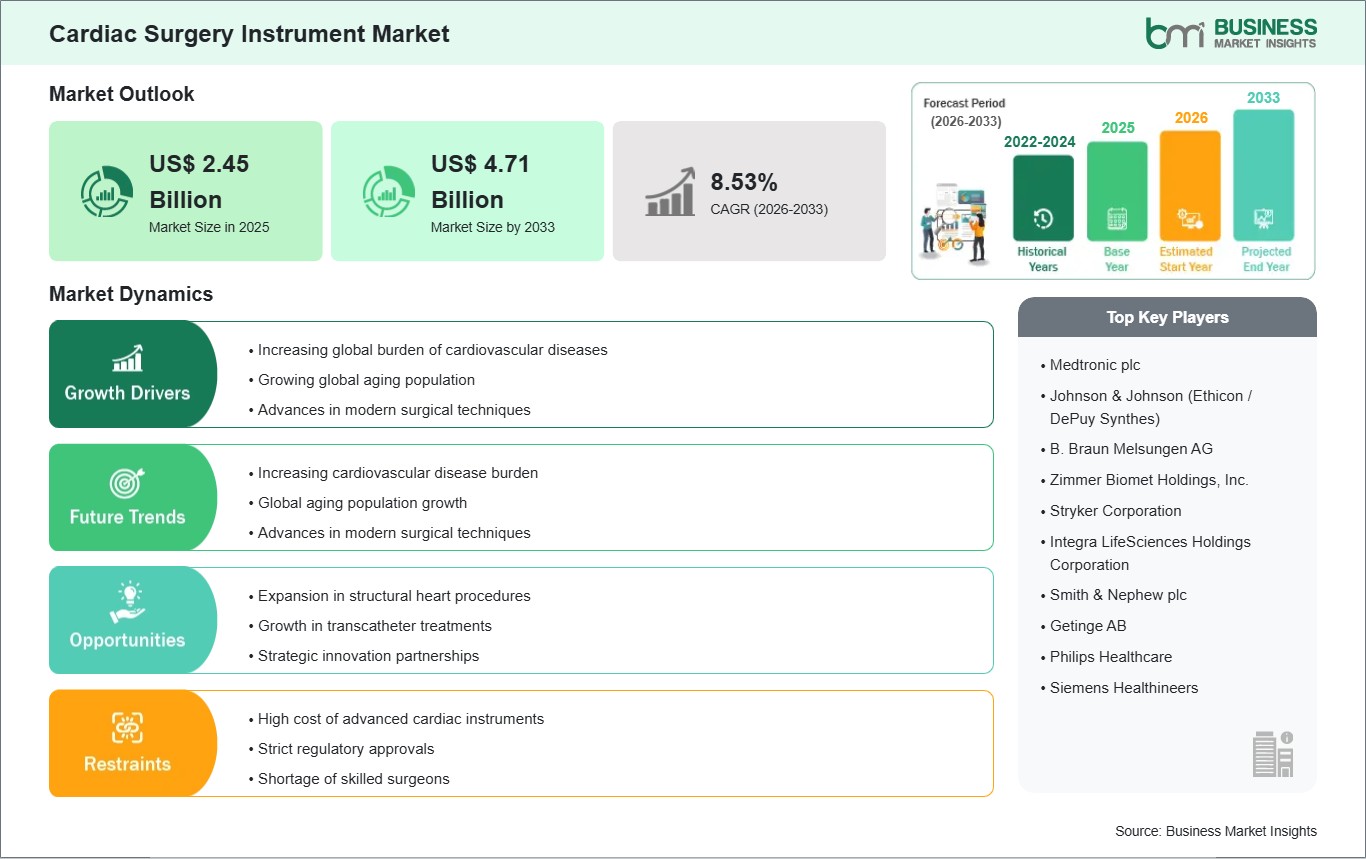
The global market for cardiac surgery instruments is experiencing consistent growth because of three main factors which are the growing number of cardiovascular disease (CVD) cases, the development of new surgical technologies, and the increasing number of elderly people throughout the world. The worldwide death rate from cardiovascular disorders makes these conditions the primary cause of death which leads to more patients requiring coronary artery bypass grafting (CABG) and valve repair and replacement and arrhythmia surgeries. The operating room needs high-precision surgical instruments to perform complex cardiac procedures which have become more common through their expansion.
The market has changed because minimally invasive techniques and robotic-assisted cardiac surgery have created demand for instruments which need special design and ergonomic features and advanced technological capabilities. North America leads the market because of its comprehensive healthcare system and significant healthcare spending and its fast adoption of new surgical technologies. Europe ranks second to North America because of its increasing number of cardiac surgeries and its effective regulatory systems. The Asia Pacific region is developing into a fast-growing market because of better healthcare facilities and increased public knowledge about cardiovascular diseases and the growing availability of modern medical treatments. The market will continue to grow because technological progress and rising surgical needs and worldwide initiatives to enhance cardiovascular care results.
Segment Analysis
Cardiac Surgery Instrument Market Segmentation
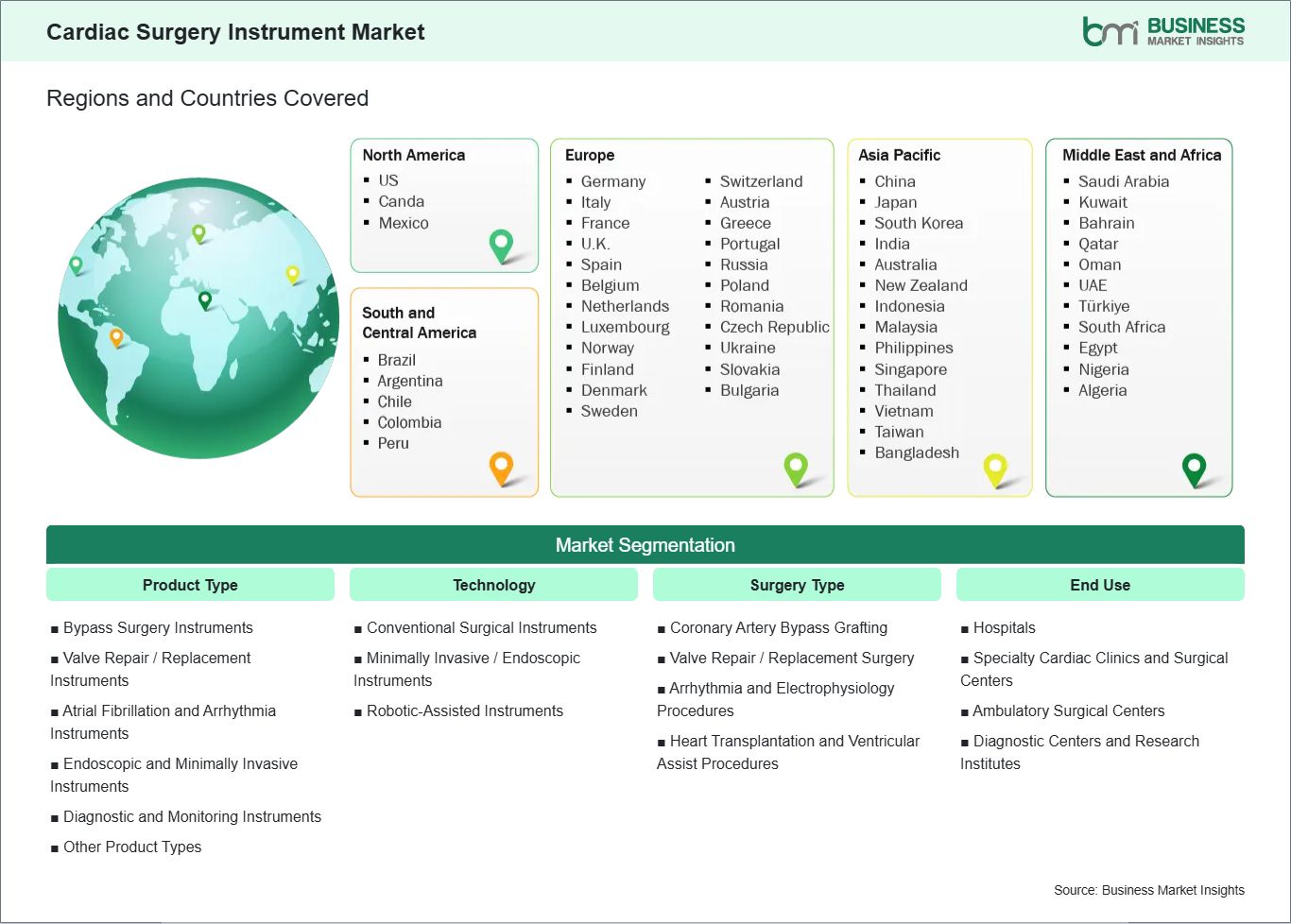
Key segments that contributed to the derivation of the Cardiac Surgery Instruments market analysis are product type, technology, surgery type, and end user.
- By product type, the cardiac surgery instruments market is segmented into bypass surgery instruments, valve repair / replacement instruments, atrial fibrillation and arrhythmia instruments, endoscopic and minimally invasive instruments, diagnostic and monitoring instruments, other cardiac surgical tools. The bypass surgery instruments segment dominated the market in 2025.
- By technology, the market is segmented conventional surgical instruments, minimally invasive / endoscopic instruments, robotic-assisted instruments. The conventional surgical instruments segment held the largest share of the market in 2025.
- By surgery type, the market is segmented coronary artery bypass grafting (CABG), valve repair / replacement surgery, arrhythmia and electrophysiology procedures, heart transplantation and ventricular assist procedures. The coronary artery bypass grafting (CABG) segment held the largest share of the market in 2025.
- By end user, the market is segmented into hospitals, specialty cardiac clinics and surgical centers, ambulatory surgical centers (ASCs), diagnostic centers and research institutes. The hospitals segment held the largest share of the market in 2025.
Market Forces
Cardiac Surgery Instrument Market Drivers and Opportunities
Rising Global Burden of Cardiovascular Diseases
The rise in cardiovascular diseases, which include coronary artery disease and heart valve disorders and heart failure and arrhythmias, establishes the main cause for growth in the market for cardiac surgery instruments. Cardiovascular diseases remain the leading cause of mortality worldwide, largely due to aging populations, sedentary lifestyles, unhealthy diets, obesity, smoking, and rising stress levels. The increasing prevalence of these medical conditions leads to higher demand for cardiac surgical procedures, which include coronary artery bypass grafting (CABG) and valve repair and replacement and congenital heart defect corrections.
The surgical procedures need advanced surgical instruments that have special design features to achieve the best results for patients. The development of improved diagnostic methods together with better screening systems has enabled doctors to find more patients who have treatable conditions, which has resulted in higher surgical procedures. The development of advanced surgical techniques that use minimally invasive methods and robotic assistance in cardiac operations has created a need for precision surgical instruments that cause less damage to body tissues. The surgical facilities at hospitals and cardiac centers undergo continuous upgrades to support better patient outcomes through higher success rates and lower complication rates. The ongoing worldwide increase in cardiovascular disease cases functions as a fundamental market driver for the cardiac surgery instrument industry because it creates continuous growth throughout the world.
Expansion of Minimally Invasive and Structural Heart Procedures
The cardiac surgery instrument market presents a major business opportunity because of its quick growth in minimally invasive surgical techniques and structural heart treatment methods. Surgical practices have shifted during the last ten years from traditional open-heart operations to less invasive techniques which decrease hospital time and surgical damage and which help patients recover faster. Surgeons and patients now widely accept procedures which include minimally invasive valve repair and transcatheter aortic valve replacement and hybrid coronary interventions. The medical field needs to develop surgical tools which combine high accuracy and compact design for use in procedures which require small incisions and catheterization. Robotic-assisted cardiac surgery has introduced new instrument design requirements which need surgical tools to have better control and operating range and to work with imaging technologies.
Emerging economies are increasingly adopting these advanced procedures as healthcare infrastructure improves and investment in modern operating rooms grows. The market offers manufacturers who create next-generation instruments which work with both minimally invasive and robotic systems an opportunity to establish a competitive edge. The development of skills and technology adoption in healthcare institutions receives support through training programs which device manufacturers create for their partnerships with these institutions. The market offers a major growth opportunity through the increasing demand for minimally invasive and structural heart interventions which help healthcare systems achieve better patient results with lower operational costs.
Size and Share Analysis
Cardiac Surgery Instrument Market Size and Share Analysis
By product type, the cardiac surgery instruments market is segmented into bypass surgery instruments, valve repair / replacement instruments, atrial fibrillation and arrhythmia instruments, endoscopic and minimally invasive instruments, diagnostic and monitoring instruments, other cardiac surgical tools. The bypass surgery instruments segment dominated the market in 2025. The segmental growth is driven by the high global volume of coronary artery bypass grafting (CABG) procedures.
By technology, the market is segmented into conventional surgical instruments, minimally invasive / endoscopic instruments, robotic-assisted instruments. The conventional surgical instruments segment held the largest share of the market in 2025. The segmental growth is driven as they remain the standard of care across most cardiac surgeries worldwide.
By surgery type, the market is segmented into coronary artery bypass grafting (CABG), valve repair / replacement surgery, arrhythmia and electrophysiology procedures, heart transplantation and ventricular assist procedures. The coronary artery bypass grafting (CABG) segment held the largest share of the market in 2025. The segmental growth is driven by the high prevalence of coronary artery disease globally.
By end user, the market is segmented into hospitals, specialty cardiac clinics and surgical centers, ambulatory surgical centers (ASCs), diagnostic centers and research institutes. The hospitals segment held the largest share of the market in 2025. Hospitals has advanced surgical infrastructure, availability of skilled cardiac surgeons, and high procedural volumes.
Report Coverage
Cardiac Surgery Instrument Market Report Coverage and Deliverables
The "Cardiac Surgery Instruments Market Size and Forecast (2022–2033)" report provides a detailed analysis of the market covering below areas:
- Cardiac Surgery Instruments market size and forecast at global, regional, and country levels for all the key market segments covered under the scope
- Cardiac Surgery Instruments market trends, as well as market dynamics such as drivers, restraints, and key opportunities
- Cardiac Surgery Instruments market analysis covering key market trends, global and regional framework, major players, regulations, and recent market developments
- Industry landscape and competition analysis covering market concentration, heat map analysis, prominent players, and recent developments for the Cardiac Surgery Instruments market
- Detailed company profiles, including SWOT analysis
Geographic Insights
Cardiac Surgery Instrument Market Geographic Insights
The geographical scope of the Cardiac Surgery Instruments market report is divided into five regions: North America, Asia Pacific, Europe, Middle East & Africa, and South & Central America. The Cardiac Surgery Instruments market in Asia Pacific is expected to grow significantly during the forecast period.
The Asia-Pacific Cardiac Surgery Instruments market is segmented into China, Japan, South Korea, India, Australia, New Zealand, Indonesia, Malaysia, the Philippines, Singapore, Thailand, Vietnam, Taiwan, Bangladesh, and the Rest of Asia. The Asia Pacific cardiac surgery instrument market is witnessing rapid growth because cardiovascular diseases occur more frequently and healthcare infrastructure develops better and people obtain more advanced surgical technologies. The countries of China India Japan and South Korea currently face increasing rates of coronary artery disease and heart valve disorders and congenital heart defects because their inhabitants grow older and their people adopt new lifestyles and their cities expand.
The increase in demand for cardiac surgical procedures which includes coronary artery bypass grafting CABG and valve repair and replacement and arrhythmia interventions has created a higher requirement for surgical instruments which doctors need during these procedures. The region needs precision-engineered instruments which doctors use in minimally invasive and robotic-assisted cardiac surgeries to create smaller incisions and decrease tissue damage and achieve better surgical results. The expansion of private hospitals together with specialty cardiac clinics and medical tourism centers provides better surgical services to local residents and international patients which helps the market grow. Cardiovascular healthcare improvement initiatives from the government combined with surgeon training program funding enable healthcare facilities to perform more procedures while using advanced medical devices. The Asia Pacific market will experience fast growth because developing countries face cost constraints and regulatory issues which create challenges but infectious diseases increase and healthcare technology develops and medical facilities become more available.
Industry Activity
Recent Developments
The Cardiac Surgery Instruments market is evaluated by gathering qualitative and quantitative data post primary and secondary research, which includes important corporate publications, association data, and databases. A few of the key developments in the cardiac surgery instruments market are:
- In October 2025, Medtronic plc launched the Avalus Ultra Bioprosthesis valve, its next-generation surgical aortic heart valve, in India. The Avalus Ultra valve was specifically designed to offer ease of use at implant and provides a durable circular foundation and reliable performance for future transcatheter aortic valve in surgical aortic valves (TAV-in-SAV) reinterventions to support patient lifetime management.
- In March 2025, Meril launched its latest range of surgical products for cardiovascular procedures, reinforcing its commitment to innovation and clinical excellence. This new portfolio is designed to enhance surgical precision and improve patient safety with cutting-edge solutions.
Trust & Transparency
Research Methodology
The market analysis combines proprietary research with secondary data from government agencies, company disclosures, regulatory filings, industry databases and expert interviews. Market estimates are validated through data triangulation, cross-market benchmarking and analyst
review.
View Full Research Methodology
Key Sources Referred:
World Bank – Global Trade Indicators World Trade Organization (WTO) International Monetary Fund (IMF) International Trade Administration (ITA) Company website Company annual reports Company investor presentations