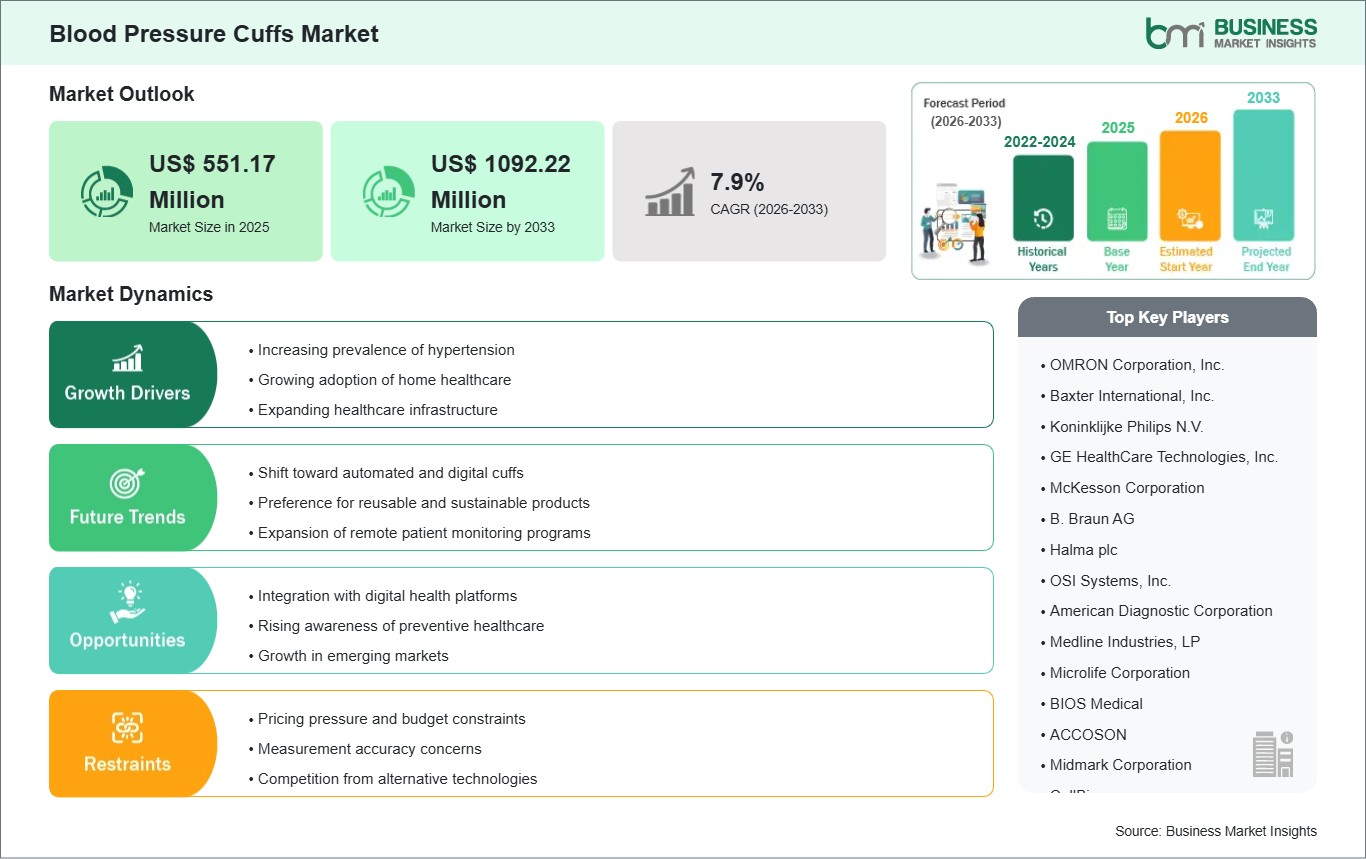
Rising prevalence of hypertension
The very fast rise in the number of people suffering from high blood pressure all over the world has become an important factor pushing the blood pressure cuffs market positively. Due to the awareness of cardiovascular health increasing and the early diagnosis being highlighted, accurate blood pressure monitoring is becoming the mainstay for doctors and patients alike, which makes cuffs an integral part of medical care today.
To illustrate, global health organizations estimate that more than one billion adults are suffering from hypertension and that the number of patients will keep growing due to demographic changes, lack of physical activity, overweight, bad nutrition, etc. Increases in the number of monitoring devices are being facilitated by hospitals, clinics, homecare settings, and community health programs. The togetherness of the multitude of sprung up hypertension cases directly drives the blood pressure cuffs market up, because the demand for monitoring solutions that are reliable, accessible, and affordable continues to grow every day in line with the preventive care and clinical management goals that are set globally.
The most important healthcare providers, diagnostic centers, and homecare service companies not only have expanded their services geographically but also made a huge impact on the monitoring practices by encouraging the routine and self-measurement of blood pressure. Blood pressure cuffs that are simple, accurate and can be used in different places are now very well positioned to cater to these changing healthcare needs.
Cuffs provide rapid, non-invasive measurements unlike more complicated diagnostic tools, which is a big advantage for those programs that are dealing with the management of the disease by using frequent and consistent monitoring as their main strategy.
Expansion of home healthcare
The ongoing home healthcare expansion has become a major factor in the growth of the blood pressure cuffs market. As healthcare systems transition more and more to patient-centered and home-based care models, there is an increasing demand for reliable and easy-to-use monitoring devices that allow patients to take care of chronic diseases outside the traditional clinical setting. Blood pressure cuffs are becoming an important factor in this transition.
The last few years have witnessed an increase in healthcare costs, hospital capacity limitations, and the rise of telehealth that together have sped up the adoption of home monitoring solutions. Blood pressure cuffs are at the forefront of these changes as they are mostly used for the management of chronic diseases, post-treatment follow-ups, and preventive care, offering both convenience and continuity of care. These devices are most often utilized by senior citizens and people with long-term conditions, which further emphasizes the need for reliable and easy-to-use monitoring devices.
Moreover, healthcare professionals are still incorporating remote patient monitoring in their care routes to enhance results and lessen hospital readmissions. This transition frequently requires blood pressure cuffs that are capable of giving regular, precise measurements and even transmitting data digitally in some cases. As homecare practices are expanding and preventive healthcare becoming more important, the need for blood pressure cuffs is predicted to rise gradually and consistently