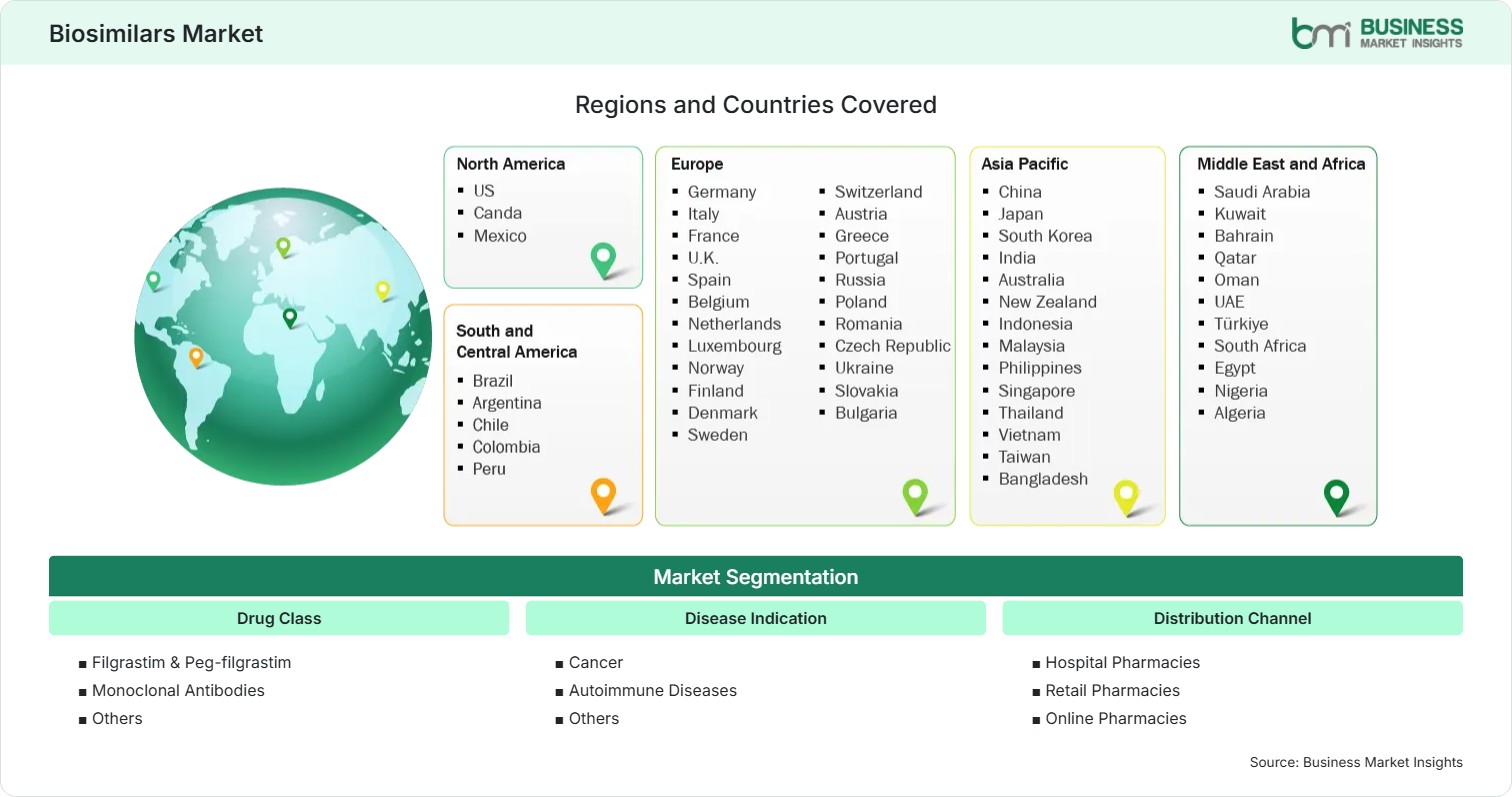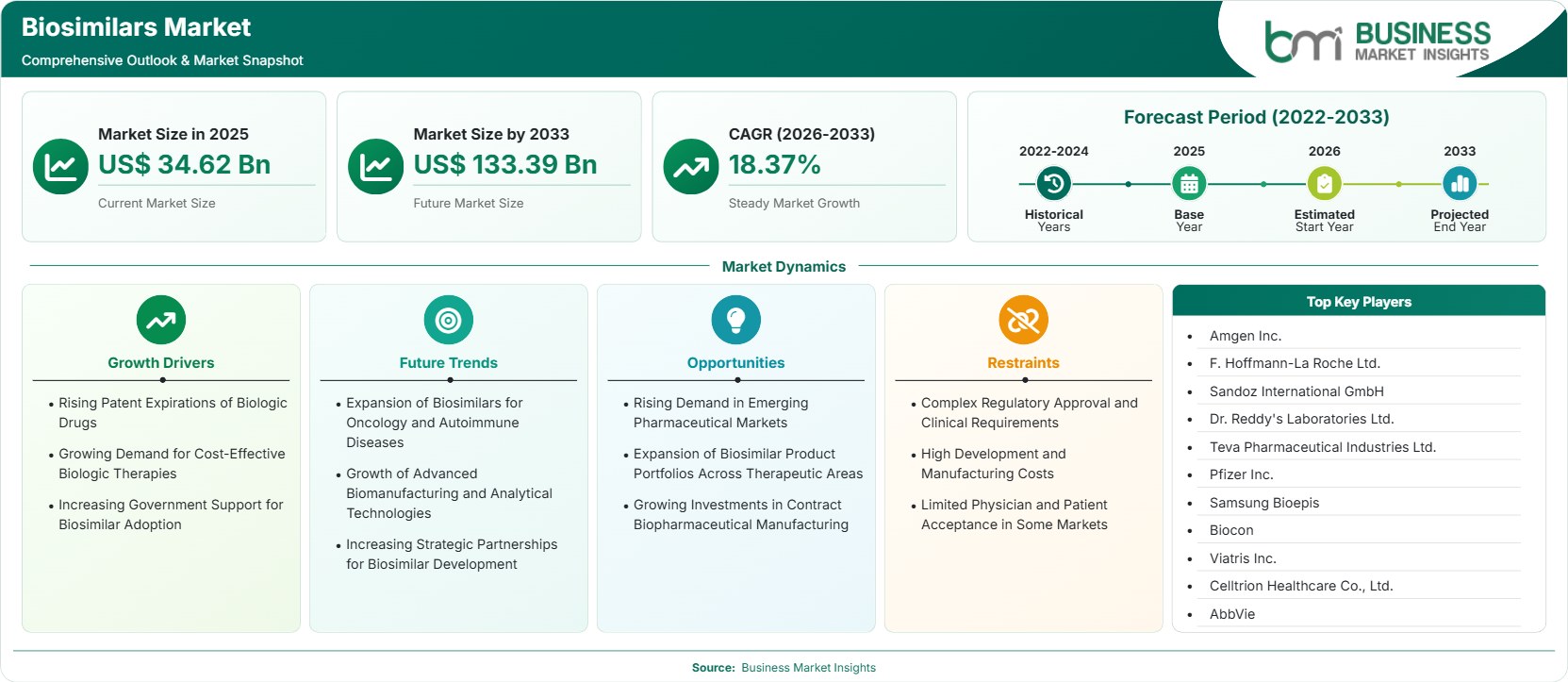
Biosimilars Market Regional Highlights
North America Biosimilars Market
North America accounts for 36%–39% Biosimilars Market share in 2025 and is projected to grow at a CAGR of 17.8%–18.5% through 2033. The region benefits from strong regulatory support, increasing healthcare cost-control initiatives, expanding acceptance of biosimilar therapies, and growing biologics utilization. Healthcare providers and payers are increasingly encouraging biosimilar adoption to improve treatment accessibility and reduce expenditure.
- Healthcare systems continue promoting biosimilars as cost-effective alternatives to branded biologics.
- Increasing physician confidence and patient awareness are supporting stronger adoption rates.
- Oncology and autoimmune disease therapies remain major areas of biosimilar utilization.
- Regulatory support continues improving market accessibility for manufacturers.
- Healthcare cost optimization programs are encouraging broader biosimilar deployment.
- Expanding biosimilar product portfolios continue strengthening market growth.
US Biosimilars Market
The United States contributes approximately 88%–92% of North American revenue and is expected to register a CAGR of 18.0%–18.7% through 2033. The country remains the largest market due to rising biologic drug expenditure, increasing biosimilar approvals, and growing payer support for lower-cost therapeutic alternatives.
- Healthcare providers are increasingly incorporating biosimilars into treatment protocols. Growing clinical confidence is supporting wider physician adoption across multiple therapeutic areas.
- Expanding insurance coverage is improving patient access to biosimilar products. Favorable reimbursement policies are reducing financial barriers and encouraging broader utilization.
- Oncology-focused biosimilars continue driving significant market demand. Rising cancer prevalence and affordable treatment options are supporting strong adoption.
- Competitive pricing strategies are encouraging wider adoption. Lower-cost alternatives help reduce healthcare expenditure while improving accessibility.
- Continuous product launches are strengthening market development. New biosimilar approvals and commercialization efforts continue expanding product availability and market competition.
Europe Biosimilars Market
Europe represents 24%–27% of global revenue in 2025 and is anticipated to expand at a CAGR of 18.2%–18.9% through 2033. Strong regulatory experience, established biosimilar frameworks, and supportive reimbursement policies continue supporting regional growth. Germany remains the leading market while Poland demonstrates stronger growth momentum.
- Germany continues leading regional demand through strong biosimilar adoption and healthcare policy support.
- Poland is among the fastest-growing markets and is estimated to register a CAGR of 19.1%–19.8% during the forecast period, supported by healthcare modernization and increasing biologics utilization.
- Governments continue promoting affordable biologic treatment options.
- Biosimilar penetration continues increasing across hospital and specialty care settings.
- Expanding treatment access remains a key market driver.
- Oncology and immunology applications continue supporting demand growth.
Asia Pacific Biosimilars Market
Asia Pacific accounts for 28%–31% of global revenue in 2025 and is expected to achieve the fastest CAGR of 19.4%–20.1% through 2033. Increasing healthcare expenditure, growing chronic disease prevalence, expanding biopharmaceutical manufacturing capabilities, and rising access to advanced therapies continue supporting strong regional growth.
- China remains the largest regional market due to growing biosimilar development and healthcare expansion.
- India is projected to achieve approximately 20.3%–21.0% CAGR, supported by strong pharmaceutical manufacturing capabilities and increasing biosimilar adoption.
- Governments are supporting affordable biologic treatment access. Favorable healthcare policies and reimbursement initiatives are encouraging biosimilar adoption.
- Domestic manufacturers continue expanding biosimilar production capacity. Increased manufacturing investments are improving product availability and supply reliability.
- Rising cancer incidence is increasing demand for cost-effective therapies. Affordable biosimilars are supporting broader access to oncology treatments.
- Growing healthcare infrastructure investments continue strengthening market opportunities. Expanding healthcare facilities and improved access to advanced therapies are supporting long-term biosimilars market growth.
Rest of World Biosimilars Market
Rest of World accounts for 8%–11% of global revenue in 2025 and is projected to expand at a CAGR of 16.9%–17.6% through 2033. Increasing healthcare access, growing awareness of biologic therapies, and expanding pharmaceutical distribution networks are supporting market growth across Latin America, the Middle East, and Africa.
- Brazil continues generating demand through healthcare expansion and increasing biologic therapy adoption. Expanding healthcare services and greater use of biologic medicines are driving biosimilar demand across the country.
- The UAE is witnessing rising utilization of advanced pharmaceutical treatments and biosimilars. Growing investments in healthcare and access to innovative therapies are supporting market expansion.
- Saudi Arabia is expected to achieve approximately 17.8%–18.5% CAGR through 2033, supported by healthcare modernization and pharmaceutical sector investments. Government initiatives and infrastructure development are accelerating biosimilar adoption.
- Access to biologic treatments is improving across emerging markets. Better healthcare availability is expanding patient access to affordable therapies.
- Healthcare cost-containment strategies continue supporting biosimilar adoption. Payers and healthcare systems increasingly favor cost-effective biologic alternatives.
- Expanding specialty care infrastructure is creating long-term growth opportunities. Investments in hospitals and specialty treatment centers continue strengthening market development.