Market Summary
Executive Summary and Global Market Analysis
A biosensor is an analytical device that combines a biological recognition element (bioreceptor, such as an enzyme, antibody, or nucleic acid) with a physicochemical transducer (which converts the biological signal into a measurable electronic signal). They are used to detect and quantify the presence or concentration of a specific biological or chemical substance (analyte).
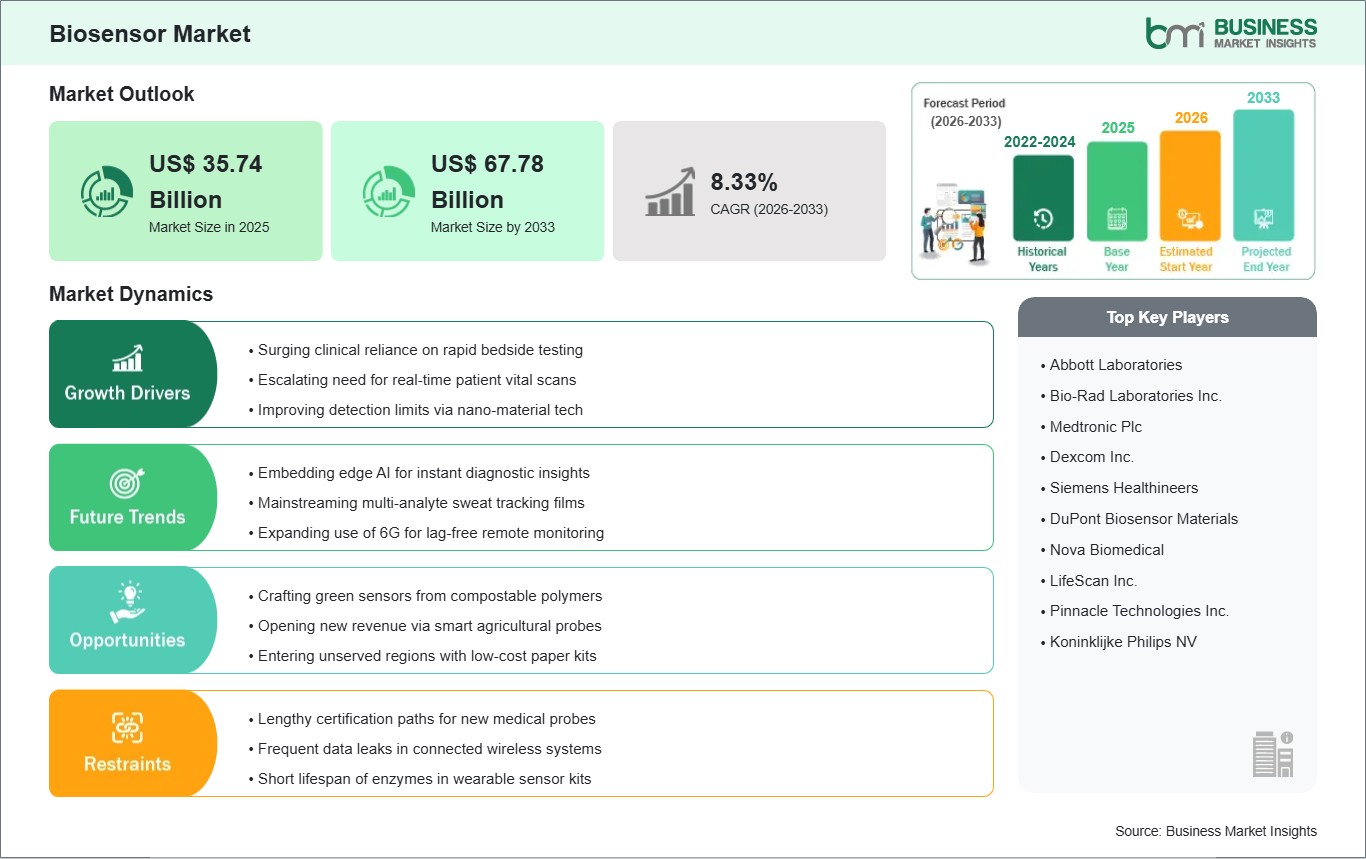
The Biosensor Market is experiencing robust growth, driven primarily by the rising global prevalence of chronic diseases like diabetes and cardiovascular disorders, which necessitate continuous or frequent monitoring. Furthermore, the shift towards Point-of-Care (POC) diagnostics and the rapid adoption of wearable devices for personal health tracking are propelling market expansion by making diagnostic capabilities more accessible and user-friendly outside of traditional laboratory settings. Continuous technological advancements in miniaturization and integration with digital platforms (IoT, AI) are key factors in sustained market momentum.
Market Forces
Biosensor Market Drivers and Opportunities
Growing Demand for Point-of-Care (POC) Diagnostic Solutions
The primary factor propelling the Biosensor Market is the surging global demand for Point-of-Care (POC) diagnostic solutions. POC testing involves performing diagnostic tests at or near the site of patient care, which significantly reduces the turnaround time for results compared to sending samples to a central laboratory. Biosensors, particularly electrochemical biosensors used in devices like continuous glucose monitors (CGM) and handheld infectious disease testers, are the core technology enabling this shift. The convenience, rapidity, and ease of use offered by these compact, often disposable devices are critical for effective management of chronic diseases and rapid screening for infectious outbreaks. This driver is further amplified by the push to decentralize healthcare, improve patient outcomes through timely intervention, and reduce overall healthcare expenditure associated with complex laboratory workflows.
Integration of Artificial Intelligence and Internet of Things for Real-Time Analytics
A significant opportunity for market players lies in the seamless integration of biosensors with Artificial Intelligence (AI) and Internet of Things (IoT) platforms. This convergence transforms biosensing devices from simple measurement tools into sophisticated, predictive, and real-time health monitoring systems. IoT-enabled biosensors in wearable patches or smart devices can collect continuous streams of physiological data (e.g., glucose, heart rate, hydration) and transmit it wirelessly to a cloud-based system. AI algorithms then analyze this vast amount of data to detect subtle patterns, predict adverse health events before they occur (predictive analytics), and provide personalized health recommendations. This integration is crucial for the future of personalized medicine, remote patient monitoring (RPM), and large-scale public health surveillance, expanding the value proposition of biosensors far beyond their traditional diagnostic utility.
Size and Share Analysis
Biosensor Market Size and Share Analysis
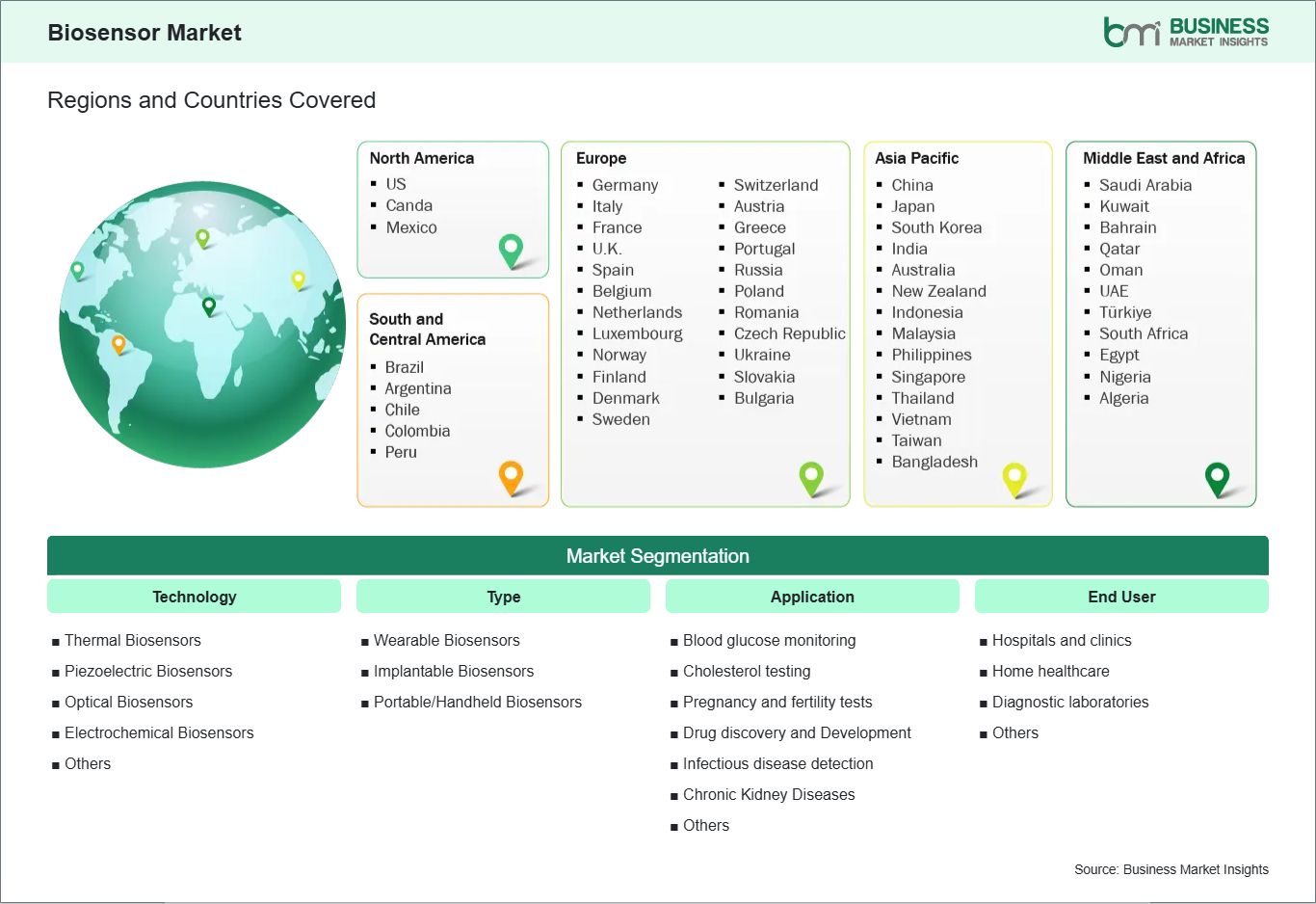
The biosensor market demonstrates steady growth, with size and share analysis revealing evolving trends and competitive positioning among key players. The report further examines subsegments categorized within technology, type, application, and end user, offering insights into their contribution to overall market performance.
For instance, the Electrochemical subsegment is primarily driven by the widespread adoption of electrochemical glucose sensors in blood glucose meters and Continuous Glucose Monitoring (CGM) devices for diabetes management. The simplicity, low cost, and high sensitivity of electrochemical systems have cemented their largest market share. The Wearable segment, driven by applications like blood glucose testing and infectious disease diagnosis, holds the largest share of the market. By end user, Home Healthcare Diagnostics is the leading subsegment, reflecting the global trend toward decentralized and patient-centric monitoring.
Report Coverage
Biosensor Market Report Coverage and Deliverables
The "Biosensor Market Size and Forecast (2022 - 2033)" report provides a detailed analysis of the market covering below areas:
- Biosensor Market size and forecast at global, regional, and country levels for all the key market segments covered under the scope
- Biosensor Market trends, as well as market dynamics such as drivers, restraints, and key opportunities
- Biosensor Market analysis covering key market trends, global and regional framework, major players, regulations, and recent market developments
- Industry landscape and competition analysis covering market concentration, heat map analysis, prominent players, and recent developments for the Biosensor Market
- Detailed company profiles, including SWOT analysis
Geographic Insights
Biosensor Market Geographic Insights
The geographical scope of the Biosensor Market report is divided into five regions: North America, Asia Pacific, Europe, Middle East & Africa, and South & Central America.
North America holding the significant share, owing to high healthcare expenditure, the presence of major key market players, a high prevalence of chronic diseases, and a swift adoption of advanced, technologically integrated monitoring solutions like CGM and wearable biosensors.
Asia Pacific is projected to be the fastest-growing region, driven by rising awareness of chronic disease management, rapidly improving healthcare infrastructure, a large patient base, and increasing government investments in diagnostics and preventive healthcare technologies.
Industry Activity
Recent Developments
The Biosensor Market is evaluated by gathering qualitative and quantitative data post primary and secondary research, which includes important corporate publications, association data, and databases. A few of the key developments in the Biosensor Market are:
- In December 2025, Medtronic, a global leader in healthcare technology, announced the broad U.S. commercial launch of the MiniMed™ 780G system integrated with the Instinct sensor, made by Abbott and designed exclusively for MiniMed™ systems. Following U.S. FDA clearance of the system earlier this year to enable integration with the Instinct sensor, the system is now shipping to customers across the U.S., marking a major milestone in diabetes technology and delivering a smart, seamless way to manage diabetes.
- In August 2025, Abbott, the global healthcare company, announced the launch of the FreeStyle Libre 2 Plus sensor, Abbott’s latest addition to the FreeStyle Libre sensor portfolio. This innovative device offers automatic glucose readings every minute straight to the phone, empowering people with diabetes to manage their condition with confidence, precision, and ease.
Trust & Transparency
Research Methodology
The market analysis combines proprietary research with secondary data from government agencies, company disclosures, regulatory filings, industry databases and expert interviews. Market estimates are validated through data triangulation, cross-market benchmarking and analyst
review.
View Full Research Methodology
Key Sources Referred:
World Bank - Global Trade IndicatorsWorld Trade Organization (WTO)International Monetary Fund (IMF)International Trade Administration (ITA)Company WebsitesCompany Annual ReportsCompany Investor Presentations