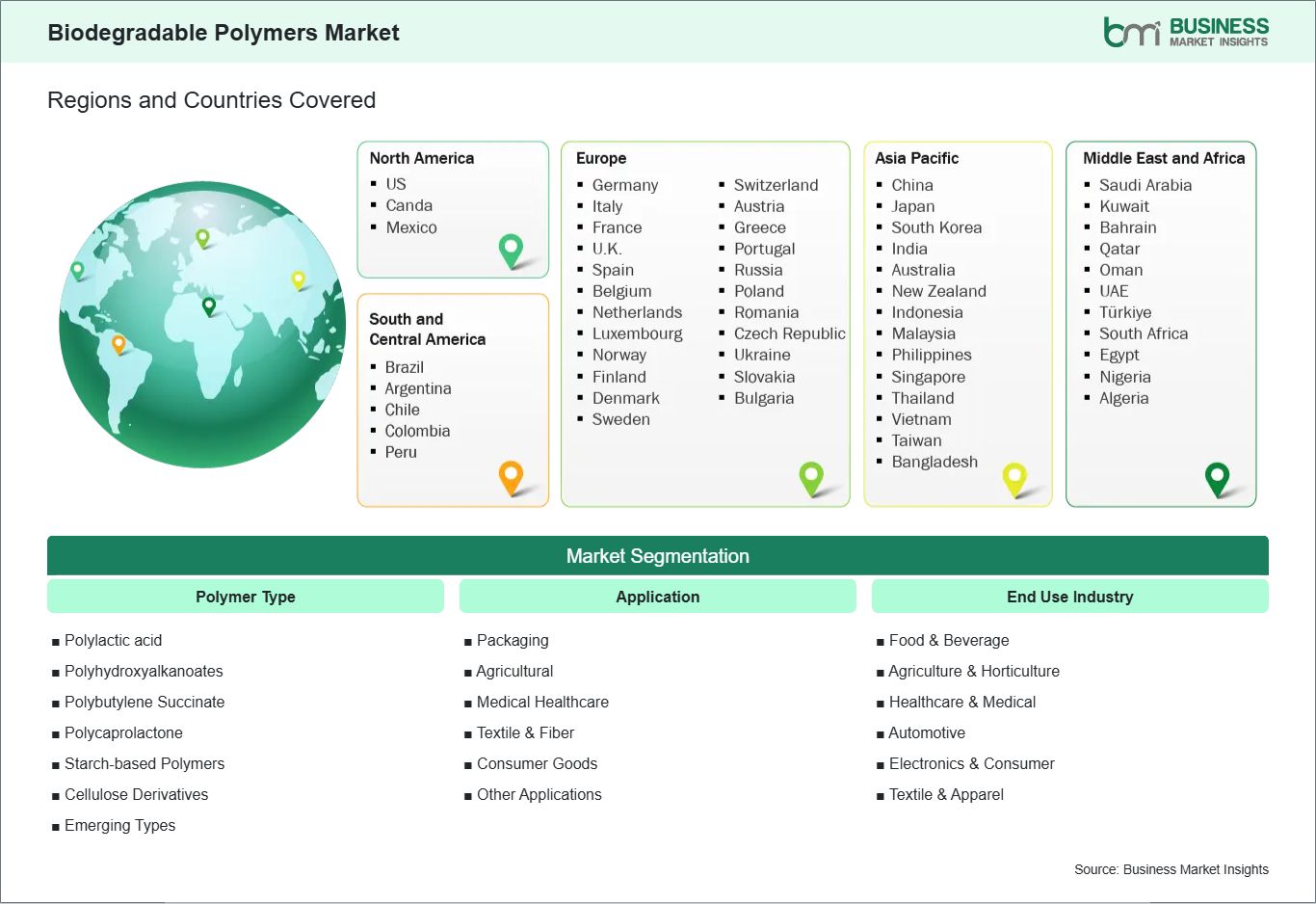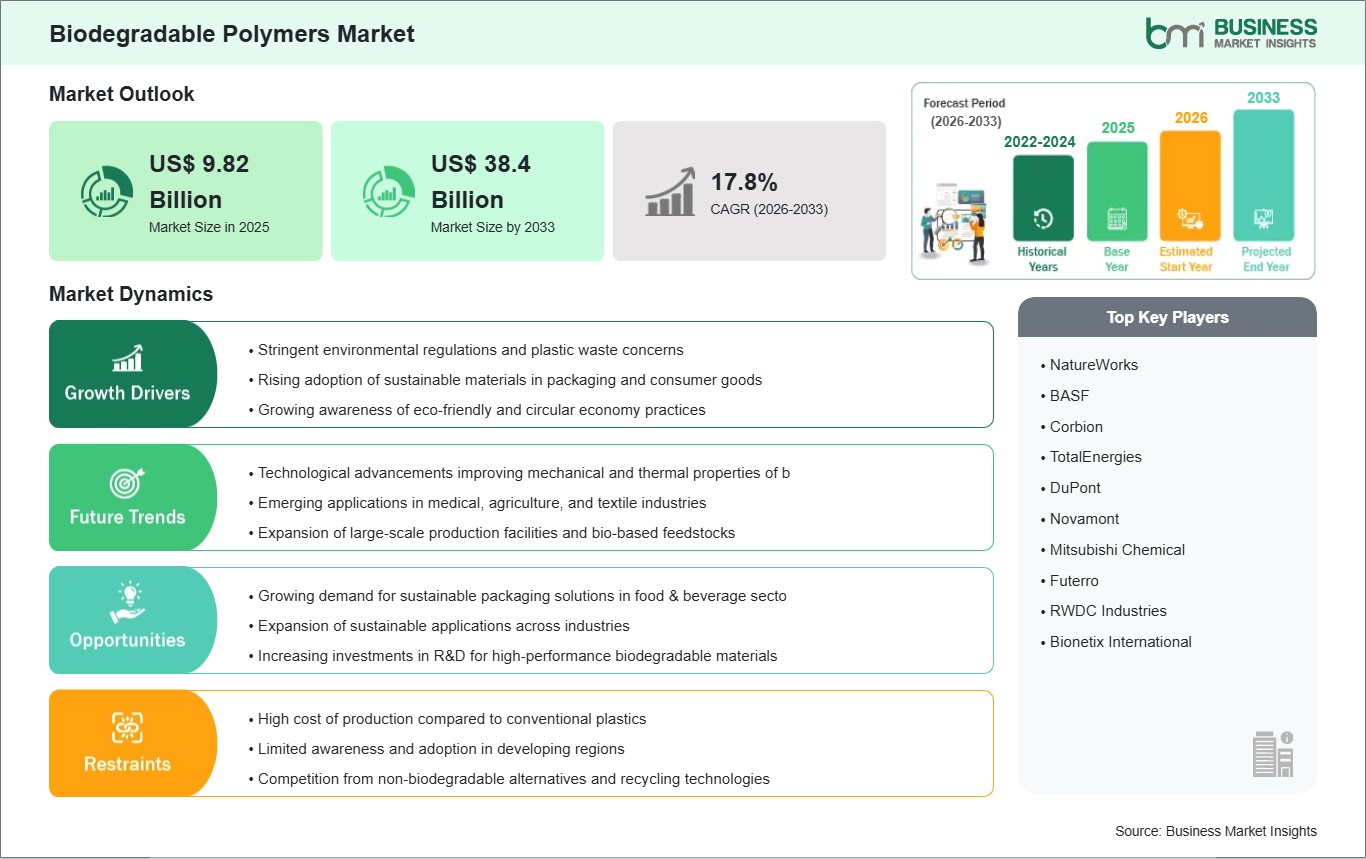
Biodegradable Polymers Market Regional Highlights
North America Biodegradable Polymers Market
North America represents an estimated 18.7% share in 2025, with a CAGR of 16.3% during 2026–2033. The Biodegradable Polymers Market is supported by foodservice packaging, state-level restrictions, sustainable procurement, agricultural films, and specialty materials. The U.S. dominates regional consumption, while Canada contributes through sustainable packaging adoption. Domestic compounding and certification capabilities support commercialization, although inconsistent composting infrastructure continues to influence product selection and disposal strategies across applications.
- Packaging demand is driven by foodservice conversion, flexible films, bags, coatings, and organic waste management products, with purchasers demanding both performance criteria and genuine environmental certification.
- Regional variations in policy lead to local purchase opportunities, driving suppliers to produce certified products that meet various composting, labeling, food contact, and disposal needs.
- Canada offers extra opportunities in sustainable packaging programs, commitments made by retailers, organics collection, and products that work well within changing waste management systems.
- Specialty uses can provide better margins when biodegradability, polymer functionality, processability, and performance justify a premium over traditional plastics.
US Biodegradable Polymers Market
The U.S. represents an estimated 89.8% of North American demand, with a CAGR of 16.0% during 2026–2033. Foodservice, flexible packaging, agriculture, consumer products, and specialty compounds form the principal opportunity areas. The market is still divided through the state-by-state criteria, which makes certification and material performance statements significant. The Environmental Protection Agency draws the line between biodegradability and compostability, reiterating the need for clear material performance and proper conditions of disposal.
- Brand owners will be requesting more material data, certification, and disposal instructions prior to using biodegradable packaging in larger procurement programs and national product lines.
- Agricultural and specialty sectors could accelerate their implementation based on benefits of soil biodegradation, controlled biodegradation, or lower persistence over traditional materials.
- Domestic converters and compounders will take advantage of the existing plastics infrastructure and can introduce selected biodegradable grades into applications without replacing all their equipment.
Europe Biodegradable Polymers Market
Europe represents an estimated 28.6% of Biodegradable Polymers Market share in 2025, with a CAGR of 10.4% during 2026–2033. Germany, Italy, France, and the Netherlands remain leading markets, while Certification, organic-waste infrastructure, packaging regulation, and established.
- Germany gains advantage through advanced certification, waste management facilities, converters, and high demand for certified compostable packaging and agricultural uses.
- Italy combines polymer conversion expertise with strong packaging manufacturing capabilities, supporting films, bags, foodservice products, coatings, and agricultural materials.
- France is an attractive market due to the prospects of further growth because of packaging needs and commitments of retailers to environmental issues, as well as demand for low impact materials.
- The Netherlands provides opportunities through advanced logistics, circular-economy initiatives, packaging conversion capabilities, and access to major European customers.
Asia Pacific Biodegradable Polymers Market
Asia Pacific represents an estimated 41.5% of Biodegradable Polymers Market share in 2025, expanding at a CAGR of 22.4% during 2026–2033, making it the fastest-growing major region. China leads regional volume, while India, Thailand, Indonesia, and South Korea provide strong expansion opportunities. Feedstock availability, polymer investments, packaging consumption, and domestic conversion capacity support regional growth. European Bioplastics identifies PHA among the technologies receiving substantial additional capacity investment in Europe, reflecting broader technology development.
- China has a combination of polymer production, large packaging conversion capabilities, and growing domestic demand, which helps to develop PLA, PBAT, PBS, and PHA.
- India offers strong potential through food packaging, agricultural applications, domestic polymer capacity, and policies targeting selected single-use plastic applications.
- Thailand and Indonesia can provide renewable sources of raw material and favorable manufacturing conditions for fermentation-based materials, packaging, agriculture products, and exports.
- South Korea benefits from advanced chemical processing, biotechnology expertise, and application development for high-performance biodegradable materials.
Rest of World Biodegradable Polymers Market
Rest of World accounts for 11.3% share in 2025 and is expected to advance at a 17.4% CAGR during the forecast period. South and Central America recorded 6.5% global share in 2025 and is forecast at 20.9% CAGR through 2033, while Middle East and Africa recorded 4.9% and 13.9% CAGR, respectively. South and Central America benefit from agricultural feedstocks and packaging demand, led by Brazil and Mexico. Middle East and Africa remain smaller markets, but packaging modernization, agriculture, foodservice, and circular-economy initiatives create selective opportunities for biodegradable materials.
- Brazil offers an attractive supply environment because renewable agricultural resources, bioeconomy capabilities, and packaging manufacturing can support locally sourced biodegradable polymer value chains.
- Mexico provides a strategic conversion and export platform because established manufacturing capabilities and proximity to U.S. customers can shorten supply chains.
- Saudi Arabia and the United Arab Emirates provide specialty opportunities through circular-economy investment, packaging modernization, and advanced-material development.
- South Africa offers regional potential through packaging sustainability programs, agricultural applications, and increased attention to plastic-waste management.