Market Summary
Executive Summary and Global Market Analysis
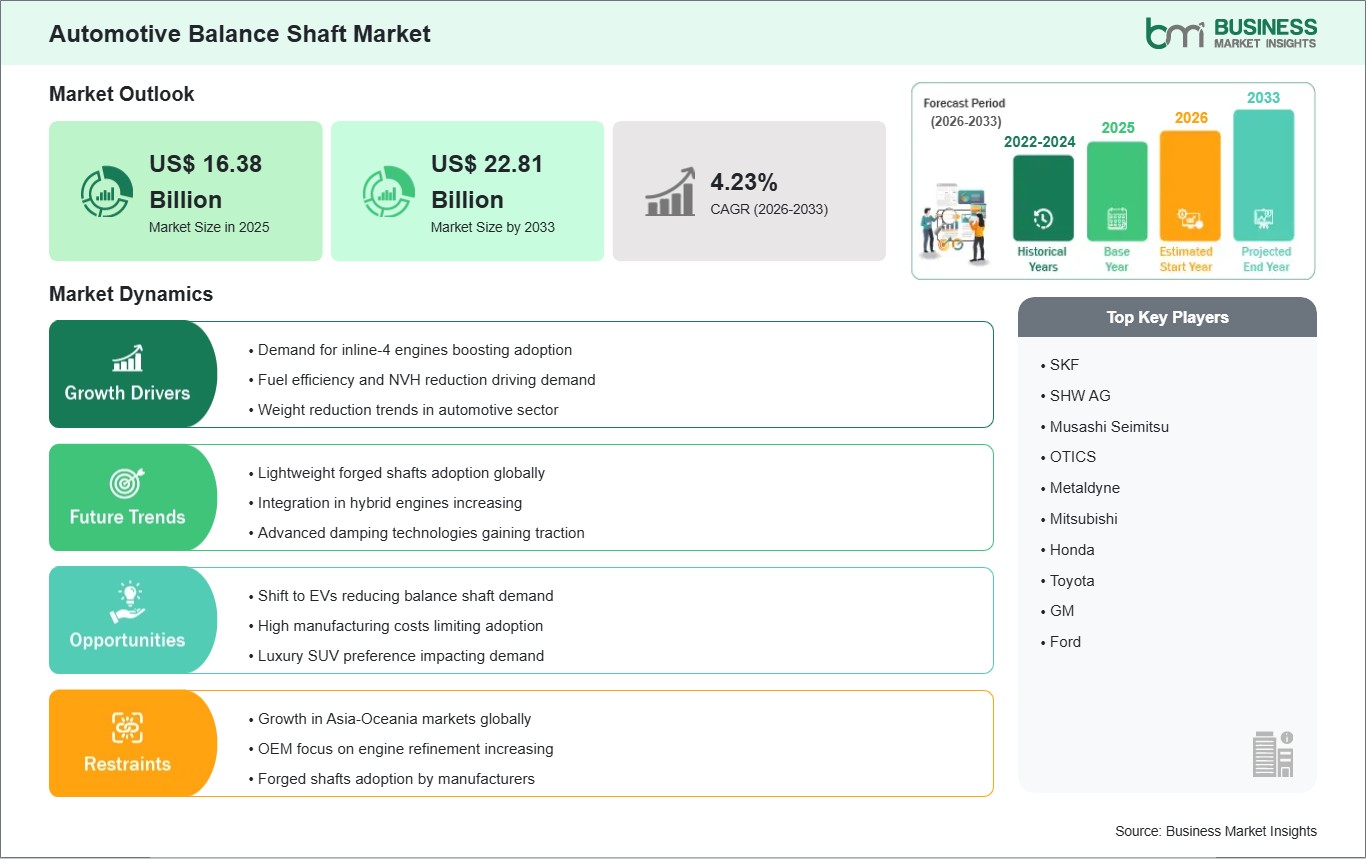
Automotive balance shafts are mechanical components used in internal combustion engines to reduce engine vibrations and improve smoothness during operation. They are commonly installed in inline and V-type engines where secondary vibrations can affect vehicle comfort and performance. These components play an important role in enhancing engine efficiency, reducing noise, and improving driving experience. The Automotive Balance Shaft market is growing as vehicle manufacturers continue to focus on engine refinement, fuel efficiency, and passenger comfort. Increasing production of passenger vehicles, demand for smoother engine performance, and advancements in engine technologies are supporting market growth. Manufacturers are also integrating lightweight materials and precision engineering techniques to improve the durability and effectiveness of balance shaft systems.
Some factors may limit market expansion. The gradual shift toward battery electric vehicles reduces dependence on conventional internal combustion engines, which may affect long-term demand for balance shaft components. High manufacturing precision requirements and fluctuations in raw material prices can increase production costs. In addition, engine downsizing trends require more complex engineering solutions, which can increase development expenses. Supply chain disruptions and evolving emission regulations may also create challenges for component manufacturers and vehicle producers.
Despite these challenges, the market is expected to maintain steady growth due to ongoing demand for internal combustion and hybrid vehicles in many regions. Opportunities are emerging from advanced manufacturing technologies, lightweight forged components, and improved balancing systems for high-efficiency engines. Hybrid vehicles continue to require refined engine performance, creating demand for sophisticated vibration control solutions. Growth in commercial vehicle production, expansion of automotive manufacturing facilities, and increasing consumer preference for quieter vehicles are expected to support the future development of the Automotive Balance Shaft market. Competition remains focused on product quality, engineering capabilities, production efficiency, and compliance with evolving automotive standards.
Segment Analysis
Automotive Balance Shaft Market Segmentation
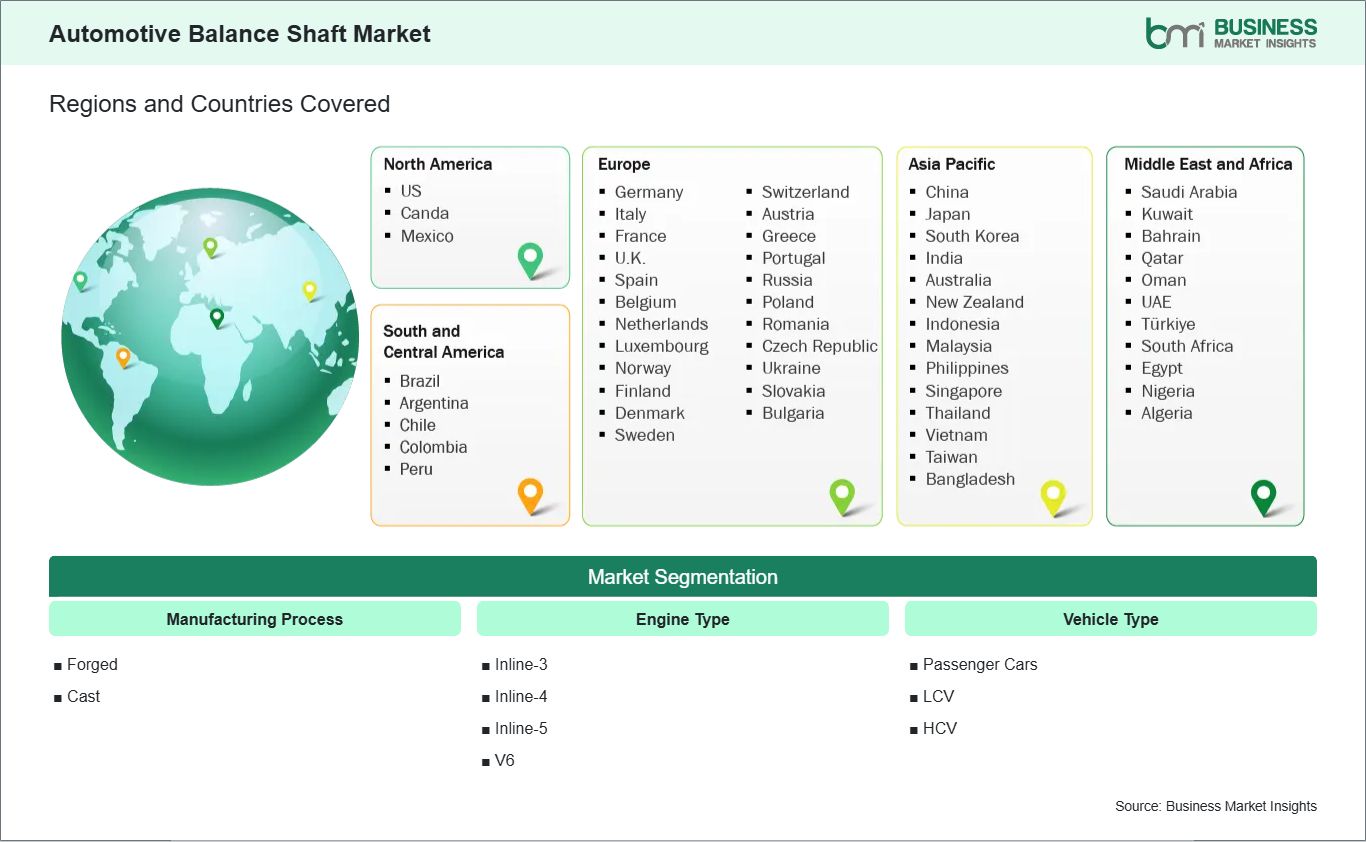
The Automotive Balance Shaft market is segmented based on manufacturing process, engine type, and vehicle type, reflecting varying performance and application requirements across the automotive industry.
By Manufacturing Process
- Forged: Offers high strength, durability, and superior performance under demanding engine conditions
- Cast: Provides cost-effective production and is widely used in standard automotive applications
By Engine Type
- Inline-3: Increasing adoption in compact and fuel-efficient vehicles
- Inline-4: Largest application segment due to widespread use across passenger vehicles
- Inline-5: Used in selected performance and specialty vehicle platforms
- V6: Supports vibration reduction and smooth operation in larger engines
By Vehicle Type
- Passenger Cars: Represents the largest demand due to high production volumes globally
- LCV: Used to improve engine refinement and operational reliability
- HCV: Supports durability and vibration control in heavy-duty applications
Market Forces
Automotive Balance Shaft Market Drivers and Opportunities
Growing Demand for Engine Refinement and Passenger Comfort
The demand for smoother, quieter, and more efficient vehicles continues to drive the Automotive Balance Shaft market. Consumers increasingly expect enhanced driving comfort, reduced cabin noise, and minimal engine vibrations across all vehicle categories. Balance shafts help manufacturers achieve these objectives by minimizing unwanted engine movements and improving overall engine stability. Automotive manufacturers are also developing smaller and more fuel-efficient engines to comply with stricter environmental standards. Engine downsizing often increases vibration levels, creating a greater need for advanced balancing solutions. Balance shafts enable these engines to deliver improved refinement without compromising performance. In commercial vehicles, vibration reduction contributes to improved durability and reduced wear on engine components.
Government regulations focused on emissions and fuel economy are encouraging the adoption of technologies that improve engine efficiency. As automakers continue investing in advanced powertrain systems, demand for precision-engineered balance shafts is expected to remain strong. The combination of comfort requirements, regulatory compliance, and evolving engine designs continues to support long-term market growth.
Hybrid Vehicles and Advanced Manufacturing Technologies
The growing adoption of hybrid vehicles presents significant opportunities for the Automotive Balance Shaft market. Hybrid powertrains combine electric motors with internal combustion engines, making smooth engine operation particularly important during engine start-stop cycles and transitions between power sources. Balance shafts help reduce vibrations and enhance the driving experience in these vehicles. Advancements in manufacturing technologies are also creating new growth opportunities. Precision forging, computer-aided engineering, and advanced machining processes enable manufacturers to produce lighter and more durable balance shaft systems. Lightweight components contribute to vehicle efficiency while maintaining structural integrity and performance.
Emerging automotive markets continue to expand vehicle production and create demand for advanced engine components. Increased investments in automotive manufacturing infrastructure support the adoption of high-quality balance shaft systems. In addition, the development of new materials and innovative balancing technologies is helping manufacturers improve efficiency and reliability. These trends position the Automotive Balance Shaft market for continued growth as the industry focuses on performance, efficiency, and sustainability.
Size and Share Analysis
Automotive Balance Shaft Market Size and Share Analysis
The Automotive Balance Shaft market size is expected to reach US$ 22.81 billion by 2033 from US$ 16.38 billion in 2025. The market is estimated to record a CAGR of 4.23% from 2026 to 2033.
By manufacturing process, forged balance shafts account for a significant share due to their superior strength, durability, and ability to withstand high engine loads. Cast balance shafts continue to be widely used in cost-sensitive vehicle segments, offering a balance between performance and manufacturing efficiency.
By engine type, inline-4 engines dominate the market owing to their extensive use in passenger vehicles worldwide and their need for vibration reduction to improve driving comfort. Inline-3 engines are witnessing increasing adoption with the growing popularity of compact and fuel-efficient vehicles, while V6 and inline-5 engines continue to generate demand in premium passenger and commercial vehicle applications.
By vehicle type, passenger cars represent the largest share of the Automotive Balance Shaft market due to high production volumes and increasing consumer demand for smoother and quieter vehicle operation. Light commercial vehicles are also contributing to market growth as manufacturers focus on enhancing engine refinement and durability. Heavy commercial vehicles maintain steady demand for balance shaft systems to support engine performance, reduce vibrations, and improve operational efficiency in demanding transportation applications.
Report Coverage
Automotive Balance Shaft Market Report Coverage and Deliverables
The "Automotive Balance Shaft Market Size and Forecast (2022-2033)" report provides a detailed analysis of the market covering below areas:
- Market size and forecast at global, regional, and country levels for all the key market segments covered under the scope
- Market trends, as well as market dynamics such as drivers, restraints, and key opportunities
- Market analysis covering key market trends, global and regional framework, major players, regulations, and recent market developments
- Industry landscape and competition analysis covering market concentration, heat map analysis, prominent players, and recent developments for the market
- Detailed company profiles, including SWOT analysis
Geographic Insights
Automotive Balance Shaft Market Geographic Insights
The Automotive Balance Shaft Market shows diverse regional adoption patterns influenced by vehicle production activities, engine technology advancements, and increasing demand for enhanced driving comfort.
North America, being a developed region, has a mature automotive manufacturing sector and a strong focus on vehicle performance and engine efficiency. The region comprises the United States and Canada, where manufacturers continue to invest in advanced powertrain technologies and vehicle refinement solutions. The region focuses on improving fuel efficiency, reducing emissions, and enhancing driving comfort. Well-established automotive supply chains, engineering expertise, and manufacturing capabilities support the steady adoption of automotive balance shaft systems across passenger cars, light commercial vehicles, and heavy-duty vehicles.
Asia Pacific is growing significantly, driven by expanding vehicle production and increasing automotive investments. The region comprises countries such as China, India, Japan, and South Korea, where rising vehicle ownership and strong manufacturing activities create significant demand for engine components. The region focuses on improving engine performance, meeting evolving emission standards, and enhancing vehicle quality. Growth in passenger vehicle production, increasing demand for commercial transportation, and ongoing investments in automotive infrastructure continue to support the adoption of balance shaft technologies across multiple vehicle categories.
Both regions are contributing significantly to the growth of the Automotive Balance Shaft Market, focusing on automotive manufacturing expansion, technological advancement, and increasing demand for efficient vibration control solutions.
Industry Activity
Recent Developments
The Automotive Balance Shaft Market is analyzed using a mix of primary and secondary research sources, including corporate publications, industry associations, and verified databases. This approach ensures accurate tracking of innovation trends and strategic developments influencing the market.
- In May 2026, Linamar Corporation finalized the strategic acquisition of Winning BLW’s manufacturing operation in Remscheid and Penzberg, Germany. The acquisition integrates advanced warm forging, precision bevel machinery, and high-performance helical gear forging capacities into Linamar’s vertically integrated structural asset portfolio. This transaction underscores an ongoing trend where top contract tier-one suppliers are executing corporate acquisitions to secure critical forging and metallurgy infrastructure, supporting downsized, high-torque internal combustion engine (ICE) and hybrid engine components like balance shaft systems.
- In January 2025, Cummins Inc. announced a collaborative product launch introducing its new 6.7-liter turbo diesel engine for the 2026 Ram Heavy Duty vehicle fleet. Alongside the engine launch, Cummins and Stellantis confirmed an extended corporate partnership to guarantee advanced engine supply architecture through 2030. The product development highlights active powertrain collaboration between component developers and global OEMs to innovate rigid, high-performance ICE blocks that leverage advanced balancing and vibration reduction technologies to satisfy strict emission rules.
Trust & Transparency
Research Methodology
The market analysis combines proprietary research with secondary data from government agencies, company disclosures, regulatory filings, industry databases and expert interviews. Market estimates are validated through data triangulation, cross-market benchmarking and analyst
review.
View Full Research Methodology
Key Sources Referred:
World Bank - Global Trade IndicatorsWorld Trade Organization (WTO)International Monetary Fund (IMF)International Trade Administration (ITA)Company WebsitesCompany Annual ReportsCompany Investor Presentations