Market Summary
Executive Summary and Global Market Analysis
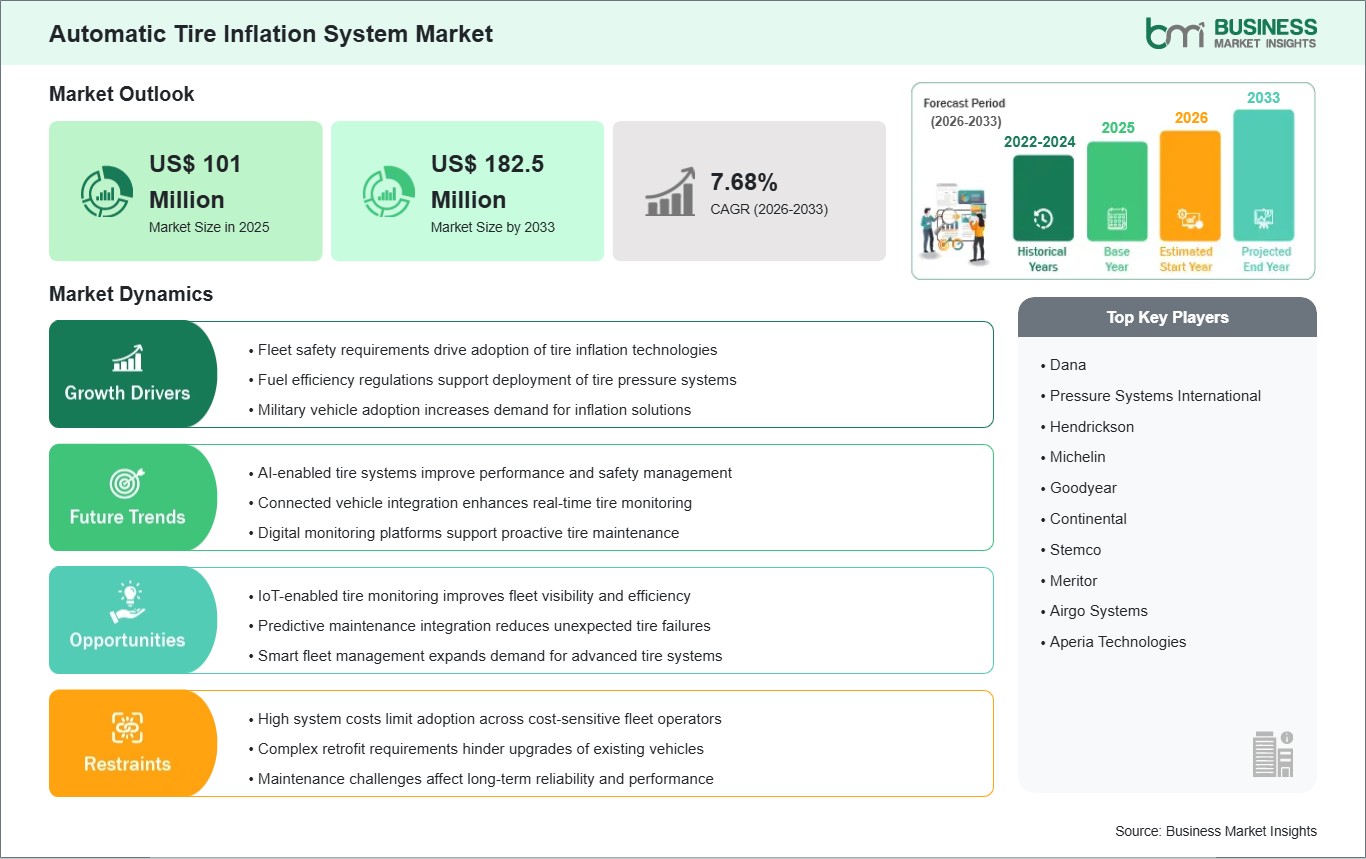
Automatic tire inflation systems are designed to continuously monitor and maintain optimal tire pressure while a vehicle is in operation. These systems help improve vehicle safety, fuel efficiency, tire lifespan, and overall operating performance. They are widely used in commercial trucks, military vehicles, and agricultural equipment where maintaining proper tire pressure is critical for vehicle reliability and performance. The Automatic Tire Inflation System market is gaining attention as fleet operators focus on reducing maintenance costs, improving operational efficiency, and complying with vehicle safety requirements. OEM integration is increasing as vehicle manufacturers seek to offer advanced safety and efficiency features, while aftermarket demand remains strong among fleet operators looking to improve vehicle uptime and reduce tire-related failures.
There are several challenges that may affect market growth. The installation cost of automatic tire inflation systems can be significant, particularly for small fleet operators and cost-sensitive end users. Integration with existing vehicle architectures may require additional modifications, increasing implementation complexity. Maintenance and servicing of system components, including air lines, sensors, and control units, can also create operational challenges. In some regions, limited awareness regarding long-term cost benefits may slow adoption. Harsh operating environments can further increase system maintenance requirements, particularly in heavy-duty applications.
Despite these challenges, the market continues to present strong opportunities. Advancements in sensor technologies, telematics integration, and intelligent tire management systems are improving system performance and reliability. Increasing demand for connected fleets and predictive maintenance solutions is creating new growth avenues. The adoption of smart transportation technologies, expansion of commercial logistics networks, and growing use of advanced mobility solutions in military and agricultural sectors are expected to support continued development of the Automatic Tire Inflation System market in the coming years.
Segment Analysis
Automatic Tire Inflation System Market Segmentation
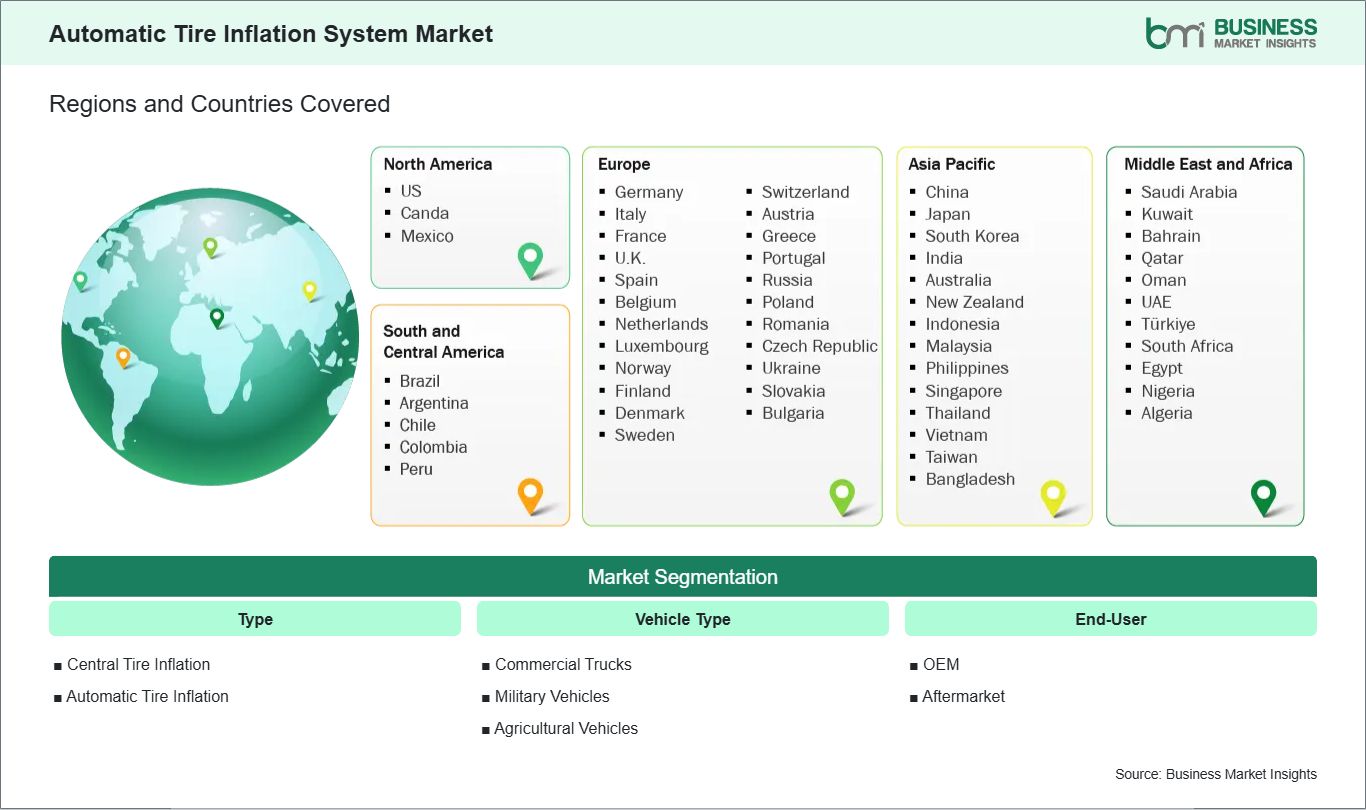
The Automatic Tire Inflation System market is segmented based on type, vehicle type, and end-user. Growing emphasis on vehicle efficiency, safety, and maintenance optimization is supporting demand across all segments.
By Type
- Central Tire Inflation: Enables operators to adjust tire pressure according to terrain and operating conditions, making it widely used in military and off-road vehicles.
- Automatic Tire Inflation: Automatically maintains optimal tire pressure during vehicle operation, improving fuel efficiency and reducing tire wear.
By Vehicle Type
- Commercial Trucks: Represents a major application area due to extensive fleet operations and increasing focus on reducing operating costs.
- Military Vehicles: Utilized for enhanced mobility and performance across varying terrains and demanding operating environments.
- Agricultural Vehicles: Supports improved traction, reduced soil compaction, and enhanced equipment productivity.
By End-User
- OEM: Increasing integration of automatic tire inflation systems into new vehicle platforms to improve safety and efficiency.
- Aftermarket: Strong demand from fleet operators seeking to upgrade existing vehicles with advanced tire management technologies.
Market Forces
Automatic Tire Inflation System Market Drivers and Opportunities
Growing Focus on Fleet Efficiency and Vehicle Safety
The transportation industry is increasingly focused on improving operational efficiency while reducing maintenance expenses and safety risks. Tire pressure plays a critical role in vehicle performance, fuel consumption, braking efficiency, and tire lifespan. Underinflated or overinflated tires can increase operating costs and create safety concerns, particularly for commercial fleets operating over long distances. Automatic tire inflation systems help address these challenges by continuously monitoring and adjusting tire pressure during vehicle operation. This capability reduces tire wear, improves fuel efficiency, and minimizes the risk of tire-related breakdowns. Regulatory emphasis on vehicle safety and fleet maintenance standards is encouraging operators to adopt technologies that improve vehicle reliability and reduce accidents.
The increasing use of telematics and connected fleet management platforms is also strengthening demand for automated tire management solutions. As transportation companies seek to optimize asset utilization and reduce downtime, automatic tire inflation systems are becoming an important component of modern fleet maintenance strategies. This trend is expected to remain a key growth driver for the market.
Integration of Smart Tire Management and Connected Vehicle Technologies
The growing adoption of connected vehicles is creating significant opportunities for the Automatic Tire Inflation System market. Modern transportation fleets increasingly rely on real-time vehicle monitoring and predictive maintenance technologies to improve operational performance and reduce maintenance costs. Automatic tire inflation systems are evolving beyond basic pressure control and are being integrated with telematics, sensors, cloud-based analytics, and fleet management platforms. These advancements enable operators to monitor tire conditions remotely and receive alerts before issues develop into costly failures.
The expansion of electric vehicles, autonomous transportation technologies, and intelligent logistics networks is further supporting innovation in tire management systems. Agricultural and military vehicle operators are also exploring advanced pressure control technologies to improve mobility and efficiency under varying operating conditions. Future opportunities are expected to emerge from smart tire ecosystems that combine pressure monitoring, predictive maintenance, and automated inflation capabilities. As digitalization continues to transform vehicle operations, manufacturers and fleet operators are likely to invest in increasingly sophisticated tire management solutions.
Size and Share Analysis
Automatic Tire Inflation System Market Size and Share Analysis
The Automatic Tire Inflation System market size is expected to reach US$ 182.5 million by 2033 from US$ 101 million in 2025. The market is estimated to record a CAGR of 7.68% from 2026 to 2033.
By type, central tire inflation systems account for a significant share due to their long-standing use in military vehicles and specialized off-road applications. Automatic tire inflation systems are witnessing increasing adoption across commercial transportation fleets because of their ability to continuously maintain proper tire pressure and improve operational efficiency.
By vehicle type, commercial trucks dominate the market owing to the growing focus on fuel efficiency, fleet safety, and maintenance optimization. Military vehicles continue to represent a major application segment due to operational requirements across diverse terrains, while agricultural vehicles are experiencing increased adoption as farmers seek to improve equipment productivity and reduce tire-related maintenance requirements.
Report Coverage
Automatic Tire Inflation System Market Report Coverage and Deliverables
The "Automatic Tire Inflation System Market Size and Forecast (2022-2033)" report provides a detailed analysis of the market covering below areas:
- Market size and forecast at global, regional, and country levels for all the key market segments covered under the scope
- Market trends, as well as market dynamics such as drivers, restraints, and key opportunities
- Market analysis covering key market trends, global and regional framework, major players, regulations, and recent market developments
- Industry landscape and competition analysis covering market concentration, heat map analysis, prominent players, and recent developments for the market
- Detailed company profiles, including SWOT analysis
Geographic Insights
Automatic Tire Inflation System Market Geographic Insights
The Automatic Tire Inflation System Market shows diverse regional adoption patterns influenced by fleet modernization initiatives, transportation infrastructure development, and increasing emphasis on vehicle safety and operational efficiency.
North America, being a developed region, has a well-established transportation and logistics sector and a high rate of adoption of advanced vehicle technologies. The region comprises the United States and Canada, where commercial fleet operators increasingly invest in technologies that improve fuel efficiency and reduce maintenance costs. The region focuses on enhancing vehicle safety, minimizing downtime, and improving fleet productivity. It has strong technological capabilities and mature transportation infrastructure, supporting widespread adoption of automatic tire inflation systems across commercial, military, and agricultural vehicle applications.
Asia Pacific is growing significantly, driven by expanding logistics networks, increasing vehicle production, and rising agricultural mechanization. The region comprises countries such as China, India, and Japan, where growing transportation activities and infrastructure development are creating demand for advanced vehicle maintenance technologies. The region focuses on improving fleet efficiency, reducing operating expenses, and enhancing vehicle performance. Expanding commercial transportation sectors and increasing adoption of modern farming equipment continue to support market growth across the region.
Both regions are contributing significantly to the growth of the Automatic Tire Inflation System Market, focusing on vehicle efficiency improvements, transportation modernization, and increased adoption of intelligent fleet management technologies.
Industry Activity
Recent Developments
The Automatic Tire Inflation System Market is analyzed using a mix of primary and secondary research sources, including corporate publications, industry associations, and verified databases. This approach ensures accurate tracking of innovation trends and strategic developments influencing the market.
- In March 2025, Pressure Systems International (P.S.I.) introduced enhancements to its tire pressure management solutions for commercial fleets, focusing on improved monitoring capabilities, maintenance efficiency, and vehicle safety. The development supports the industry's growing demand for automated tire management systems that help reduce tire-related failures and operating costs. The launch demonstrates continued innovation in automatic tire inflation and pressure monitoring technologies for fleet operators.
- In September 2024, Dana Incorporated announced the expansion of its Spicer Electrified product portfolio for commercial vehicles, including integrated tire and vehicle management technologies designed to improve fleet efficiency and vehicle uptime. The development reflects the growing industry focus on connected vehicle systems and intelligent maintenance solutions that support automatic tire pressure management capabilities. The announcement highlights the increasing integration of tire monitoring and vehicle performance technologies across commercial transportation applications.
Trust & Transparency
Research Methodology
The market analysis combines proprietary research with secondary data from government agencies, company disclosures, regulatory filings, industry databases and expert interviews. Market estimates are validated through data triangulation, cross-market benchmarking and analyst
review.
View Full Research Methodology
Key Sources Referred:
World Bank - Global Trade IndicatorsWorld Trade Organization (WTO)International Monetary Fund (IMF)International Trade Administration (ITA)Company WebsitesCompany Annual ReportsCompany Investor Presentations