Analysis By Sensor Type (Accelerometer, Gyroscope, Position Sensor, Motion Sensor, Image Sensor, Pressure & Force Sensor, Touch Sensor, and Others), Application (Smart Wristwear, Smart Glass, Smart Bodywear, and Smart Footwear), and Vertical (Consumer Electronics, Healthcare, and Industrial & Enterprise)
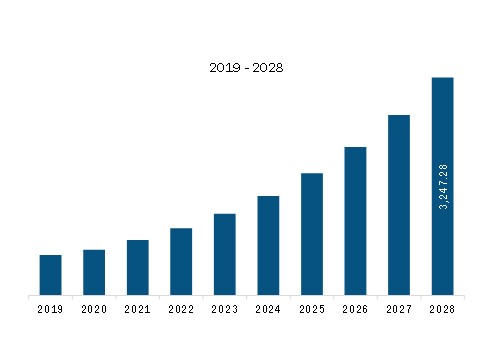
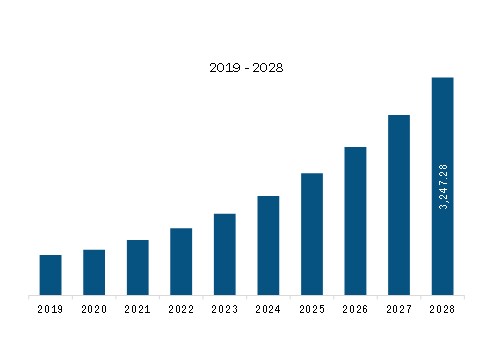
The Asia Pacific (APAC) wearable sensor market is expected to reach US$ 3,247.28 million by 2028 from US$ 825.45 million in 2021. The market is estimated to grow at a CAGR of 21.6% from 2021 to 2028.
Internet penetration has increased notably in the last 5 years, and one-third of the APAC population uses the Internet at higher bandwidths. This has increased the number of Internet-enabled smart devices in developing countries. Smartphones are among the most used portable devices. In the wearable ecosystem, they are primarily used to gather and track health and fitness data for the 0–9 and 60 and above age groups. According to Cisco, ~6.3 billion people and ~500 million devices were connected to the Internet in 2003, and with increasing customers' focus on smart devices, the number reached ~6.58 billion devices in 2020. The increasing number of connected devices eventually fuels the demand for wearable sensors.
According to Cisco Systems, the growth in connected wearable devices from 325 million in 2016 to 529 million in 2018, particularly in healthcare applications. These applications are expected to continue to fuel the demand for connected wearable devices in the upcoming years. With growing investments by various industries in IoT and IoT sensors, the demand for wearable devices across multiple sectors is expected to rise and create a massive opportunity for the APAC wearable sensor market players in the near future. This APAC market is projected to rise at a good CAGR during the forecast period.
Asia Pacific Wearable Sensor Revenue and Forecast to 2028 (US$ million)
Asia Pacific Wearable Sensor Market Segmentation
The APAC wearable sensor market is analyzed on the basis of sensor type, application, vertical, and country. Based on sensor type, the market is segmented into accelerometer, gyroscope, position sensor, motion sensor, image sensor, pressure and force sensor, touch sensor, and others. The accelerometer segment dominated the market in 2020.
Based on application, the market is segmented into smart wristwear, smart glass, smart bodywear, and smart footwear. The smart wristwear segment led the market in 2020.
Based on vertical, the market is segmented into consumer electronics, healthcare, and industrial and enterprise. The consumer electronics segment dominated the market in 2020.
Based on country, The APAC wearable sensor market is segmented into China, India, Japan, South Korea, and the Rest of APAC. China dominated the market in 2020.
Texas Instruments Incorporated, NXP Semiconductor, Analog Devices Inc, STMicroelectronics, Infineon Technology, Sensirion AG, Robert Bosch GmbH, Panasonic Corporation, TE Connectivity Corporation, and TDK corporation are the leading companies in the APAC wearable sensor market.
Asia Pacific Wearable Sensor Market Strategic Insights
Get more information on this report
Asia Pacific Wearable Sensor Market Segmentation Analysis
Asia Pacific Wearable Sensor Market Report Highlights
Asia Pacific Wearable Sensor Report Scope
Report Attribute
Details
Market size in 2021
US$ 825.45 Million
Market Size by 2028
US$ 3,247.28 Million
CAGR (2021 - 2028)
21.6%
Historical Data
2019-2020
Forecast period
2022-2028
Segments Covered
By Sensor Type
Accelerometer
Gyroscope
Position Sensor
Motion Sensor
Image Sensor
Pressure & Force Sensor
Touch Sensor
By Application
Smart Wristwear
Smart Glass
Smart Bodywear
Smart Footwear
By Vertical
Consumer Electronics
Healthcare
Industrial & Enterprise
Regions and Countries Covered
Asia-Pacific
China, India, Japan, Australia, Rest of Asia-Pacific
Market leaders and key company profiles
Texas Instruments Incorporated.
NXP Semiconductor.
Analog Devices Inc.
STMicroelectronics.
Infeneon Technology.
Sensirion AG.
Robert Bosch GmbH.
Panasonic Corporatin.
TE Connectivity Corporation.
TDK corporation.
Get more information on this report
Asia Pacific Wearable Sensor Market Country and Regional Insights
Get more information on this report
Identical Market Reports with other Region/Countries
The List of Companies - Asia Pacific Wearable Sensor Market
Texas Instruments Incorporated.NXP Semiconductor.Analog Devices Inc.STMicroelectronics.Infeneon Technology.Sensirion AG.Robert Bosch GmbH.Panasonic Corporatin.TE Connectivity Corporation.TDK corporation.
Frequently Asked Questions
How big is the Asia Pacific Wearable Sensor Market?
The Asia Pacific Wearable Sensor Market is valued at US$ 825.45 Million in 2021, it is projected to reach US$ 3,247.28 Million by 2028.
What is the CAGR for Asia Pacific Wearable Sensor Market by (2021 - 2028)?
As per our report Asia Pacific Wearable Sensor Market, the market size is valued at US$ 825.45 Million in 2021, projecting it to reach US$ 3,247.28 Million by 2028. This translates to a CAGR of approximately 21.6% during the forecast period.
What segments are covered in this report?
The Asia Pacific Wearable Sensor Market report typically cover these key segments-
Sensor Type (Accelerometer, Gyroscope, Position Sensor, Motion Sensor, Image Sensor, Pressure & Force Sensor, Touch Sensor)
What is the historic period, base year, and forecast period taken for Asia Pacific Wearable Sensor Market?
The historic period, base year, and forecast period can vary slightly depending on the specific market research report. However, for the Asia Pacific Wearable Sensor Market report:
Historic Period : 2019-2020
Base Year : 2021
Forecast Period : 2022-2028
Who are the major players in Asia Pacific Wearable Sensor Market?
The Asia Pacific Wearable Sensor Market is populated by several key players, each contributing to its growth and innovation. Some of the major players include:
Texas Instruments Incorporated.
NXP Semiconductor.
Analog Devices Inc.
STMicroelectronics.
Infeneon Technology.
Sensirion AG.
Robert Bosch GmbH.
Panasonic Corporatin.
TE Connectivity Corporation.
TDK corporation.
Who should buy this report?
The Asia Pacific Wearable Sensor Market report is valuable for diverse stakeholders, including:
Investors: Provides insights for investment decisions pertaining to market growth, companies, or industry insights. Helps assess market attractiveness and potential returns.
Industry Players: Offers competitive intelligence, market sizing, and trend analysis to inform strategic planning, product development, and sales strategies.
Suppliers and Manufacturers: Helps understand market demand for components, materials, and services related to concerned industry.
Researchers and Consultants: Provides data and analysis for academic research, consulting projects, and market studies.
Financial Institutions: Helps assess risks and opportunities associated with financing or investing in the concerned market.
Essentially, anyone involved in or considering involvement in the Asia Pacific Wearable Sensor Market value chain can benefit from the information contained in a comprehensive market report.




 Get Free Sample For Asia Pacific Wearable Sensor Market