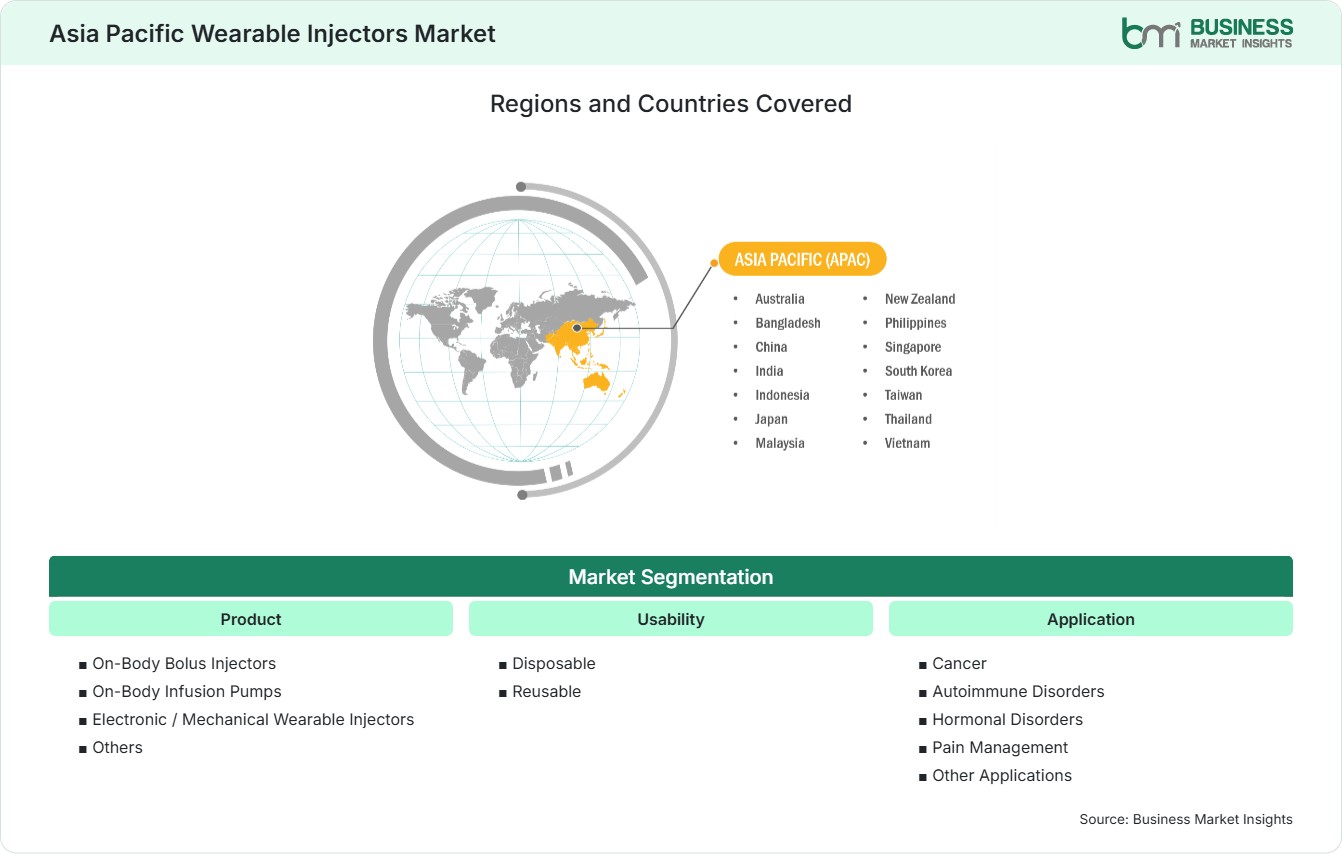
The geographical scope of the Asia Pacific Wearable Injectors Market report is divided into China, India, Japan, Australia, Bangladesh, Indonesia, Malaysia, New Zealand, Philippines, Singapore, South Korea, Taiwan, Thailand, and Vietnam. China held the largest share in 2025.
Country-level dynamics within Asia Pacific highlight diverse adoption patterns driven by infrastructure readiness, regulatory environments, and patient behavior. China emerges as the dominant market, fueled by its large patient population, rising incidence of chronic diseases such as diabetes, oncology, and autoimmune disorders, and rapid expansion of private and specialty healthcare facilities. Urban centers such as Beijing, Shanghai, and Guangzhou lead adoption, with hospitals and specialty clinics integrating wearable injectors into chronic care programs. Government initiatives promoting home-based care, combined with growing patient awareness of self-administration benefits and adherence advantages, have positioned China as the strategic hub in Asia Pacific. Japan represents a mature market with widespread adoption in specialty clinics and hospital-based chronic care programs. Regulatory efficiency, strong private insurance coverage, and high patient expectations for convenience and safety drive demand for devices that incorporate smart monitoring and connected health features. South Korea is witnessing increasing uptake, particularly in biologic therapy and diabetes management. Adoption is concentrated in urban healthcare centers that leverage connected devices and remote monitoring platforms to improve adherence and reduce frequent clinical visits. Collaborations between device manufacturers and digital health providers facilitate real-time data collection and enhance patient oversight. The market in Australia is well-established, as wearable injectors are largely integrated into specialty care programs, particularly for oncology and autoimmune therapies. Adoption is supported by advanced home-based care initiatives, private insurance coverage, and telehealth services that strengthen patient engagement and treatment monitoring. India and Indonesia represent high-potential emerging markets. Adoption is primarily concentrated in urban centers such as Mumbai, Jakarta, and Bangalore, driven by the growing chronic disease prevalence and expanding private hospital networks. Challenges such as limited insurance coverage, cost constraints, and lower patient awareness continue to restrict broader market penetration. Overall, China dominates the Asia Pacific wearable injectors market, while Japan, South Korea, Australia, India, and Indonesia offer complementary growth opportunities. Successful market strategies require tailored approaches that address country-specific regulatory requirements, patient education, clinician engagement, and healthcare infrastructure readiness to optimize adoption and long-term growth.