Analysis by Type (Air Traffic Services, Air Traffic Flow Management, and Airspace Management), Component (Hardware and Software), Application (Communication, Navigation, Surveillance, Traffic Control, and Others), and Airport Class (Class I, Class II, Class III, and Class IV)
No. of Pages:229
Report Code:
BMIRE00026163
Category:
Technology, Media and Telecommunications
Asia Pacific Commercial Air Traffic Management Market
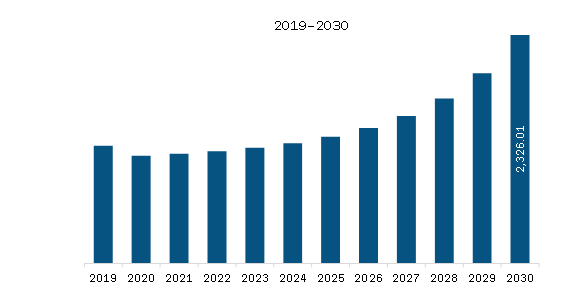
The Asia Pacific commercial air traffic management market is expected to grow from US$ 1,142.19 million in 2022 to US$ 2,326.01 million by 2030. It is estimated to grow at a CAGR of 9.3% from 2022 to 2030.
Growing Government Investment for Safer Air Transport is Driving the Asia Pacific Commercial Air Traffic Management Market
The growing demand for air transport worldwide compels the government to invest in more reliable and accurate management systems. Various countries are investing in technologies for safe and efficient air transport. In July 2022, the Chinese government announced an investment of around US$ 100 million for the expansion of São Tomé International Airport. The project will enhance the airport’s capability of managing air traffic movements in the coming years by integrating newer technologies. The government focuses on repairing and replacing hundreds of buildings and pieces of equipment to enhance flight operations. Thus, for the safer flights and efficient air transport, governments of various countries are investing in ATCs to create lucrative market growth opportunities in the Asia Pacific commercial air traffic management market.
Asia Pacific Commercial Air Traffic Management Market Overview
The Asia Pacific commercial air traffic management market is segmented into Australia, China, India, Japan, South Korea, and the Rest of APAC. Asia Pacific has the fastest-growing aviation industry that comprises the development of many airports and procurement pipelines of a large volume of commercial aircraft to cater to the continuously growing passenger traffic across different countries of the region. Moreover, the growing interest of FDI companies to invest in developing economies, such as India and Southeast Asian countries, to develop a strong aviation hub across the region is driving the market.
The rising demand for air travel across highly populated countries such as China and India, owing to the rising purchasing power of customers, is leading to an increase in passenger traffic across the region. This is further leading to the higher procurement of new aircraft across the region. For instance, in 2022, DGCA of India already announced plans to construct ~80 airports by the end of 2027, which is expected to catalyze the deployment of air traffic management systems during the forecast period. Similarly, in 2020, the Civil Aviation Administration of China (CAAC) announced to increase the number of civil airports from 241 to ~400 by the end of 2035, which means that China is expected to construct ten airports every year between 2021 and 2035. Such developments are likely to catalyze the Asia Pacific commercial air traffic management market growth during the forecast period.
Asia Pacific Commercial air traffic management Market Revenue and Forecast to 20230 (US$ Million)
Asia Pacific Commercial air traffic management Market Segmentation
The Asia Pacific commercial air traffic management market is segmented into type, component, application, airport class, and country.
Based on type, the Asia Pacific commercial air traffic management market is segmented into air traffic services, air traffic flow management, and airspace management. The airspace management segment accounted for the largest share in the market in 2022.
Based on component, the Asia Pacific commercial air traffic management market is segmented into hardware and software. The hardware segment accounted for the larger share in the market in 2022.
Based on application, the Asia Pacific commercial air traffic management market is segmented into communication, navigation, surveillance, traffic control, and others. The surveillance segment accounted for the largest share in the market in 2022.
Based on airport class, the Asia Pacific commercial air traffic management market is segmented into Class I, Class II, Class III, and Class IV. The Class I segment accounted for the largest share in the market in 2022.
Based on country, the Asia Pacific commercial air traffic management market is segmented into Australia, China, India, Japan, South Korea, and the Rest of Asia Pacific. China dominated the market share in 2022.
BAE Systems Plc, Honeywell International Inc, Indra Sistemas SA, L3Harris Technologies Inc, Leonardo SpA, NEC Corp, Raytheon Technologies Corp, Saab AB, SITA SC, and Thales SA are the leading companies operating in the Asia Pacific commercial air traffic management market.
Asia Pacific Commercial Air Traffic Management Market Strategic Insights
Get more information on this report
Asia Pacific Commercial Air Traffic Management Market Segmentation Analysis
Asia Pacific Commercial Air Traffic Management Market Report Highlights
Asia Pacific Commercial Air Traffic Management Report Scope
Report Attribute
Details
Market size in 2022
US$ 1,142.19 Million
Market Size by 2030
US$ 2,326.01 Million
CAGR (2022 - 2030)
9.3%
Historical Data
2020-2021
Forecast period
2023-2030
Segments Covered
By Type
Air Traffic Services
Air Traffic Flow Management
Airspace Management
By Component
Hardware
Software
By Application
Communication
Navigation
Surveillance
Traffic Control
By Airport Class
Class I
Class II
Class III
Class IV
Regions and Countries Covered
Asia-Pacific
China, India, Japan, Australia, Rest of Asia-Pacific
Market leaders and key company profiles
BAE Systems Plc
Honeywell International Inc
Indra Sistemas SA
L3Harris Technologies Inc
Leonardo SpA
NEC Corp
Raytheon Technologies Corp
Saab AB
SITA SC
Thales SA
Get more information on this report
Asia Pacific Commercial Air Traffic Management Market Country and Regional Insights
Get more information on this report
Identical Market Reports with other Region/Countries
The List of Companies - Asia Pacific Commercial Air Traffic Management Market
BAE Systems PlcHoneywell International IncIndra Sistemas SAL3Harris Technologies IncLeonardo SpANEC CorpRaytheon Technologies CorpSaab ABSITA SCThales SA
Frequently Asked Questions
How big is the Asia Pacific Commercial Air Traffic Management Market?
The Asia Pacific Commercial Air Traffic Management Market is valued at US$ 1,142.19 Million in 2022, it is projected to reach US$ 2,326.01 Million by 2030.
What is the CAGR for Asia Pacific Commercial Air Traffic Management Market by (2022 - 2030)?
As per our report Asia Pacific Commercial Air Traffic Management Market, the market size is valued at US$ 1,142.19 Million in 2022, projecting it to reach US$ 2,326.01 Million by 2030. This translates to a CAGR of approximately 9.3% during the forecast period.
What segments are covered in this report?
The Asia Pacific Commercial Air Traffic Management Market report typically cover these key segments-
Type (Air Traffic Services, Air Traffic Flow Management, Airspace Management)
Airport Class (Class I, Class II, Class III, Class IV)
What is the historic period, base year, and forecast period taken for Asia Pacific Commercial Air Traffic Management Market?
The historic period, base year, and forecast period can vary slightly depending on the specific market research report. However, for the Asia Pacific Commercial Air Traffic Management Market report:
Historic Period : 2020-2021
Base Year : 2022
Forecast Period : 2023-2030
Who are the major players in Asia Pacific Commercial Air Traffic Management Market?
The Asia Pacific Commercial Air Traffic Management Market is populated by several key players, each contributing to its growth and innovation. Some of the major players include:
BAE Systems Plc
Honeywell International Inc
Indra Sistemas SA
L3Harris Technologies Inc
Leonardo SpA
NEC Corp
Raytheon Technologies Corp
Saab AB
SITA SC
Thales SA
Who should buy this report?
The Asia Pacific Commercial Air Traffic Management Market report is valuable for diverse stakeholders, including:
Investors: Provides insights for investment decisions pertaining to market growth, companies, or industry insights. Helps assess market attractiveness and potential returns.
Industry Players: Offers competitive intelligence, market sizing, and trend analysis to inform strategic planning, product development, and sales strategies.
Suppliers and Manufacturers: Helps understand market demand for components, materials, and services related to concerned industry.
Researchers and Consultants: Provides data and analysis for academic research, consulting projects, and market studies.
Financial Institutions: Helps assess risks and opportunities associated with financing or investing in the concerned market.
Essentially, anyone involved in or considering involvement in the Asia Pacific Commercial Air Traffic Management Market value chain can benefit from the information contained in a comprehensive market report.





 Get Free Sample For Asia Pacific Commercial Air Traffic Management Market