Analysis By Type (Welding Guns, Clamps, Grippers, Suction Cups, Tool Changers, and Others), Application (Handling, Assembly, Welding, Processing, Dispensing, and Others), and Industry (Automotive, Metals and Machinery, Electrical and Electronics, Food and Beverages, and Others)
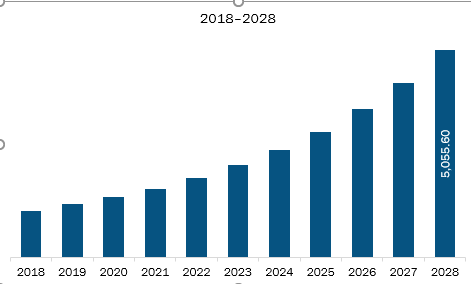
The Asia Pacific robot end-effector market is expected to grow from US$ 1,671.84 million in 2021 to US$ 5,055.60 million by 2028; it is estimated to grow at a CAGR of 17.1% from 2021 to 2028.
The rapid technological advancements across the region are likely to boost the growth of additive manufacturing technology. The immense advances in materials, machinery, and software have made additive manufacturing accessible to a broader range of businesses, which allows firms to use tools that were formerly limited to a few high-tech industries. Additive manufacturing allows the shift to the Industrial Revolution 4.0, which provides huge potential that could revolutionize the manufacturing and industrial production landscape. The growing spending in technology is also leading the market toward growth. For instance, as per the Ministry of Electronics and Information Technology (MeitY), in 2017, additive manufacturing was valued at US$ 7 billion and is likely to be reach US$ 35.6 billion by 2023. MeitY is planning a strategy to promote additive manufacturing within all industrial applications, such as machines, software, materials, and design, which would boost the adoption of untapped potential business opportunities during the forecast period. The government agencies in various technologically advanced economies such as the Australia, Japan, and South Korea are highly funding and accelerating advanced additive manufacturing and next-gen technologies to improve productivity competitiveness.
Asia Pacific is characterized by a large number of developing countries, a positive economic outlook, high industrial presence, huge population, and rising disposable income. All these factors make APAC a major growth driving region for various markets, including robot end-effector. The lockdown of various factories in China affects the Asia Pacific supply chains and negatively impacts manufacturing, delivery schedules, and various products and services. Even as the factories in China are beginning to reopen, several logistics businesses have reduced or hit pause on their operations; thus, some cargo terminals shut down due to low volume. In the healthcare sector, robots witnessed a slight growth during the pandemic. For instance, HCARD, a robotic device, helped frontline healthcare workers to maintain physical distance from those infected by COVID-19 in India.
With the new advancements and technologies, vendors can attract new customers and expand their footprints in emerging markets. This factor is likely to drive the Asia Pacific robot end-effector market. The mounting demand for robot grippers across all the industries due to their affordability and increasing productivity is likely to fuel market growth in the near future. They are primarily utilized for material handling as they can grasp, hold, lift, and move materials. Grippers are witnessing substantial improvements in design, owing to which companies are able to attain increased productivity and efficiency. This would help the companies in increasing the overall business ROI. Grippers are highly utilized in Cobots for safety, ease of use, and flexibility. Moreover, they ensure that Cobots can flexibly adapt to tasks. The growing implementation of grippers for Cobots would propel the demand for robot end-effectors across the region in the coming years. For instance, as per a study by World Robotics, ~20% of all Cobots applications would work with vacuum gripping technology.
Asia Pacific Robot End-Effector Market Revenue and Forecast to 2028 (US$ Million)
Asia Pacific Robot End-Effector Market Segmentation
Asia Pacific Robot End-Effector Market – By Type
Welding Guns
Clamps
Grippers
Suction Cups
Tool Changers
Others
Asia Pacific Robot End-Effector Market – By Application
Handling
Assembly
Welding
Processing
Dispensing
Others
Asia Pacific Robot End-Effector Market – By Industry
Automotive
Metals and Machinery
Electrical and Electronics
Food and Beverages
Others
Asia Pacific Robot End-Effector Market – By Country
China
Japan
South Korea
India
Australia
Rest of Asia Pacific
Asia Pacific Robot End-Effector Market Strategic Insights
Get more information on this report
Asia Pacific Robot End-Effector Market Segmentation Analysis
Asia Pacific Robot End-Effector Market Report Highlights
Asia Pacific Robot End-Effector Report Scope
Report Attribute
Details
Market size in 2021
US$ 1,671.84 Million
Market Size by 2028
US$ 5,055.60 Million
CAGR (2021 - 2028)
17.1%
Historical Data
2019-2020
Forecast period
2022-2028
Segments Covered
By Type
Welding Guns
Clamps
Grippers
Suction Cups
Tool Changers
By Application
Handling
Assembly
Welding
Processing
Dispensing
By Industry
Automotive
Metals and Machinery
Electrical and Electronics
Food and Beverages
Regions and Countries Covered
Asia-Pacific
China, India, Japan, Australia, Rest of Asia-Pacific
Market leaders and key company profiles
ABB Ltd.
Destaco (Dover Corporation)
Festo SE & Co. KG
J. Schmalz GmbH
Kuka AG
Piab AB
Robotiq Inc.
Schunk GmbH & Co. KG
Zimmer Group
Get more information on this report
Asia Pacific Robot End-Effector Market Country and Regional Insights
Get more information on this report
Identical Market Reports with other Region/Countries
The List of Companies - Asia Pacific Robot End-Effector Market
ABB Ltd.Destaco (Dover Corporation)Festo SE & Co. KGJ. Schmalz GmbHKuka AGPiab ABRobotiq Inc.Schunk GmbH & Co. KGZimmer Group
About Author— Electronics and Semiconductor Research Team
Siddhika is an experienced market research professional with over five years of expertise in delivering actionable market intelligence and strategic insights to support business growth and decision-making. She has strong experience in designing and managing end-to-end research engagements, including research planning, data collection, and insight generation.
Proficient in research methodologies, Siddhika synthesizes diverse information sources to deliver accurate, high-quality insights and strategic recommendations. She excels at translating complex market information into strategic narratives that support executive decision-making..
Show More
Frequently Asked Questions
How big is the Asia Pacific Robot End-Effector Market?
The Asia Pacific Robot End-Effector Market is valued at US$ 1,671.84 Million in 2021, it is projected to reach US$ 5,055.60 Million by 2028.
What is the CAGR for Asia Pacific Robot End-Effector Market by (2021 - 2028)?
As per our report Asia Pacific Robot End-Effector Market, the market size is valued at US$ 1,671.84 Million in 2021, projecting it to reach US$ 5,055.60 Million by 2028. This translates to a CAGR of approximately 17.1% during the forecast period.
What segments are covered in this report?
The Asia Pacific Robot End-Effector Market report typically cover these key segments-
Type (Welding Guns, Clamps, Grippers, Suction Cups, Tool Changers)
Industry (Automotive, Metals and Machinery, Electrical and Electronics, Food and Beverages)
What is the historic period, base year, and forecast period taken for Asia Pacific Robot End-Effector Market?
The historic period, base year, and forecast period can vary slightly depending on the specific market research report. However, for the Asia Pacific Robot End-Effector Market report:
Historic Period : 2019-2020
Base Year : 2021
Forecast Period : 2022-2028
Who are the major players in Asia Pacific Robot End-Effector Market?
The Asia Pacific Robot End-Effector Market is populated by several key players, each contributing to its growth and innovation. Some of the major players include:
ABB Ltd.
Destaco (Dover Corporation)
Festo SE & Co. KG
J. Schmalz GmbH
Kuka AG
Piab AB
Robotiq Inc.
Schunk GmbH & Co. KG
Zimmer Group
Who should buy this report?
The Asia Pacific Robot End-Effector Market report is valuable for diverse stakeholders, including:
Investors: Provides insights for investment decisions pertaining to market growth, companies, or industry insights. Helps assess market attractiveness and potential returns.
Industry Players: Offers competitive intelligence, market sizing, and trend analysis to inform strategic planning, product development, and sales strategies.
Suppliers and Manufacturers: Helps understand market demand for components, materials, and services related to concerned industry.
Researchers and Consultants: Provides data and analysis for academic research, consulting projects, and market studies.
Financial Institutions: Helps assess risks and opportunities associated with financing or investing in the concerned market.
Essentially, anyone involved in or considering involvement in the Asia Pacific Robot End-Effector Market value chain can benefit from the information contained in a comprehensive market report.






 Get Free Sample For Asia Pacific Robot End-Effector Market