Analysis By Cancer Type (Breast Cancer, Lung Cancer, Liver Cancer, Hematological Cancer, Brain Cancer, Prostate Cancer, Pancreatic Cancer, and Others), Route of Administration (Intravenous and Intramuscular), Drug Class (HER2 Inhibitors, Immune Checkpoint Inhibitors, PARP Inhibitors, Kinase Inhibitors, and Others), Product (Branded, Generics, and Biosimilars), and End User (Hospital, Specialty Clinic, and Others)
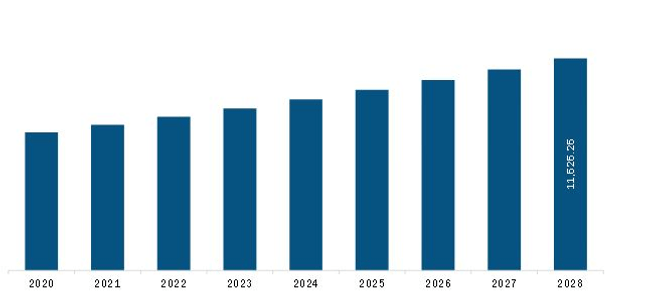
The Asia Pacific metastatic cancer drugs market is expected to reach US$ 11,626.26 million by 2028 from US$ 7,985.76 million in 2021; it is estimated to grow at a CAGR of 5.5% from 2021 to 2028.
Advancements in artificial intelligence (AI) are anticipated to transform every industry. In drug discovery and development, time and costs required are key challenges to sustain the drug development pipeline. The development of oncology therapeutics is estimated to cost over US$ 2.6 billion to the manufacturer and take over a decade. These soaring costs are mostly a result of money invested in the 90% of candidate therapies that fail to enter the late stages of drug development, i.e., between phase 1 trials and regulatory approval. AI is projected to be the foundation for rapid, cheap, and efficient drug discovery and development. The integration of AI technology in cancer care could improve the accuracy and speed of diagnosis, aid in improved clinical decision-making, and lead to better health outcomes. AI-guided clinical care can play an important role in reducing health disparities, particularly in low-resource settings. Notably, the application areas of AI are expanding to include new approaches for cancer detection, screening, diagnosis and classification; cancer genomics characterization; tumor microenvironment analysis; and predictive and prognostic biomarkers assessment. AI can enhance many processes that are directly and indirectly related to the drug discovery and development. It can be used for improved tumor classification, computer-aided organic synthesis, compound discovery, assay development, and biomarker and target discovery. In general, AI aims to automate and optimize slow processes to substantially speed up the R&D drug discovery process. Several pharmaceutical, biotech, and software companies are making efforts to integrate AI into drug discovery and development. In 2016, Pfizer partnered with IBM Watson Health, an AI platform provider, to enhance its search for immuno-oncology treatments. Sanofi joined forces with Exscientia, the spin-out of Dundee University, to discover metabolic-disease therapies. Thus, the increased use of AI in drug development and delivery would create significant opportunities for the growth of the metastatic cancer drug market during the forecast period.
With the new features and technologies, vendors can attract new customers and expand their footprints in emerging markets. This factor is likely to drive the metastatic cancer drugs market growth in the coming years. The market is expected to grow at a good CAGR during the forecast period.
Asia Pacific Metastatic Cancer Drugs Market Revenue and Forecast to 2028 (US$ Million)
Asia Pacific Metastatic Cancer Drugs Market Segmentation
The market for Asia Pacific metastatic cancer drugs market is segmented into cancer type ,route of administration ,drug class , product , and end user. Based on cancer type, the market is segmented into breast cancer, lung cancer, liver cancer, haematological cancer, brain cancer, prostate cancer, pancreatic cancer, and others. Based on route of administration, the market is bifurcated into intravenous and intramuscular. Based on drug class, the Asia Pacific metastatic cancer drugs market is segmented into HER2 inhibitors, immune checkpoint inhibitors, parp inhibitors, kinase inhibitors, and others. Based on product, the market is segmented into branded, generics, and biosimilars. Based on end user, the market is segmented into hospital, specialty clinic, and others. By country, the Asia Pacific metastatic cancer drugs market is segmented into China, Japan, India, Australia, South Korea, and Rest of Asia Pacific.
Asia Pacific Metastatic Cancer Drugs Market – Companies Mentioned
AbbVie Inc. ; Amgen Inc. ; Bristol-Myers Squibb Company ; F. HOFFMANN-LA ROCHE LTD.; Novartis AG ; Astrazeneca ;Eli Lilly and Company; MERCK KGaA ; Pfizer Inc. (Arena Pharmaceutical GmbH) ; and Johnson and Johnson Services, Inc. are among the leading companies in the Asia Pacific metastatic cancer drugs market .
Asia Pacific Metastatic Cancer Drugs Market Strategic Insights
Get more information on this report
Asia Pacific Metastatic Cancer Drugs Market Segmentation Analysis
Asia Pacific Metastatic Cancer Drugs Market Report Highlights
Asia Pacific Metastatic Cancer Drugs Report Scope
Report Attribute
Details
Market size in 2021
US$ 7,985.76 Million
Market Size by 2028
US$ 11,626.26 Million
CAGR (2021 - 2028)
5.5%
Historical Data
2019-2020
Forecast period
2022-2028
Segments Covered
By Cancer Type
Breast Cancer
Lung Cancer
Liver Cancer
Hematological Cancer
Brain Cancer
Prostate Cancer
Pancreatic Cancer
By Route of Administration
Intravenous and Intramuscular
By Drug Class
HER2 Inhibitors
Immune Checkpoint Inhibitors
PARP Inhibitors
Kinase Inhibitors
By Product
Branded
Generics
Biosimilars
Regions and Countries Covered
Asia-Pacific
China, India, Japan, Australia, Rest of Asia-Pacific
Market leaders and key company profiles
AbbVie Inc.
Amgen Inc.
Bristol-Myers Squibb Company
F. HOFFMANN-LA ROCHE LTD.
Novartis AG
Astrazeneca
Eli Lilly and Company
MERCK KGaA
Pfizer Inc. (Arena Pharmaceutical GmbH)
Johnson and Johnson Services, Inc.
Get more information on this report
Asia Pacific Metastatic Cancer Drugs Market Country and Regional Insights
Get more information on this report
Identical Market Reports with other Region/Countries
The List of Companies - Asia Pacific Metastatic Cancer Drugs Market
AbbVie Inc. Amgen Inc. Bristol-Myers Squibb Company F. HOFFMANN-LA ROCHE LTD. Novartis AG Astrazeneca Eli Lilly and Company MERCK KGaA Pfizer Inc. (Arena Pharmaceutical GmbH) Johnson and Johnson Services, Inc.
Frequently Asked Questions
How big is the Asia Pacific Metastatic Cancer Drugs Market?
The Asia Pacific Metastatic Cancer Drugs Market is valued at US$ 7,985.76 Million in 2021, it is projected to reach US$ 11,626.26 Million by 2028.
What is the CAGR for Asia Pacific Metastatic Cancer Drugs Market by (2021 - 2028)?
As per our report Asia Pacific Metastatic Cancer Drugs Market, the market size is valued at US$ 7,985.76 Million in 2021, projecting it to reach US$ 11,626.26 Million by 2028. This translates to a CAGR of approximately 5.5% during the forecast period.
What segments are covered in this report?
The Asia Pacific Metastatic Cancer Drugs Market report typically cover these key segments-
Cancer Type (Breast Cancer, Lung Cancer, Liver Cancer, Hematological Cancer, Brain Cancer, Prostate Cancer, Pancreatic Cancer)
Route of Administration (Intravenous and Intramuscular)
Drug Class (HER2 Inhibitors, Immune Checkpoint Inhibitors, PARP Inhibitors, Kinase Inhibitors)
Product (Branded, Generics, Biosimilars)
End User (Hospital, Specialty Clinic)
What is the historic period, base year, and forecast period taken for Asia Pacific Metastatic Cancer Drugs Market?
The historic period, base year, and forecast period can vary slightly depending on the specific market research report. However, for the Asia Pacific Metastatic Cancer Drugs Market report:
Historic Period : 2019-2020
Base Year : 2021
Forecast Period : 2022-2028
Who are the major players in Asia Pacific Metastatic Cancer Drugs Market?
The Asia Pacific Metastatic Cancer Drugs Market is populated by several key players, each contributing to its growth and innovation. Some of the major players include:
AbbVie Inc.
Amgen Inc.
Bristol-Myers Squibb Company
F. HOFFMANN-LA ROCHE LTD.
Novartis AG
Astrazeneca
Eli Lilly and Company
MERCK KGaA
Pfizer Inc. (Arena Pharmaceutical GmbH)
Johnson and Johnson Services, Inc.
Who should buy this report?
The Asia Pacific Metastatic Cancer Drugs Market report is valuable for diverse stakeholders, including:
Investors: Provides insights for investment decisions pertaining to market growth, companies, or industry insights. Helps assess market attractiveness and potential returns.
Industry Players: Offers competitive intelligence, market sizing, and trend analysis to inform strategic planning, product development, and sales strategies.
Suppliers and Manufacturers: Helps understand market demand for components, materials, and services related to concerned industry.
Researchers and Consultants: Provides data and analysis for academic research, consulting projects, and market studies.
Financial Institutions: Helps assess risks and opportunities associated with financing or investing in the concerned market.
Essentially, anyone involved in or considering involvement in the Asia Pacific Metastatic Cancer Drugs Market value chain can benefit from the information contained in a comprehensive market report.





 Get Free Sample For Asia Pacific Metastatic Cancer Drugs Market