Analysis – by Platform (On-Shore and Vessel), Application (Fleet Management, Vessel Tracking, and Maritime Security), and End-User (Commercial and Government)
No. of Pages:162
Report Code:
BMIRE00027858
Category:
Technology, Media and Telecommunications
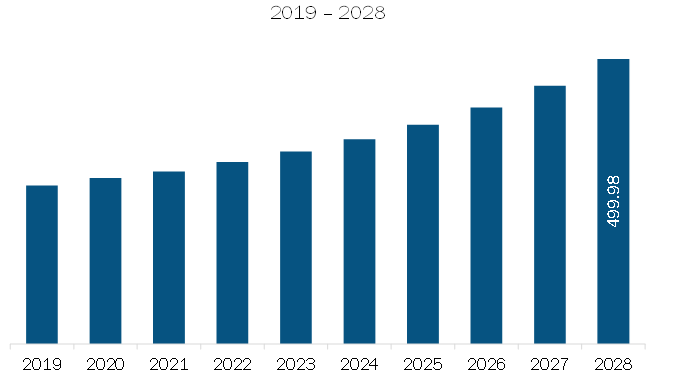
The Asia Pacific maritime information market is expected to grow from US$ 319.34 million in 2022 to US$ 499.98 million by 2028. It is estimated to grow at a CAGR of 7.8% from 2022 to 2028.
Emergence of Big Data Analytics and IoT will be Driving the Asia Pacific Maritime Information Market in Coming Years
Information collected from large operation systems, such as ships and ports, is verified using data analytics which includes information about container weight, type, and destination. Additionally, it can analyze the ship’s trim, stability, engine performance, and communication data, among others. Big data analytics on ships can provide insights into historical container patterns and maritime conditions. Ships move by responding to various shifts in weather conditions. Big data analytics analyses these parameters and increases the efficiency and overall performance of the sea vessels. Further, Internet of Things (IoT) enables the remote control of some objects. It functions with a GPS and a cloud-based database that stores all the information gathered by equipment on the ship. IoT can connect all other equipment and shipments through wireless networks, such as robots. Thus, the Emergence of big data analytics and IoT is anticipated to boost the growth of the maritime information across the region
Asia Pacific Maritime Information Market Overview
Australia, China, India, Japan, South Korea, and rest of Asia Pacific are the key contributors to the maritime information market in the Asia Pacific. Based on a report by Allianz Global Corporate & Specialty (AGCS), a unit of Allianz Group, the number of shipping incidents in Asia has increased by 22% since 2018. This requires greater use of maritime information systems. Many ports, specifically Indian ports, are now adopting new technologies in which automated identification systems play a vital role. This is expected to address the inefficiencies of Indian ports in handling cargo due to constraints such as long dwell times. Maritime information plays a crucial role in economic development, as most of the world's trade is carried across Asia Pacific seas. As this continued commercial growth has increased the number of illegal activities, governments in countries such as China, Japan, and India are increasing their maritime budgets, potentially creating opportunities for market growth. Shanghai, Singapore, Hong Kong, Tianjin, Qingdao, Guangzhou, Busan, Ningbo-Zhoushan, and Shenzhen are among the busiest ports in the world; they are all located in Asia Pacific. Strong sea trade from countries in Asia Pacific, such as China, Japan, India, and South Korea, mainly contributed to the region's leading position in the market. In addition, large export volumes, intra-regional trading activities, and expanding manufacturing activities, especially in these countries, are expected to support market growth. For instance, in April 2019, a new land-sea freight route was implemented, connecting Southwest China's Chongqing Municipality with Indonesia. Cargo overturns at Asia's major hub ports surged through December 2020 as the rising container demand from the US and Europe overwhelmed terminals and carrier capacity, despite deploying all available vessels and extra loaders on both trades. Hence, the growing marine trading across the region is expected to propel the Asia Pacific maritime information market over the forecast period.
Asia Pacific Maritime Information Market Revenue and Forecast to 2028 (US$ Million)
Asia Pacific Maritime Information Market Segmentation
The Asia Pacific maritime information market is segmented into platform, application, end-user, and country.
Based on platform, the Asia Pacific maritime information market is bifurcated into on-shore and vessel. In 2022, the vessel segment registered the larger share in Asia Pacific maritime information market.
Based on application, the Asia Pacific maritime information market is segmented into fleet management, vessel tracking, and maritime security. In 2022, the fleet management segment registered the largest share in Asia Pacific maritime information market.
Based on end user, the Asia Pacific maritime information market is bifurcated into commercial and government. In 2022, the commercial segment registered the larger share in Asia Pacific maritime information market.
Based on country, the Asia Pacific maritime information market is segmented into Australia, China, India, Japan, South Korea, and the Rest of Asia Pacific. In 2022, the Rest of Asia Pacific segment registered the largest share in Asia Pacific maritime information market.
BAE Systems Plc; Fujitsu Limited; Iridium Communications Inc.; L3Harris Technologies Inc.; Lockheed Martin Corp; Northrop Grumman Corp; ONEOCEAN; ORBCOMM Inc.; Polestar; Saab AB; Siemens AG; Spire Global; Thales Group; and Windward Ltd are the leading companies operating in the Asia Pacific maritime information market.
Asia Pacific Maritime Information Market Strategic Insights
Get more information on this report
Asia Pacific Maritime Information Market Segmentation Analysis
Asia Pacific Maritime Information Market Report Highlights
Asia Pacific Maritime Information Report Scope
Report Attribute
Details
Market size in 2022
US$ 319.34 Million
Market Size by 2028
US$ 499.98 Million
CAGR (2022 - 2028)
7.8%
Historical Data
2020-2021
Forecast period
2023-2028
Segments Covered
By Platform
On-Shore
Vessel
By Application
Fleet Management
Vessel Tracking
Maritime Security
By End-User
Commercial
Government
Regions and Countries Covered
Asia-Pacific
China, India, Japan, Australia, Rest of Asia-Pacific
Market leaders and key company profiles
BAE Systems Plc
Fujitsu Limited
Iridium Communications Inc.
L3Harris Technologies Inc.
Lockheed Martin Corp
Northrop Grumman Corp
ONEOCEAN
ORBCOMM Inc.
Polestar
Saab AB
Siemens AG
Spire Global
Thales Group
Windward Ltd
Get more information on this report
Asia Pacific Maritime Information Market Country and Regional Insights
Get more information on this report
Identical Market Reports with other Region/Countries
The List of Companies - Asia Pacific Maritime Information Market
BAE Systems PlcFujitsu LimitedIridium Communications Inc.L3Harris Technologies Inc.Lockheed Martin CorpNorthrop Grumman CorpONEOCEANORBCOMM Inc.PolestarSaab ABSiemens AGSpire GlobalThales GroupWindward Ltd
Frequently Asked Questions
How big is the Asia Pacific Maritime Information Market?
The Asia Pacific Maritime Information Market is valued at US$ 319.34 Million in 2022, it is projected to reach US$ 499.98 Million by 2028.
What is the CAGR for Asia Pacific Maritime Information Market by (2022 - 2028)?
As per our report Asia Pacific Maritime Information Market, the market size is valued at US$ 319.34 Million in 2022, projecting it to reach US$ 499.98 Million by 2028. This translates to a CAGR of approximately 7.8% during the forecast period.
What segments are covered in this report?
The Asia Pacific Maritime Information Market report typically cover these key segments-
What is the historic period, base year, and forecast period taken for Asia Pacific Maritime Information Market?
The historic period, base year, and forecast period can vary slightly depending on the specific market research report. However, for the Asia Pacific Maritime Information Market report:
Historic Period : 2020-2021
Base Year : 2022
Forecast Period : 2023-2028
Who are the major players in Asia Pacific Maritime Information Market?
The Asia Pacific Maritime Information Market is populated by several key players, each contributing to its growth and innovation. Some of the major players include:
BAE Systems Plc
Fujitsu Limited
Iridium Communications Inc.
L3Harris Technologies Inc.
Lockheed Martin Corp
Northrop Grumman Corp
ONEOCEAN
ORBCOMM Inc.
Polestar
Saab AB
Siemens AG
Spire Global
Thales Group
Windward Ltd
Who should buy this report?
The Asia Pacific Maritime Information Market report is valuable for diverse stakeholders, including:
Investors: Provides insights for investment decisions pertaining to market growth, companies, or industry insights. Helps assess market attractiveness and potential returns.
Industry Players: Offers competitive intelligence, market sizing, and trend analysis to inform strategic planning, product development, and sales strategies.
Suppliers and Manufacturers: Helps understand market demand for components, materials, and services related to concerned industry.
Researchers and Consultants: Provides data and analysis for academic research, consulting projects, and market studies.
Financial Institutions: Helps assess risks and opportunities associated with financing or investing in the concerned market.
Essentially, anyone involved in or considering involvement in the Asia Pacific Maritime Information Market value chain can benefit from the information contained in a comprehensive market report.





 Get Free Sample For Asia Pacific Maritime Information Market