Analysis By Process (Water Washed, Airfloat, Calcined, Delaminated, and Others) and End-Use Industry (Paper, Ceramic and Sanitaryware, Paints and Coatings, Plastic, Rubber, and Others)
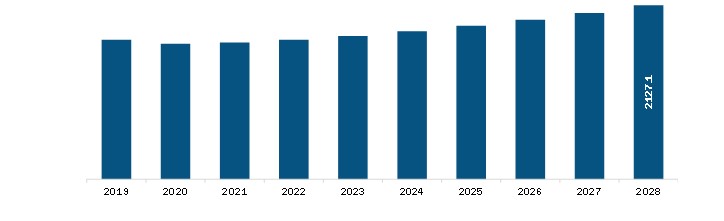
The Asia Pacific kaolin market is expected to reach US$ 2,127.1 million by 2028 from US$ 1,627.3 million in 2021 and is estimated to grow at a CAGR of 3.9% from 2021 to 2028.
Key factors propelling the market growth are growing urbanization in developing economies and surging demand for cosmetics and personal care products across Asia Pacific. However, digitalization and stringent government policies restrict market growth.
Rapid urbanization in developing countries, such as China and India, is expected to bolster kaolin market growth. These countries are witnessing a rise in the construction of residential and commercial buildings, which is expected to increase the demand for kaolin in developing economies. As per the report of CEIC, in 2020, Beijing recorded 237,142.000 square meter building construction work, which is 5% greater than the previous building construction work. Further, kaolin is extensively used in the ceramic industry for its molding properties. It is also used in the manufacture of sanitary wares, tiles, and tableware and has been utilized as a direct substitute against the traditional method of cement. In addition, kaolin clay is used as a functional extender in paintsbecause it is chemically inert, has a high covering power, gives desirable flow properties, and reduces the number of expensive pigments required. Hence, the rising building construction work is accelerating the demand for kaolin-based building material products and is expected to increase the application of kaolin to manufacture these products. Also, beauty and skincare products are witnessing an increased application of kaolin in various products such as face powders, face masks, creams and lotions for oily skin, bath powders, foundation, powdered blush, deodorants, and soaps. These products use kaolin to absorb excess oil from the skin's surface, lifting dirt and other impurities from the skin pores. Also, kaolin has oil control properties, which allow the makeup to stay on longer, withstanding perspiration in wet or humid conditions. Furthermore, the rising demand for cosmetics products globally increases the requirement for kaolin. As per the data of the International Trade Association and Korean Cosmetic Association, South Korea recorded a 4.3% annual growth during 2015–2019. Hence, the surging demand for cosmetics products positively impacts the kaolin market.
The COVID-19 pandemic is anticipated to cause a significant economic loss in Asia Pacific. The Asian economies have been hit hard due to the pandemic. The governments of various economies are taking possible steps to restrict the spread of the virus by announcing country-wide lockdowns, which directly impact the growth of industrial sectors. Many kaolin producers operated their plants at reduced rates amid the COVID-19 pandemic. Various end-use sectors, such as construction, automotive, ceramic, and sanitaryware, have been hit hard by the pandemic, declining the consumption of kaolin in the region. Many construction projects were temporarily halted due to the COVID-19 pandemic, which affected the demand for calcined kaolin. However, the construction sector is overcoming the challenges of labor shortage and supply chain disruptions of their raw material. Moreover, the demand for other kaolin derivatives like air float, delaminated, and hydrous is witnessing marginal recovery in the region as various countries from the region restarted their business activities.
Asia Pacific Kaolin Market Revenue and Forecast to 2028 (US$ Mn)
ASIA PACIFIC KAOLIN MARKET SEGMENTATION By Process
Water Washed
Airfloat
Calcined
Delaminated
Other
By End-Use Industry
Paper
Ceramic and Sanitaryware
Paints and coatings
Plastic
Rubber
Other
By Country
Japan
China
India
South Korea
Australia
Rest of Asia Pacific
Company Profiles
American Elements
BASF SE
Burgess Pigment Company
Imerys S.A.
Sibelco
Asia Pacific Kaolin Market Strategic Insights
Get more information on this report
Asia Pacific Kaolin Market Segmentation Analysis
Asia Pacific Kaolin Market Report Highlights
Asia Pacific Kaolin Report Scope
Report Attribute
Details
Market size in 2021
US$ 1,627.3 Million
Market Size by 2028
US$ 2,127.1 Million
CAGR (2021 - 2028)
3.9%
Historical Data
2019-2020
Forecast period
2022-2028
Segments Covered
By Process
Water Washed
Airfloat
Calcined
Delaminated
By End-Use Industry
Paper
Ceramic and Sanitaryware
Paints and Coatings
Plastic
Rubber
Regions and Countries Covered
Asia-Pacific
China, India, Japan, Australia, Rest of Asia-Pacific
Market leaders and key company profiles
American Elements
BASF SE
Burgess Pigment Company
Imerys S.A.
Sibelco
Get more information on this report
Asia Pacific Kaolin Market Country and Regional Insights
Get more information on this report
Identical Market Reports with other Region/Countries
Suraj Sajeev is a market research and consulting professional with nearly 10 years of experience across Life Sciences, Consumer Goods, Food & Beverages, Materials & Chemicals, and Automotive industries. Throughout his career, he has successfully managed and delivered custom market research and consulting engagements, enabling clients to make informed strategic decisions through actionable market intelligence.
Suraj has extensive expertise in end-to-end project management, including proposal development, market assessment, competitive intelligence, opportunity analysis, market sizing and forecasting, strategic recommendation..
Show More
Frequently Asked Questions
How big is the Asia Pacific Kaolin Market?
The Asia Pacific Kaolin Market is valued at US$ 1,627.3 Million in 2021, it is projected to reach US$ 2,127.1 Million by 2028.
What is the CAGR for Asia Pacific Kaolin Market by (2021 - 2028)?
As per our report Asia Pacific Kaolin Market, the market size is valued at US$ 1,627.3 Million in 2021, projecting it to reach US$ 2,127.1 Million by 2028. This translates to a CAGR of approximately 3.9% during the forecast period.
What segments are covered in this report?
The Asia Pacific Kaolin Market report typically cover these key segments-
Process (Water Washed, Airfloat, Calcined, Delaminated)
End-Use Industry (Paper, Ceramic and Sanitaryware, Paints and Coatings, Plastic, Rubber)
What is the historic period, base year, and forecast period taken for Asia Pacific Kaolin Market?
The historic period, base year, and forecast period can vary slightly depending on the specific market research report. However, for the Asia Pacific Kaolin Market report:
Historic Period : 2019-2020
Base Year : 2021
Forecast Period : 2022-2028
Who are the major players in Asia Pacific Kaolin Market?
The Asia Pacific Kaolin Market is populated by several key players, each contributing to its growth and innovation. Some of the major players include:
American Elements
BASF SE
Burgess Pigment Company
Imerys S.A.
Sibelco
Who should buy this report?
The Asia Pacific Kaolin Market report is valuable for diverse stakeholders, including:
Investors: Provides insights for investment decisions pertaining to market growth, companies, or industry insights. Helps assess market attractiveness and potential returns.
Industry Players: Offers competitive intelligence, market sizing, and trend analysis to inform strategic planning, product development, and sales strategies.
Suppliers and Manufacturers: Helps understand market demand for components, materials, and services related to concerned industry.
Researchers and Consultants: Provides data and analysis for academic research, consulting projects, and market studies.
Financial Institutions: Helps assess risks and opportunities associated with financing or investing in the concerned market.
Essentially, anyone involved in or considering involvement in the Asia Pacific Kaolin Market value chain can benefit from the information contained in a comprehensive market report.






 Get Free Sample For Asia Pacific Kaolin Market