Analysis – by Product Type (Chocolate Coconut Candy and Non-Chocolate Coconut Candy), Category (Sugar-Free and Conventional), and Distribution Channel (Supermarkets & Hypermarkets, Convenience Stores, Online Retail, and Others)
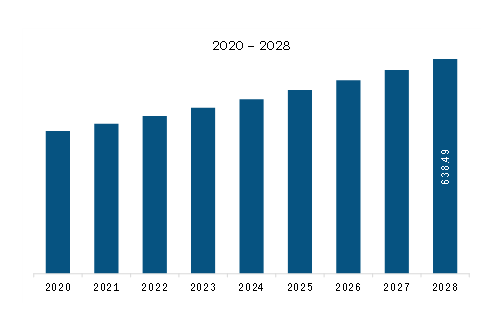
The coconut candy market in Asia Pacific is expected to grow from US$ 468.16 million in 2022 to US$ 638.49 million by 2028. It is estimated to grow at a CAGR of 5.3% from 2022 to 2028.
Consumer Inclination Toward Vegan Candies
Veganism is gaining significant traction with consumers becoming increasingly concerned about animal cruelty, sustainability, and health and well-being. Registrations for “Veganuary,” a nonprofit organization that encourages people to eat vegan food in January, are increasing at a dramatic rate, with 620,000 registrations in 2022. According to Veganuary, the veganism trend is becoming more than just a one-month commitment as a large number of people are permanently shifting toward plant-based food. The increasing preference for vegan food is mainly attributed to the perceived health benefits of plant-based food over animal-derived food. Moreover, the rising number of affiliations for animal safety is also favoring the vegan industry’s growth. Vegan candies, constituting 100% plant-based ingredients, are highly suitable for consumers looking for healthy indulgence. Coconut candies are also expected to gain huge traction among consumers with a rising inclination toward vegan candies. Confectionery manufacturers are launching coconut candies with vegan claims to appeal to a large number of consumers. For example, in January 2021, Bounty, a brand of Mars Incorporated, launched vegan chocolate bars blended with diced coconut, inspired by tropical flavors. The product is 100% vegan and gluten free. Thus, the rising preference for vegan candies is likely to emerge as a new trend in the Asia Pacific coconut candy market during the forecast period.
Market Overview
Australia, China, India, Japan, South Korea, and the Rest of Asia Pacific are the key contributors to the coconut candy market in the Asia Pacific. Asia Pacific significantly contributes to the production and consumption of coconut-based products as the major plantations are found in countries such as Indonesia, the Philippines, India, Sri Lanka, and Vietnam. According to an article published by the Food and Agriculture Organization of the United Nations, the 15 member countries of the Asian and Pacific Coconut Community (APCC) account for a major share of area and production, occupying 10.7 million ha (87%) and 9.2 million MT of copra equivalent (82.81%). Indonesia, the Philippines, and India are the major producers of coconut in the world. Thus, it is convenient for manufacturers to procure raw materials for making coconut-based confectioneries such as coconut candy. These factors are anticipated to drive market growth in the region. Moreover, Vietnam is one of the well-established markets for coconut candies—Kẹo dừa—a Vietnamese coconut candy produced in Bến Tre province, Vietnam. This candy is made with coconut milk and coconut cream. Additionally, there are over a hundred coconut candy manufacturers in Bến Tre (Vietnam), making up 30% of local enterprises. However, the market is dominated by a handful of well-known brands, with most manufacturers producing candy under license for these brands. These candies are also exported to other Asian countries, such as Australia. Manufacturers offer a wider range of products in accordance with consumer needs—such as non-GMO, sugar-free, clean-label products—as consumers in the region are getting health conscious, resulting in the increasing demand for low-calorie and sugar-free confectionery products. Consumers in the region have diversified tastes and preferences and are fond of experimenting with new flavors. These factors are expected to drive the growth of the Asia Pacific coconut candy market in the region.
Asia Pacific Coconut Candy Market Revenue and Forecast to 2028 (US$ Million)
Based on product type, the market is bifurcated into chocolate coconut candy and non-chocolate coconut candy. The chocolate coconut candy segment registered the larger market share in 2022.
Based on category, the market is bifurcated into sugar-free and conventional. The conventional segment held a larger market share in 2022.
Based on distribution channel, the market is segmented into supermarkets & hypermarkets, convenience stores, online retail, and others. The supermarkets & hypermarkets segment held the largest market share in 2022.
Based on country, the market is segmented into Australia, China, India, Japan, South Korea, and the Rest of Asia Pacific. China dominated the market share in 2022.
Alfred Ritter GmbH & Co. KG; Chocoladefabriken Lindt and Spruengli AG; Ferrero International S.A.; Godiva; Mars Incorporated; The Hershey Company; Unreal Brands Inc.; and Weetabix Food Co. are the leading companies operating in the coconut candy market in the Asia Pacific region.
Asia Pacific Coconut Candy Market Strategic Insights
Get more information on this report
Asia Pacific Coconut Candy Market Segmentation Analysis
Asia Pacific Coconut Candy Market Report Highlights
Asia Pacific Coconut Candy Report Scope
Report Attribute
Details
Market size in 2022
US$ 468.16 Million
Market Size by 2028
US$ 638.49 Million
CAGR (2022 - 2028)
5.3%
Historical Data
2020-2021
Forecast period
2023-2028
Segments Covered
By Product Type
Chocolate Coconut Candy
Non-Chocolate Coconut Candy
By Category
Sugar-Free
Conventional
By Distribution Channel
Supermarkets & Hypermarkets
Convenience Stores
Online Retail
Regions and Countries Covered
Asia-Pacific
China, India, Japan, Australia, Rest of Asia-Pacific
Market leaders and key company profiles
Alfred Ritter GmbH & Co. KG
Chocoladefabriken Lindt and Spruengli AG
Ferrero International S.A.
Godiva
Mars Incorporated
The Hershey Company
Unreal Brands Inc.
Weetabix Food Co.
Get more information on this report
Asia Pacific Coconut Candy Market Country and Regional Insights
Get more information on this report
Identical Market Reports with other Region/Countries
The List of Companies - Asia Pacific Coconut Candy Market
Alfred Ritter GmbH & Co. KGChocoladefabriken Lindt and Spruengli AGFerrero International S.A.GodivaMars IncorporatedThe Hershey CompanyUnreal Brands Inc.Weetabix Food Co.
Frequently Asked Questions
How big is the Asia Pacific Coconut Candy Market?
The Asia Pacific Coconut Candy Market is valued at US$ 468.16 Million in 2022, it is projected to reach US$ 638.49 Million by 2028.
What is the CAGR for Asia Pacific Coconut Candy Market by (2022 - 2028)?
As per our report Asia Pacific Coconut Candy Market, the market size is valued at US$ 468.16 Million in 2022, projecting it to reach US$ 638.49 Million by 2028. This translates to a CAGR of approximately 5.3% during the forecast period.
What segments are covered in this report?
The Asia Pacific Coconut Candy Market report typically cover these key segments-
Product Type (Chocolate Coconut Candy, Non-Chocolate Coconut Candy)
Category (Sugar-Free, Conventional)
Distribution Channel (Supermarkets & Hypermarkets, Convenience Stores, Online Retail)
What is the historic period, base year, and forecast period taken for Asia Pacific Coconut Candy Market?
The historic period, base year, and forecast period can vary slightly depending on the specific market research report. However, for the Asia Pacific Coconut Candy Market report:
Historic Period : 2020-2021
Base Year : 2022
Forecast Period : 2023-2028
Who are the major players in Asia Pacific Coconut Candy Market?
The Asia Pacific Coconut Candy Market is populated by several key players, each contributing to its growth and innovation. Some of the major players include:
Alfred Ritter GmbH & Co. KG
Chocoladefabriken Lindt and Spruengli AG
Ferrero International S.A.
Godiva
Mars Incorporated
The Hershey Company
Unreal Brands Inc.
Weetabix Food Co.
Who should buy this report?
The Asia Pacific Coconut Candy Market report is valuable for diverse stakeholders, including:
Investors: Provides insights for investment decisions pertaining to market growth, companies, or industry insights. Helps assess market attractiveness and potential returns.
Industry Players: Offers competitive intelligence, market sizing, and trend analysis to inform strategic planning, product development, and sales strategies.
Suppliers and Manufacturers: Helps understand market demand for components, materials, and services related to concerned industry.
Researchers and Consultants: Provides data and analysis for academic research, consulting projects, and market studies.
Financial Institutions: Helps assess risks and opportunities associated with financing or investing in the concerned market.
Essentially, anyone involved in or considering involvement in the Asia Pacific Coconut Candy Market value chain can benefit from the information contained in a comprehensive market report.





 Get Free Sample For Asia Pacific Coconut Candy Market