Analysis - by Product (Botulinum Toxin A and Botulinum Toxin B), Application (Medical and Aesthetic), and End User (Specialty & Dermatology Clinics, Hospitals & Clinics, and Others)
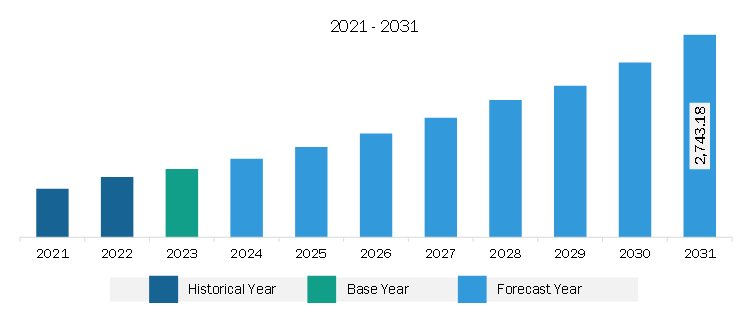
The Asia Pacific botulinum toxin market was valued at US$ 925.29 million in 2023 and is expected to reach US$ 2,743.18 million by 2031; it is estimated to register a CAGR of 14.6% from 2023 to 2031.
Increasing Use of Botulinum Toxin for Enhancing Facial Aesthetics Boosts Asia Pacific Botulinum Toxin Market
Cosmetic surgery and injectable botulinum toxin are among the most popular noninvasive rejuvenation procedures. According to the ISAPS, in 2020, the botulinum toxin treatment was the leading noninvasive cosmetic procedure performed worldwide. Moreover, the use of botulinum toxin type A-based (BoNTA) cosmetic facial treatments are performed to improve the aesthetics of the upper and lower face. In the last decade, a facial rejuvenation procedure has gained significant popularity over different types of traditional surgeries. According to the ISAPS, ~7.3 million botulinum toxin procedures were performed globally in 2020. Thus, the surge in the adoption of botulinum toxin in facial aesthetic procedures for both men and women from all age groups is driving the botulinum toxin market growth.
Asia Pacific Botulinum Toxin Market Overview
The Asia Pacific botulinum toxin market is segmented into China, India, Japan, South Korea, Australia, and the Rest of Asia Pacific. The number of people suffering from headache or migraine has been rising every year, and botulinum toxin has been proven effective in reducing the frequency and severity of headaches in patients with chronic migraine. Moreover, the rising awareness of cosmetic procedures such as skin rejuvenation to improve aesthetic appeal and an increase in healthcare expenditure help to boost the growth of the botulinum toxin market in the region.The aesthetic industry in Japan has witnessed massive growth in the past. The industry is well-developed and has access to a wide range of aesthetic products. The industry is highly regulated, and hence, only licensed medical doctors perform aesthetic procedures. The market in the country is mainly driven by the increasing number of consumers willing to invest in altering and maintaining their looks. According to the ISAPS, in 2021, 458,749 botulinum toxin procedures were performed across the country. The country ranks 3rd among all the countries performing nonsurgical aesthetic procedures in the world, with share of 6.3% of the total procedures performed in the world.
Various international companies have obtained approvals for their products that treat muscle spasticity. Thus, Japanese firms have taken strategic initiatives to secure their positions in the market. In June 2021, Teijin Pharma Limited and Merz Therapeutics, a business of the Merz Group, together announced that Teijin Pharma had been granted additional approval by Japan’s Ministry of Health, Labor and Welfare (MHLW) to market Xeomin (incobotulinumtoxinA). To treat lower limb spasticity, Xeomin would be used in the form of intramuscular injection in 50, 100, or 200 units. This strategic move has benefited both companies for the successful launch of Xeomin to treat spasticity indication in Japan. Thus, such instances are expected to encourage more players to develop botulinum toxin for different medical conditions to enter the Japanese market.
Asia Pacific Botulinum Toxin Market Revenue and Forecast to 2031 (US$ Million)
Asia Pacific Botulinum Toxin Market Segmentation
The Asia Pacific botulinum toxin market is categorized into product, application, end user, and country.
Based on product, the Asia Pacific botulinum toxin market is bifurcated into botulinum toxin A and botulinum toxin B. The botulinum toxin A segment held a larger share of Asia Pacific botulinum toxin market share in 2023.
In terms of application, the Asia Pacific botulinum toxin market is bifurcated into medical and aesthetic. The medical segment held a larger share of Asia Pacific botulinum toxin market in 2023. Furthermore, the medical segment is subcategorized into chronic migraine, muscle spasm, over reactive bladder, hyperhidrosis, and others. Additionally, the aesthetic segment is subcategorized into frown lines/ glabellar, forehead lines, crow’s feet, square jaw/ masseter, and others.
By end user, the Asia Pacific botulinum toxin market is divided into specialty & dermatology clinics, hospitals & clinics, and others. The specialty and dermatology clinics segment held the largest share of Asia Pacific botulinum toxin market in 2023.
Based on country, the Asia Pacific botulinum toxin market is segmented into Japan, China, India, South Korea, Australia, and the Rest of Asia Pacific. Japan dominated the Asia Pacific botulinum toxin market share in 2023.
Merz Pharma GmbH & Co KGaA, AbbVie Inc, Ipsen SA, Evolus Inc, Medytox Inc, Galderma SA, Hugel Inc, and Lanzhou Institute of Biological Products Co Ltd are some of the leading companies operating in the Asia Pacific botulinum toxin market.
Asia Pacific Botulinum Toxin Market Strategic Insights
Get more information on this report
Asia Pacific Botulinum Toxin Market Segmentation Analysis
Asia Pacific Botulinum Toxin Market Report Highlights
Asia Pacific Botulinum Toxin Report Scope
Report Attribute
Details
Market size in 2023
US$ 925.29 Million
Market Size by 2031
US$ 2,743.18 Million
CAGR (2023 - 2031)
14.6%
Historical Data
2021-2022
Forecast period
2024-2031
Segments Covered
By Product
Botulinum Toxin A and Botulinum Toxin B
By Application
Medical and Aesthetic
By End User
Specialty & Dermatology Clinics
Hospitals & Clinics
Regions and Countries Covered
Asia-Pacific
China, India, Japan, Australia, Rest of Asia-Pacific
Market leaders and key company profiles
Merz Pharma GmbH & Co KGaA
AbbVie Inc
Ipsen SA
Evolus Inc
Medytox Inc
Galderma SA
Hugel Inc
Lanzhou Institute of Biological Products Co Ltd
Get more information on this report
Asia Pacific Botulinum Toxin Market Country and Regional Insights
Get more information on this report
Identical Market Reports with other Region/Countries
The List of Companies - Asia Pacific Botulinum Toxin Market
Merz Pharma GmbH & Co KGaAAbbVie IncIpsen SAEvolus Inc Medytox IncGalderma SAHugel IncLanzhou Institute of Biological Products Co Ltd
Krishna is a Market Research Analyst with over 4 years of experience across Life Sciences and Materials & Chemicals industries. He holds a Bachelor's degree in Pharmacy (B.Pharm.) and a Master's degree in Pharmaceutical Medicinal Chemistry (M.Pharm.). His expertise spans market intelligence, competitive benchmarking, market sizing and forecasting, primary and secondary research, and strategic consulting.
Krishna has successfully contributed to numerous syndicated and custom research engagements, delivering industry reports, market assessments, competitive analyses, and business proposals for clients across diverse sectors. With ..
Show More
Frequently Asked Questions
How big is the Asia Pacific Botulinum Toxin Market?
The Asia Pacific Botulinum Toxin Market is valued at US$ 925.29 Million in 2023, it is projected to reach US$ 2,743.18 Million by 2031.
What is the CAGR for Asia Pacific Botulinum Toxin Market by (2023 - 2031)?
As per our report Asia Pacific Botulinum Toxin Market, the market size is valued at US$ 925.29 Million in 2023, projecting it to reach US$ 2,743.18 Million by 2031. This translates to a CAGR of approximately 14.6% during the forecast period.
What segments are covered in this report?
The Asia Pacific Botulinum Toxin Market report typically cover these key segments-
Product (Botulinum Toxin A and Botulinum Toxin B)
Application (Medical and Aesthetic)
End User (Specialty & Dermatology Clinics, Hospitals & Clinics)
What is the historic period, base year, and forecast period taken for Asia Pacific Botulinum Toxin Market?
The historic period, base year, and forecast period can vary slightly depending on the specific market research report. However, for the Asia Pacific Botulinum Toxin Market report:
Historic Period : 2021-2022
Base Year : 2023
Forecast Period : 2024-2031
Who are the major players in Asia Pacific Botulinum Toxin Market?
The Asia Pacific Botulinum Toxin Market is populated by several key players, each contributing to its growth and innovation. Some of the major players include:
Merz Pharma GmbH & Co KGaA
AbbVie Inc
Ipsen SA
Evolus Inc
Medytox Inc
Galderma SA
Hugel Inc
Lanzhou Institute of Biological Products Co Ltd
Who should buy this report?
The Asia Pacific Botulinum Toxin Market report is valuable for diverse stakeholders, including:
Investors: Provides insights for investment decisions pertaining to market growth, companies, or industry insights. Helps assess market attractiveness and potential returns.
Industry Players: Offers competitive intelligence, market sizing, and trend analysis to inform strategic planning, product development, and sales strategies.
Suppliers and Manufacturers: Helps understand market demand for components, materials, and services related to concerned industry.
Researchers and Consultants: Provides data and analysis for academic research, consulting projects, and market studies.
Financial Institutions: Helps assess risks and opportunities associated with financing or investing in the concerned market.
Essentially, anyone involved in or considering involvement in the Asia Pacific Botulinum Toxin Market value chain can benefit from the information contained in a comprehensive market report.







 Get Free Sample For Asia Pacific Botulinum Toxin Market