Analysis By Type (In Situ Bioremediation and Ex Situ Bioremediation), Technology (Phytoremediation, Bio Stimulation, Bioaugmentation, Bioreactors, Fungal Remediation, and Land-Based Treatments), and Services (Soil Remediation, Wastewater Remediation, Oilfield Remediation, and Others)
No. of Pages:116
Report Code:
TIPRE00027772
Category:
Life Sciences
Asia Pacific Bioremediation Technology and Services Market
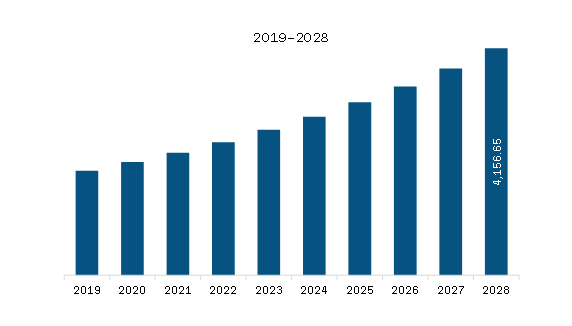
The bioremediation technology and services market in Asia-Pacific is expected to grow from US$ 2,249.68 million in 2021 to US$ 4,156.65 million by 2028; it is estimated to grow at a CAGR of 9.2% from 2021 to 2028.
The increasing content of micro-nano plastics (MNPs) in natural ecosystems has a negative impact on the environment and biological health. MNP invades the agroecosystems, flora, fauna, and the human body through microbes' transport, ingestion, and inhalation, causing vascular obstruction, infertility, and abnormal behavior. Therefore, applying a new approach to remediate MNP from the natural environment is essential. Among the several prevailing technologies of MNPs remediation, microbial remediation is considered a greener technology. Microbial degradation of plastics is typically influenced by several biotic and abiotic factors such as enzymatic mechanisms, substrates, co-substrates concentration, pH, oxidative stress, and temperature. Therefore, it is vital to acknowledge the critical pathways adopted by microbes to use plastic fragments as the only carbon source for growth and development. Thus, the rising level of micro-nano plastics (MNPs) in the natural ecosystem is expected to fuel the demand for bioremediation, which is likely to offer various growth opportunities for bioremediation technology and services market players during the forecast period.
COVID-19 policies in Asia-Pacific have slowed the region's economic recovery compared to the rest of the world. Plastic garbage that has not been properly managed poses a serious threat to natural ecosystems and public health and safety. Nonetheless, governmental institutions, scientific communities, and public are paying less and less attention to environmental health issues. Several national and state-level agreements on the usage and consumption of plastics have been withdrawn as evidence of this. Cities with high COVID-19 incidence rates are trying to keep up with the rapid growth in medical waste generated by hospitals. The rapid increase in medical waste is straining any country's or municipality's ability to handle and treat it properly. Due to the SARS-CoV-2 virus's persistence and high contagiousness, many countries have classified all hospital trash as infectious, requiring it to be burnt at high temperatures for sterilize, followed by landfilling of the leftover ash.
Asia-Pacific Bioremediation Technology and Services Market Revenue and Forecast to 2028 (US$ Million)
Asia-Pacific Bioremediation Technology and Services Market Segmentation
Asia-Pacific Bioremediation Technology and Services Market – By Type
In Situ Bioremediation
Ex Situ Bioremediation
Asia-Pacific Bioremediation Technology and Services Market – By Technology
Phytoremediation
Bio stimulation
Bioreactors
Bioaugmentation
Fungal Remediation
Land-based Treatments
Asia-Pacific Bioremediation Technology and Services Market – ByServices
Soil Remediation
Wastewater Remediation
Oilfield Remediation
Others
Asia-Pacific Bioremediation Technology and Services Market– By Country
China
Japan
India
South Korea
Australia
Rest of Asia-Pacific
Asia-Pacific Bioremediation Technology and Services Market-Companies Mentioned
Aquatech International LLC.
InSitu Remediation Services Limited
Ivey International Inc.
REGENESIS
Xylem Inc
Asia Pacific Bioremediation Technology and Services Market Strategic Insights
Get more information on this report
Asia Pacific Bioremediation Technology and Services Market Segmentation Analysis
Asia Pacific Bioremediation Technology and Services Market Report Highlights
Asia Pacific Bioremediation Technology and Services Report Scope
Report Attribute
Details
Market size in 2021
US$ 2,249.68 Million
Market Size by 2028
US$ 4,156.65 Million
CAGR (2021 - 2028)
9.2%
Historical Data
2019-2020
Forecast period
2022-2028
Segments Covered
By Type
In Situ Bioremediation
Ex Situ Bioremediation
By Technology
Phytoremediation
Bio Stimulation
Bioaugmentation
Bioreactors
Fungal Remediation
Land-Based Treatments
By Services
Soil Remediation
Wastewater Remediation
Oilfield Remediation
Regions and Countries Covered
Asia-Pacific
China, India, Japan, Australia, Rest of Asia-Pacific
Market leaders and key company profiles
Aquatech International LLC.
InSitu Remediation Services Limited
Ivey International Inc.
REGENESIS
Xylem Inc.
Get more information on this report
Asia Pacific Bioremediation Technology and Services Market Country and Regional Insights
Get more information on this report
Identical Market Reports with other Region/Countries
The List of Companies - Asia Pacific Bioremediation Technology and Services Market
Aquatech International LLC.InSitu Remediation Services LimitedIvey International Inc.REGENESISXylem Inc.
Krishna is a Market Research Analyst with over 4 years of experience across Life Sciences and Materials & Chemicals industries. He holds a Bachelor's degree in Pharmacy (B.Pharm.) and a Master's degree in Pharmaceutical Medicinal Chemistry (M.Pharm.). His expertise spans market intelligence, competitive benchmarking, market sizing and forecasting, primary and secondary research, and strategic consulting.
Krishna has successfully contributed to numerous syndicated and custom research engagements, delivering industry reports, market assessments, competitive analyses, and business proposals for clients across diverse sectors. With ..
Show More
Frequently Asked Questions
How big is the Asia Pacific Bioremediation Technology and Services Market?
The Asia Pacific Bioremediation Technology and Services Market is valued at US$ 2,249.68 Million in 2021, it is projected to reach US$ 4,156.65 Million by 2028.
What is the CAGR for Asia Pacific Bioremediation Technology and Services Market by (2021 - 2028)?
As per our report Asia Pacific Bioremediation Technology and Services Market, the market size is valued at US$ 2,249.68 Million in 2021, projecting it to reach US$ 4,156.65 Million by 2028. This translates to a CAGR of approximately 9.2% during the forecast period.
What segments are covered in this report?
The Asia Pacific Bioremediation Technology and Services Market report typically cover these key segments-
Type (In Situ Bioremediation, Ex Situ Bioremediation)
Technology (Phytoremediation, Bio Stimulation, Bioaugmentation, Bioreactors, Fungal Remediation, Land-Based Treatments)
What is the historic period, base year, and forecast period taken for Asia Pacific Bioremediation Technology and Services Market?
The historic period, base year, and forecast period can vary slightly depending on the specific market research report. However, for the Asia Pacific Bioremediation Technology and Services Market report:
Historic Period : 2019-2020
Base Year : 2021
Forecast Period : 2022-2028
Who are the major players in Asia Pacific Bioremediation Technology and Services Market?
The Asia Pacific Bioremediation Technology and Services Market is populated by several key players, each contributing to its growth and innovation. Some of the major players include:
Aquatech International LLC.
InSitu Remediation Services Limited
Ivey International Inc.
REGENESIS
Xylem Inc.
Who should buy this report?
The Asia Pacific Bioremediation Technology and Services Market report is valuable for diverse stakeholders, including:
Investors: Provides insights for investment decisions pertaining to market growth, companies, or industry insights. Helps assess market attractiveness and potential returns.
Industry Players: Offers competitive intelligence, market sizing, and trend analysis to inform strategic planning, product development, and sales strategies.
Suppliers and Manufacturers: Helps understand market demand for components, materials, and services related to concerned industry.
Researchers and Consultants: Provides data and analysis for academic research, consulting projects, and market studies.
Financial Institutions: Helps assess risks and opportunities associated with financing or investing in the concerned market.
Essentially, anyone involved in or considering involvement in the Asia Pacific Bioremediation Technology and Services Market value chain can benefit from the information contained in a comprehensive market report.






 Get Free Sample For Asia Pacific Bioremediation Technology and Services Market