Analysis – by Channel Type (16, 8, and 4), Battery Type [Lead Acid, Nickel Cadmium (NiCd) Batteries, Nickel -Metal (NiMh) Batteries, and Lithium-Ion (Li-Ion) Batteries], and End User (Aerospace, Energy & Power, Automotive, Consumer Electronics, and Others)
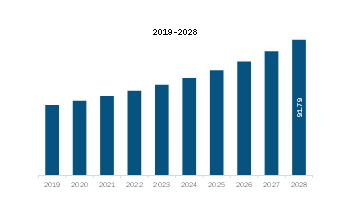
The battery cyclers market in APAC is expected to grow from US$ 57.29 million in 2022 to US$ 91.79 million by 2028. It is estimated to grow at a CAGR of 8.2% from 2022 to 2028.
Increasing Adoption of Battery Cyclers in Healthcare Sector
During the COVID-19 pandemic, the demand for diagnostic equipment, ventilators, and other critical care devices has increased worldwide. Lithium batteries are the preferred choice for both primary and backup energy sources in implanted and portable devices due to their long life and high energy density. Monitors; tools such as surgical drills and robots; and vital devices such as defibrillators, transport ventilators, and heart and lung machines need batteries. Therefore, prominent battery testing companies are offering continuous support and services in response to the growing demand in the healthcare sector. According to a survey by the FDA, poor battery conditions lead to equipment malfunctions which mat adversely impact the patient’s conditions. As battery failures in hospitals may lead to critical conditions, most of the underperforming batteries are discarded even when they are still usable. Comprehensive testing and easily accessible maintenance information are required to minimize wastage while assuring the optimum functioning of battery-powered devices when needed. Therefore, continuous testing and maintenance are required to reduce battery wastage and ensure battery and equipment safety. Hence, the growing demand for medical equipment and the need to reduce battery wastage is expected to boost the demand for battery cyclers in the coming years. Manufacturers of battery cyclers and other testing equipment can utilize high-resolution technologies to detect the slightest changes in battery performance during the testing. Thus, regular testing and maintenance are essential to reduce battery waste and assure the safety of batteries used in medical devices, which drives the growth of the battery cyclers market.
Market Overview
Automotive, aerospace, machinery, and consumer electronics are among the major manufacturing industries in APAC. The automotive industry and consumer electronics industry in each of the APAC countries contribute ~7% and ~10%, respectively to the country’s GDP. Further, the automotive industry in the region is the largest private investor in R&D, and it receives support from governments in the form of R&D funds. The car manufacturers in APAC countries such as Volkswagen, Volvo, Audi, and BMW are investing in the production of EVs, which will drive the demand for batteries. Moreover, the industries in countries under APAC Union is experiencing growth based on the quantity of lithium-ion batteries that are recycled every year. A battery cycler is a vital instrument for both research and testing of rechargeable batteries. Thus, the above factors are likely to boost the battery cyclers market during the forecast period.
APAC Battery Cyclers Market Revenue and Forecast to 2028 (US$ Million)
APAC Battery Cyclers Market Segmentation
The APAC battery cyclers market is segmented into channel type, battery type, end user and country. Based on channel type, the market is segmented into 16, 8, and 4. The 8 segment registered the largest market share in 2022.
Based on battery type, the APAC battery cyclers market is segmented into lead acid, nickel-cadmium batteries, nickel-metal hydride batteries, and lithium-ion batteries. The lithium-ion batteries segment registered the largest market share in 2022.
Based on end user, the APAC battery cyclers market is segmented into aerospace, energy and power, automotive, consumer electronics and others. The consumer electronics segment registered the largest market share in 2022.
Based on country, the market is segmented into Australia, China, India, Japan, South Korea, and Rest of APAC. China dominated the market share in 2022.
Arbin Instruments; BioLogic Sciences Instruments; Bitrode Corporation; Chroma Systems Solutions, Inc.; Digatron; Gamry Instruments; Hioki E.E. Corporation; PEC; Unico, LLC; and Xiamen Tmax Battery Equipments Limited are the leading companies operating in the battery cyclers market in the region.
The List of Companies - Asia-Pacific Battery Cyclers Market
Arbin InstrumentsBioLogic Sciences InstrumentsBitrode CorporationChroma Systems Solutions, Inc.DigatronGamry InstrumentsHioki E.E. CorporationPECUnico, LLCXiamen Tmax Battery Equipments Limited
Frequently Asked Questions
How big is the Asia-Pacific Battery Cyclers Market?
The Asia-Pacific Battery Cyclers Market is valued at US$ 57.29 Million in 2022, it is projected to reach US$ 91.79 Million by 2028.
What is the CAGR for Asia-Pacific Battery Cyclers Market by (2022 - 2028)?
As per our report Asia-Pacific Battery Cyclers Market, the market size is valued at US$ 57.29 Million in 2022, projecting it to reach US$ 91.79 Million by 2028. This translates to a CAGR of approximately 8.2% during the forecast period.
What segments are covered in this report?
The Asia-Pacific Battery Cyclers Market report typically cover these key segments-
End User (Aerospace, Energy & Power, Automotive, Consumer Electronics)
What is the historic period, base year, and forecast period taken for Asia-Pacific Battery Cyclers Market?
The historic period, base year, and forecast period can vary slightly depending on the specific market research report. However, for the Asia-Pacific Battery Cyclers Market report:
Historic Period : 2020-2021
Base Year : 2022
Forecast Period : 2023-2028
Who are the major players in Asia-Pacific Battery Cyclers Market?
The Asia-Pacific Battery Cyclers Market is populated by several key players, each contributing to its growth and innovation. Some of the major players include:
Arbin Instruments
BioLogic Sciences Instruments
Bitrode Corporation
Chroma Systems Solutions, Inc.
Digatron
Gamry Instruments
Hioki E.E. Corporation
PEC
Unico, LLC
Xiamen Tmax Battery Equipments Limited
Who should buy this report?
The Asia-Pacific Battery Cyclers Market report is valuable for diverse stakeholders, including:
Investors: Provides insights for investment decisions pertaining to market growth, companies, or industry insights. Helps assess market attractiveness and potential returns.
Industry Players: Offers competitive intelligence, market sizing, and trend analysis to inform strategic planning, product development, and sales strategies.
Suppliers and Manufacturers: Helps understand market demand for components, materials, and services related to concerned industry.
Researchers and Consultants: Provides data and analysis for academic research, consulting projects, and market studies.
Financial Institutions: Helps assess risks and opportunities associated with financing or investing in the concerned market.
Essentially, anyone involved in or considering involvement in the Asia-Pacific Battery Cyclers Market value chain can benefit from the information contained in a comprehensive market report.





 Get Free Sample For Asia-Pacific Battery Cyclers Market