Analysis - by Technology (Wired Navigation, Guide Tape Navigation, Laser Target Navigation, Magnetic Navigation, and Others), Vehicle Type (Pallet Trucks, Unit Load Carriers, Driverless Trains, Forklift Trucks, and Others), and End User (General Manufacturing, Food and Beverage, Aerospace, Retail, Healthcare, Logistics, Automotive, and Others)
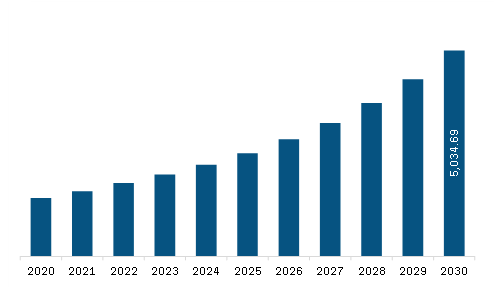
The Asia Pacific automated guided vehicle market was valued at US$ 1,794.60 million in 2022 and is expected to reach US$ 5,034.69 million by 2030; it is estimated to grow at a CAGR of 13.8% from 2022 to 2030.
Technological Advancements in AGVs fuel the Asia Pacific Automated Guided Vehicle Market
Technological advancements play a crucial role in the automated guided vehicle (AGV) market. As with many industries, AGV technology continues to evolve and improve, driven by innovations. AGVs rely on various navigation methods, including laser-based systems, magnetic tape, vision-based systems, and LiDAR, to move autonomously through their environments. Advancements in navigation algorithms and sensor technologies have led to more accurate and reliable AGV movement, enabling them to precisely navigate complex and dynamic environments. AGVs are also becoming smarter with the integration of artificial intelligence (AI) and machine learning (ML) algorithms. These technologies allow AGVs to learn from their surroundings, optimize their routes, and adapt to changing conditions in real time. AI and ML enable predictive maintenance, enhance the AGVs' reliability, and reduce downtime.
Several companies are using AI-based AGVs. In May 2023, KION announced that it is increasingly deploying AI systems in its solutions—such as smart factories, assistance systems, or AGVs. AI will help optimize warehouse operations, anticipate demand and bottlenecks, and reduce the risk of overstocks or shortfalls. The KION Group is proactively cultivating the potential that AI offers, harnessing its position as a global technology leader. AGVs are increasingly becoming part of interconnected systems within smart factories and warehouses. They communicate with other machines, control systems, and central servers, allowing coordinated operations, data exchange, and real-time tracking. These technological advancements drive the AGV market toward increased automation, efficiency, and adaptability. As businesses continue to seek ways to optimize their operations, AGVs equipped with latest technologies are projected to become attractive solutions to meet the growing demand of various industries, from manufacturing and warehousing to healthcare and logistics.
Asia Pacific Automated Guided Vehicle Market Overview
The Asia Pacific automated guided vehicle market is segmented into China, Japan, India, Australia, South Korea, and the Rest of Asia Pacific. Rapid developments, digitalization of the economy, adequate government support, increasing education awareness, and rising incomes of the middle class are a few factors contributing to the development of the abovementioned economies. In Asia Pacific, the manufacturing, electronics & semiconductor, and automotive sectors are heavily dependent on the use of automated material handling systems to ensure optimum material handling costs, increased employee safety, and improved overall supply chain efficiency.
Asia Pacific Automated Guided Vehicle Market Revenue and Forecast to 2030 (US$ Million)
Asia Pacific Automated Guided Vehicle Market Segmentation
The Asia Pacific automated guided vehicle market is segmented based on technology, vehicle type, end user, and country. Based on technology, the Asia Pacific automated guided vehicle market is segmented into wired navigation, guide tape navigation, laser target navigation, magnetic navigation, and others. The laser target navigation segment held the largest market share in 2022.
Based on vehicle type, the Asia Pacific automated guided vehicle market is segmented into pallet trucks, tow vehicle, tugger trains, forklift trucks, and others. The tow vehicle segment held the largest market share in 2022.
Based on end user, the Asia Pacific automated guided vehicle market is segmented into general manufacturing, food and beverage, aerospace, retail, healthcare, logistics, automotive, and others. The logistics segment held the largest market share in 2022.
Based on country, the Asia Pacific automated guided vehicle market is segmented into China, Japan, India, South Korea, Australia, Indonesia, Singapore, Malaysia, Thailand, and the Rest of Asia Pacific. China dominated the Asia Pacific automated guided vehicle market share in 2022.
Bastian solutions, LLC; Daifuku Co Ltd; Dematic Corp; Hyster-Yale Group Inc; John Bean Technologies Corp; Jungheinrich AG; Kion Group AG; Konecranes Plc; Murata Machinery Ltd; and Toyota Material Handling Inc are some of the leading players operating in the Asia Pacific automated guided vehicle market.
Asia Pacific Automated Guided Vehicle Market Strategic Insights
Get more information on this report
Asia Pacific Automated Guided Vehicle Market Segmentation Analysis
Asia Pacific Automated Guided Vehicle Market Report Highlights
Asia Pacific Automated Guided Vehicle Report Scope
Report Attribute
Details
Market size in 2022
US$ 1,794.60 Million
Market Size by 2030
US$ 5,034.69 Million
CAGR (2022 - 2030)
13.8%
Historical Data
2020-2021
Forecast period
2023-2030
Segments Covered
By Technology
Wired Navigation
Guide Tape Navigation
Laser Target Navigation
Magnetic Navigation
By Vehicle Type
Pallet Trucks
Unit Load Carriers
Driverless Trains
Forklift Trucks
By End User
General Manufacturing
Food and Beverage
Aerospace
Retail
Healthcare
Logistics
Automotive
Regions and Countries Covered
Asia-Pacific
China, India, Japan, Australia, Rest of Asia-Pacific
Market leaders and key company profiles
Bastian Solutions LLC
Daifuku Co Ltd
Dematic Corp
Hyster-Yale Group Inc
John Bean Technologies Corp
Jungheinrich AG
Kion Group AG
Konecranes Plc
Murata Machinery Ltd
Toyota Material Handling Inc
Get more information on this report
Asia Pacific Automated Guided Vehicle Market Country and Regional Insights
Get more information on this report
Identical Market Reports with other Region/Countries
The List of Companies - Asia Pacific Automated Guided Vehicle Market
Bastian Solutions LLCDaifuku Co LtdDematic CorpHyster-Yale Group IncJohn Bean Technologies CorpJungheinrich AGKion Group AGKonecranes PlcMurata Machinery LtdToyota Material Handling Inc
Frequently Asked Questions
How big is the Asia Pacific Automated Guided Vehicle Market?
The Asia Pacific Automated Guided Vehicle Market is valued at US$ 1,794.60 Million in 2022, it is projected to reach US$ 5,034.69 Million by 2030.
What is the CAGR for Asia Pacific Automated Guided Vehicle Market by (2022 - 2030)?
As per our report Asia Pacific Automated Guided Vehicle Market, the market size is valued at US$ 1,794.60 Million in 2022, projecting it to reach US$ 5,034.69 Million by 2030. This translates to a CAGR of approximately 13.8% during the forecast period.
What segments are covered in this report?
The Asia Pacific Automated Guided Vehicle Market report typically cover these key segments-
Vehicle Type (Pallet Trucks, Unit Load Carriers, Driverless Trains, Forklift Trucks)
End User (General Manufacturing, Food and Beverage, Aerospace, Retail, Healthcare, Logistics, Automotive)
What is the historic period, base year, and forecast period taken for Asia Pacific Automated Guided Vehicle Market?
The historic period, base year, and forecast period can vary slightly depending on the specific market research report. However, for the Asia Pacific Automated Guided Vehicle Market report:
Historic Period : 2020-2021
Base Year : 2022
Forecast Period : 2023-2030
Who are the major players in Asia Pacific Automated Guided Vehicle Market?
The Asia Pacific Automated Guided Vehicle Market is populated by several key players, each contributing to its growth and innovation. Some of the major players include:
Bastian Solutions LLC
Daifuku Co Ltd
Dematic Corp
Hyster-Yale Group Inc
John Bean Technologies Corp
Jungheinrich AG
Kion Group AG
Konecranes Plc
Murata Machinery Ltd
Toyota Material Handling Inc
Who should buy this report?
The Asia Pacific Automated Guided Vehicle Market report is valuable for diverse stakeholders, including:
Investors: Provides insights for investment decisions pertaining to market growth, companies, or industry insights. Helps assess market attractiveness and potential returns.
Industry Players: Offers competitive intelligence, market sizing, and trend analysis to inform strategic planning, product development, and sales strategies.
Suppliers and Manufacturers: Helps understand market demand for components, materials, and services related to concerned industry.
Researchers and Consultants: Provides data and analysis for academic research, consulting projects, and market studies.
Financial Institutions: Helps assess risks and opportunities associated with financing or investing in the concerned market.
Essentially, anyone involved in or considering involvement in the Asia Pacific Automated Guided Vehicle Market value chain can benefit from the information contained in a comprehensive market report.





 Get Free Sample For Asia Pacific Automated Guided Vehicle Market