Market Summary
Executive Summary and Global Market Analysis
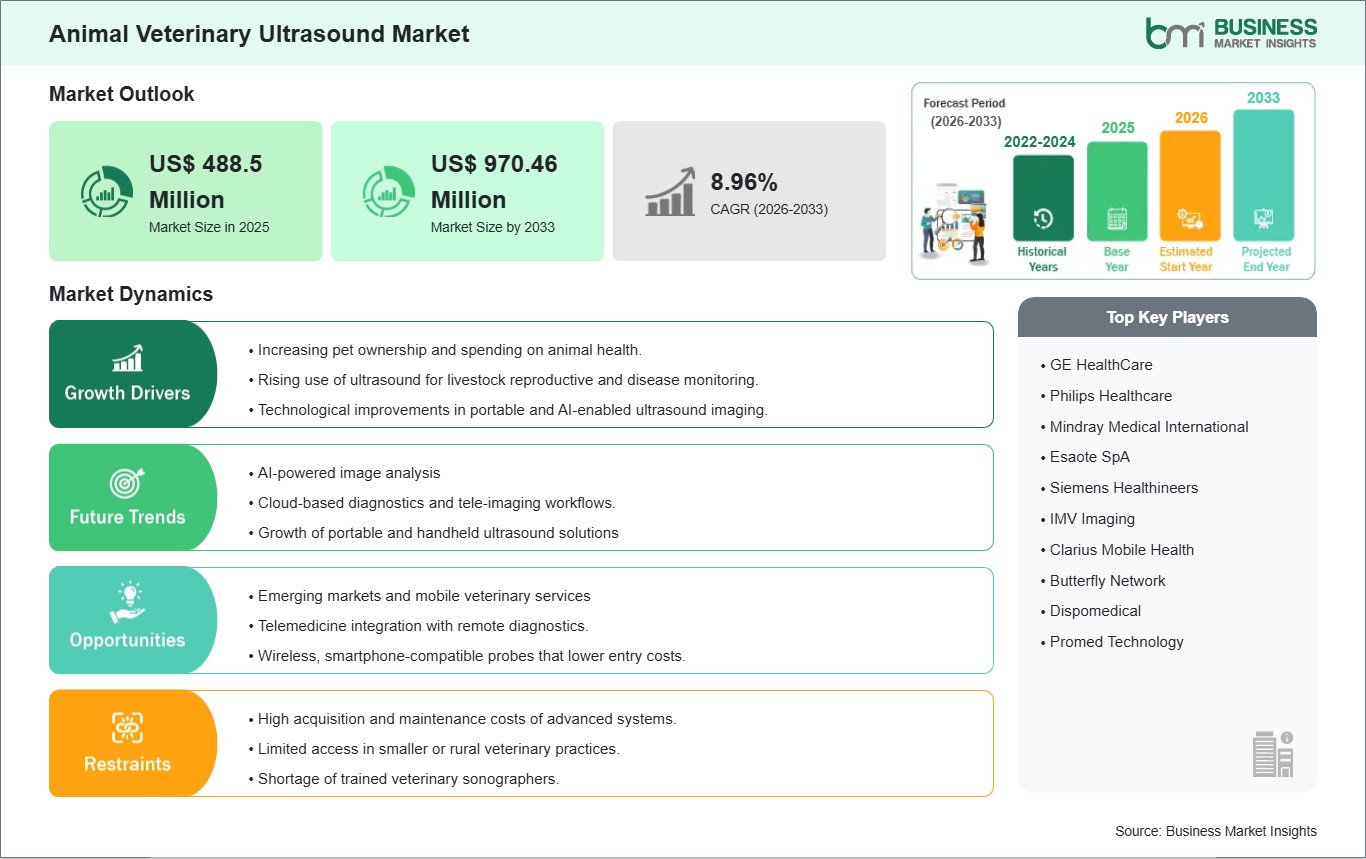
The animal veterinary ultrasound system functions as a vital diagnostic instrument, providing veterinarians with real-time access to observe internal organs, soft tissues, and blood circulation patterns. The systems enable veterinarians to develop precise diagnoses and treatment plans while tracking patient progress across both companion and livestock species. Veterinary practices use ultrasound technology to enhance diagnostic capabilities, reduce the need for invasive tests, and deliver better patient outcomes.
The global animal veterinary ultrasound market is experiencing consistent growth as pet ownership rates rise, animal healthcare spending increases, and people become more aware of animal disease symptoms. The market expansion is supported by growing use of reproductive health services, cardiology services, and abdominal imaging services, which especially benefit companion animals. The veterinary field has seen increased use of portable, point-of-care ultrasound systems, which have achieved greater adoption in both veterinary clinics and field environments.
The market has high growth potential but faces obstacles, including the cost of advanced ultrasound systems, limited ultrasound access in rural veterinary clinics, and the need for qualified veterinary staff to operate imaging technologies. The future will witness substantial growth opportunities as developing nations build their veterinary infrastructure, demand for preventive animal health services increases, and technological advancements continue.
Segment Analysis
Animal Veterinary Ultrasound Market Segmentation
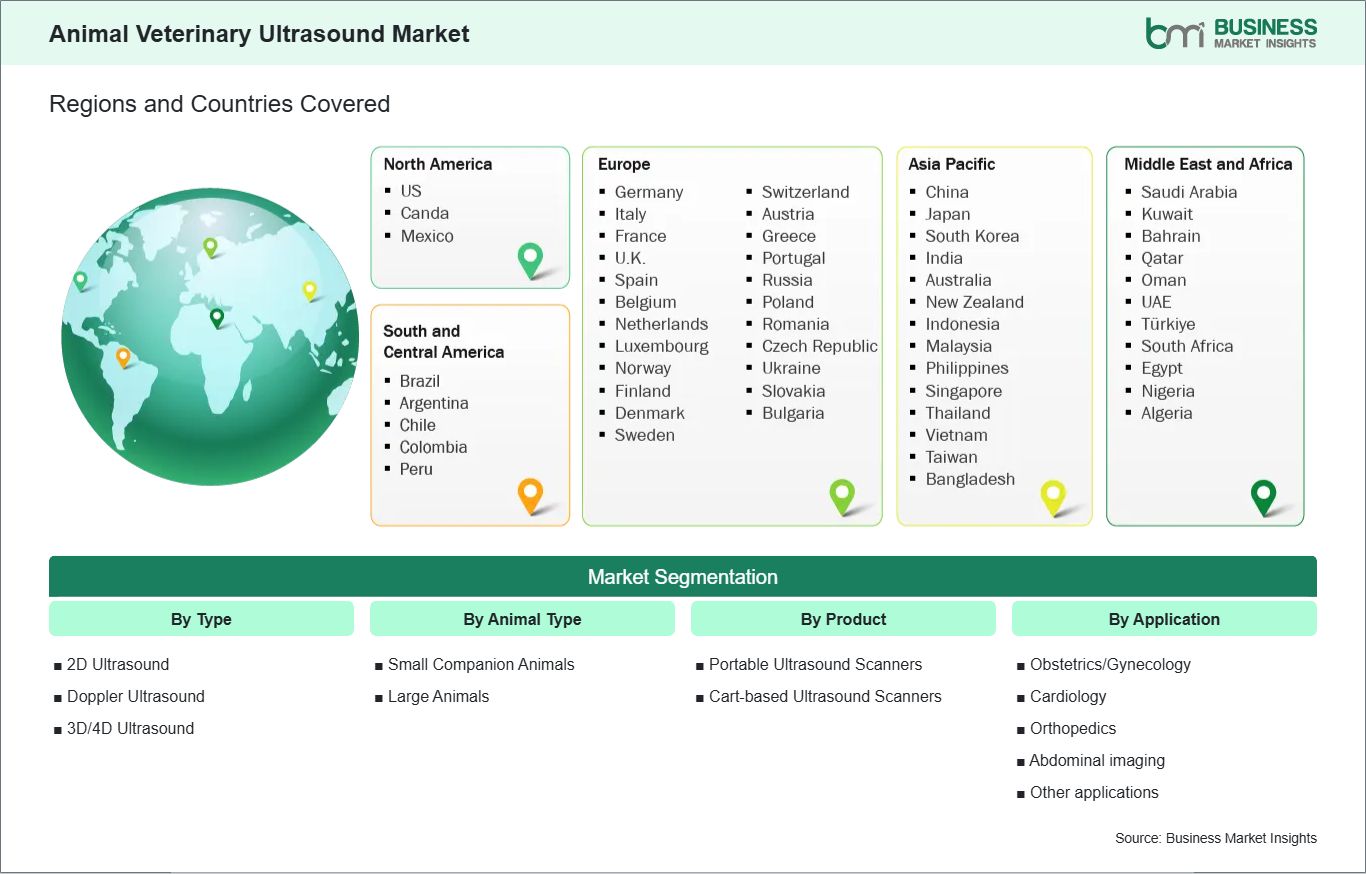
Key segments that contributed to the derivation of the animal veterinary ultrasound market analysis are type, animal type, product, application, and end user.
- By type, the animal veterinary ultrasound market is segmented into 2D ultrasound, doppler ultrasound, 3D/4D ultrasound. The 2D ultrasound segment dominated the market in 2025.
- By animal type, the animal veterinary ultrasound market is segmented into small companion animals, large animals. The small companion animals segment dominated the market in 2025.
- By product, the animal veterinary ultrasound market is segmented into portable ultrasound scanners, cart-based ultrasound scanners. The portable ultrasound scanners segment dominated the market in 2025.
- By application, the market is segmented into obstetrics/gynecology, cardiology, orthopedics, abdominal imaging, other applications. The obstetrics/gynecology segment held the largest market share in 2025.
- By end user, the animal veterinary ultrasound market is segmented into veterinary hospitals and clinics, diagnostic imaging centers, and other end users. The veterinary hospitals and clinics segment dominated the market in 2025.
Market Forces
Animal Veterinary Ultrasound Market Drivers and Opportunities
Rising Prevalence of Animal Health Conditions
The Animal Veterinary Ultrasound market has expanded because companion animals and farm animals now experience more chronic and acute health problems. The veterinary field uses ultrasound as its primary diagnostic tool because abdominal organ problems, cardiovascular issues, and reproductive health conditions require imaging for proper evaluation.
The rising prevalence of reproductive disorders and pregnancy monitoring needs in livestock and companion animals has created a substantial need for ultrasound imaging services. The increasing number of elderly companion animals is driving more cases of cardiac and organ-related diseases, boosting demand for veterinary ultrasound systems. The market expansion continues because people now prioritize early diagnosis and preventive medical treatment.
Technological Advancements and Expanding Clinical Applications
Animal Veterinary Ultrasound systems have gained new clinical uses due to ongoing technological advances that continue to develop these systems. The combination of improved image resolution, advanced Doppler capabilities, and 3D/4D imaging systems has resulted in better diagnostic outcomes in cardiology, obstetrics, and abdominal imaging. The medical field has adopted portable and handheld ultrasound devices because these tools offer flexible operations, which enables doctors to perform diagnostic tests at patient locations.
The implementation of AI-powered image processing, along with wireless technology and cloud storage solutions, is enabling veterinarians to make better diagnostic decisions while speeding up their workflows. New technologies enable rapid decision-making and the creation of customized treatment strategies. The combination of rising clinical evidence for ultrasound-based diagnostic tests and expanding veterinary education programs will drive continuous market development.
The advancement of technology has enabled veterinary clinics to use ultrasound equipment in both emergency situations and in mobile medical facilities operating in agricultural areas. Ultrasound imaging has become a fundamental diagnostic tool used by veterinarians across multiple practice settings.
Size and Share Analysis
Animal Veterinary Ultrasound Market Size and Share Analysis
By type, the animal veterinary ultrasound market is segmented into 2D ultrasound, doppler ultrasound, 3D/4D ultrasound. The 2D ultrasound segment dominated the market in 2025. Veterinary practices prefer 2D ultrasound systems because they offer affordable pricing, simple operation, and can be used for most standard diagnostic tests. The systems are used to perform standard imaging tests which include pregnancy tests and abdominal examinations for both pets and farm animals thus becoming the equipment of choice for veterinary clinics and hospitals.
By animal type, the animal veterinary ultrasound market is segmented into small companion animals, large animals. The small companion animals segment dominated the market in 2025. The population of dogs and cats as companion animals together with increased spending on pet medical treatment and better understanding of disease detection needs among pet owners, has led to this market expansion. The demand for ultrasound imaging services has increased because pet owners use this technology to identify their animals' internal medical issues and reproductive health status and heart disease conditions.
By product, the animal veterinary ultrasound market is segmented into portable ultrasound scanners, cart-based ultrasound scanners. The portable ultrasound scanners segment dominated the market in 2025. Clinics and farms and field locations can use portable systems because these systems provide mobility and user-friendly operation and they operate effectively for point-of-care diagnostic testing. The compact design of mobile systems together with their improved image quality makes these systems popular among veterinarians who need to perform on-site tests and emergency medical evaluations.
By application, the market is segmented into obstetrics/gynecology, cardiology, orthopedics, abdominal imaging, other applications. The obstetrics/gynecology segment held the largest market share in 2025. Veterinary ultrasound is an essential tool for managing reproductive health because it enables pregnancy detection, fetal monitoring, and breeding management in both livestock and companion animals. The growing emphasis on achieving better reproductive outcomes and increasing breeding efficiency has led to the widespread use of ultrasound technology in this field.
By end user, the animal veterinary ultrasound market is segmented into veterinary hospitals and clinics, diagnostic imaging centers, and other end users. The veterinary hospitals and clinics segment dominated the market in 2025. The facilities serve as primary animal healthcare centers, providing diagnostic and treatment services while acquiring new high-tech imaging equipment. The increasing patient load in hospitals and clinics, along with the availability of qualified veterinary professionals, will continue to drive demand for ultrasonic devices in this customer segment.
Report Coverage
Animal Veterinary Ultrasound Market Report Coverage and Deliverables
The "Animal Veterinary Ultrasound Market Size and Forecast (2022-2033)" report provides a detailed analysis of the market covering below areas:
- Animal veterinary ultrasound market size and forecast at global, regional, and country levels for all the key market segments covered under the scope
- Animal veterinary ultrasound market trends, as well as market dynamics such as drivers, restraints, and key opportunities
- Animal veterinary ultrasound market analysis covering key market trends, global and regional framework, major players, regulations, and recent market developments
- Industry landscape and competition analysis covering market concentration, heat map analysis, prominent players, and recent developments for the animal veterinary ultrasound market
- Detailed company profiles, including SWOT analysis
Geographic Insights
Animal Veterinary Ultrasound Market Geographic Insights
The geographical scope of the animal veterinary ultrasound market report is divided into five regions: North America, Asia Pacific, Europe, Middle East & Africa, and South & Central America. The animal veterinary ultrasound market in Asia Pacific is expected to grow significantly during the forecast period.
The Asia-Pacific animal veterinary ultrasound market is segmented into China, Japan, South Korea, India, Australia, New Zealand, Indonesia, Malaysia, the Philippines, Singapore, Thailand, Vietnam, Taiwan, Bangladesh, and the Rest of Asia. The Asia-Pacific Animal Veterinary Ultrasound market is expanding rapidly as more people adopt pets, more livestock are born, and people learn how to manage animal health. The market is growing as veterinary facilities expand and countries such as China, Japan, India, South Korea, and Australia gain greater access to diagnostic equipment.
China, Japan, and India offer strong growth opportunities, as their large animal populations drive demand for veterinary hospitals and their healthcare sectors expand with increased funding. Government programs that aim to enhance veterinary service delivery, disease management, and livestock production will accelerate the region's adoption of advanced diagnostic imaging solutions.
Market demand grows as portable ultrasound technology advances, and people choose less-invasive testing methods. The Asia-Pacific region will remain one of the fastest-expanding markets for Animal Veterinary Ultrasound systems throughout the forecast period.
Industry Activity
Recent Developments
The animal veterinary ultrasound market is evaluated by gathering qualitative and quantitative data post primary and secondary research, which includes important corporate publications, association data, and databases. A few of the key developments in the Animal Veterinary Ultrasound market are:
- In May 2025, the Assam state government announced plans to set up three dedicated pet care hospitals in Birubari (Guwahati), Khanikar (Dibrugarh), and Bokakhat by the end of the year to improve access to quality pet healthcare across Assam. Each hospital will include four specialist doctors dedicated to medicine, surgery, pathology, and gynaecology.
- In March 2025, IVC Evidensia launched two new state-of-the-art veterinary training centres, equipped with phantom models for abdominal ultrasound training, high-tech audiovisual equipment with ceiling-mounted cameras to relay demonstrations, and advanced simulators for echocardiography practice. The centres are located at Vets Now headquarters in Dunfermline and Blaise Referral Hospital in Birmingham.
Trust & Transparency
Research Methodology
The market analysis combines proprietary research with secondary data from government agencies, company disclosures, regulatory filings, industry databases and expert interviews. Market estimates are validated through data triangulation, cross-market benchmarking and analyst
review.
View Full Research Methodology
Key Sources Referred:
World Bank & Global Trade Indicators American Medical Association (AMA) National Center for Biotechnology Information (NCBI) National Library of Medicine (NLM) Centers for Disease Control and Prevention (CDC) Company website National Institutes of Health (NIH) International Hospital Federation (IHF) Company annual reports Company investor presentations