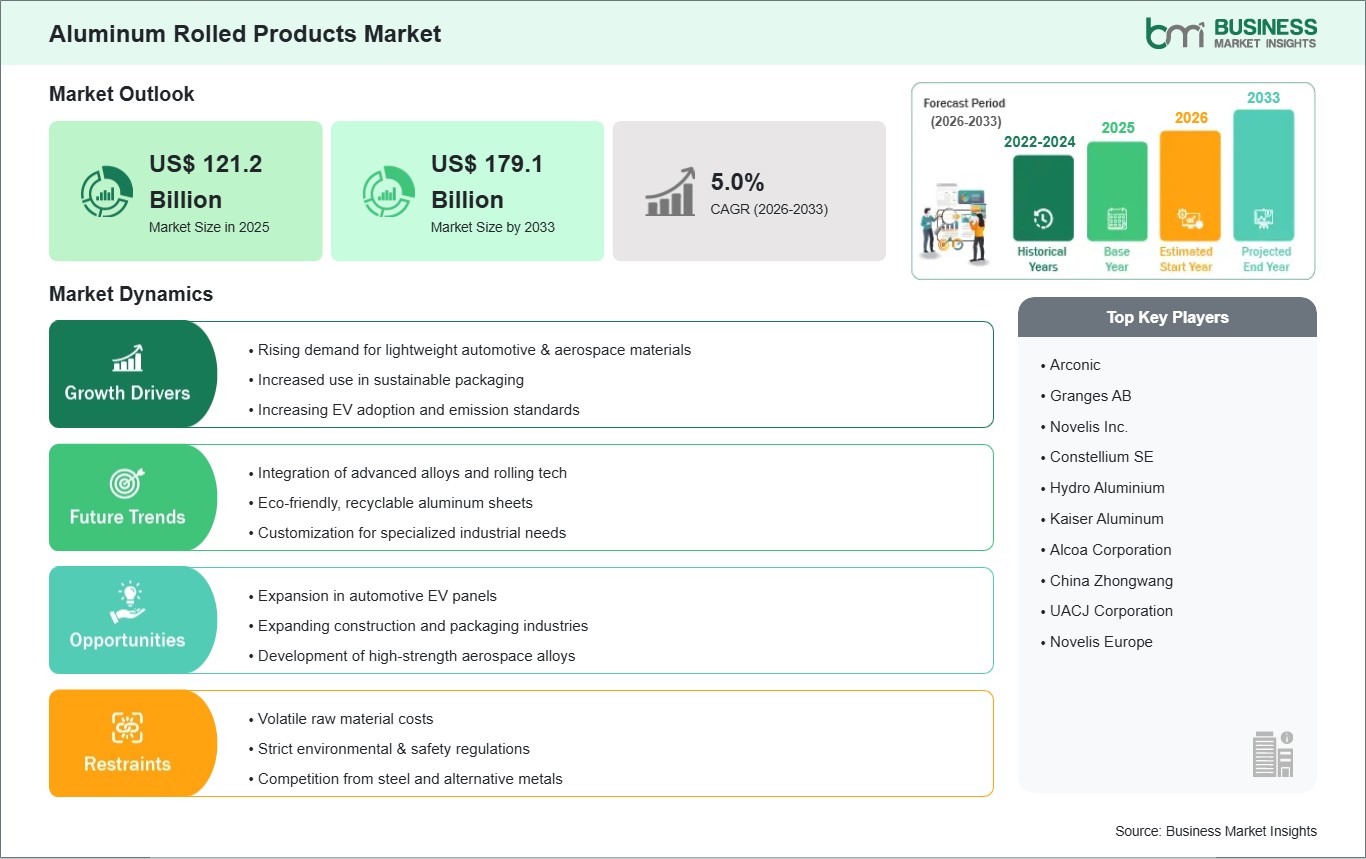
Increasing Demand for Lightweight Materials in Automotive and Aerospace
In response to the global automotive and aerospace industry's current epochal change driven by emission reductions, environmental regulations, and fuel efficiency; aluminium rolled products have become a key answer for lightweighting solutions due to them having an impressive strength-to-weight ratio as well as being lightweight in nature.
Automakers are using aluminium sheets and coils as body panels, parts of the chassis structure, structural reinforcements, etc., which means they are replacing heavier materials with this type of material so they've made their vehicles lighter; thereby increasing how well they perform, how much safer they are, and how long they'll last. The recent development of the electric vehicle industry has also contributed to this market move because lightweight materials directly increase battery range and efficiency.
In aerospace/defense, aluminium rolled products are essential for manufacturing aircraft because weight reductions yield substantial cost savings on fuel and operational success. Aircraft fuselage skins (skin) wing designs (structure) and interior pieces (structure) utilize properties such as being corrosion resistant and easily malleable thanks to forming. Additionally, armoured vehicles and lightweight systems also use aluminium rolled products within their classifications to help protect individuals from dangers that may be associated with their usage.
New technology related to advanced alloys and rolling practices have led to advancements in the usability of aluminium rolled products with continued increases in strength/resistance to fatigue & thermal properties etc. While the global mobility market is moving towards sustainability, lightweight solutions (namely aluminium rolled products) are enhancing the automobile (gas or electric) and aerospace/defence industries.
Expanding Construction and Packaging Industries
The construction and packaging industries represent two of the largest end‑use markets for aluminum rolled products, and both are experiencing robust growth. In construction, aluminum’s durability, corrosion resistance, and aesthetic appeal make it a preferred material for roofing, cladding, facades, and structural applications. Rapid urbanization, particularly in Asia Pacific and the Middle East, is fueling demand for modern infrastructure projects, including high‑rise buildings, airports, and commercial complexes. Aluminum rolled products provide architects and engineers with versatile solutions that combine functionality with design flexibility. Their ability to withstand harsh weather conditions while offering sleek finishes aligns perfectly with contemporary architectural trends emphasizing sustainability and energy efficiency.
The packaging industry is another major growth driver, especially in food and beverage applications. Aluminum sheets and foils offer excellent barrier properties, protecting products from moisture, light, and contaminants, thereby extending shelf life and preserving quality. The rise of ready‑to‑eat meals, canned beverages, and pharmaceutical packaging has further boosted demand for aluminum rolled products. Sustainability is also a key factor, as aluminum is infinitely recyclable without loss of quality, making it a preferred choice for companies seeking eco‑friendly packaging solutions. Technological innovations in rolling and alloying processes are enabling customized products with enhanced performance, such as thinner foils with superior strength or coatings that improve recyclability. Together, construction and packaging industries are expanding the market potential of aluminum rolled products, ensuring steady demand growth across diverse applications while reinforcing aluminum’s role as a sustainable and high‑performance material.