Market Summary
Executive Summary and Global Market Analysis
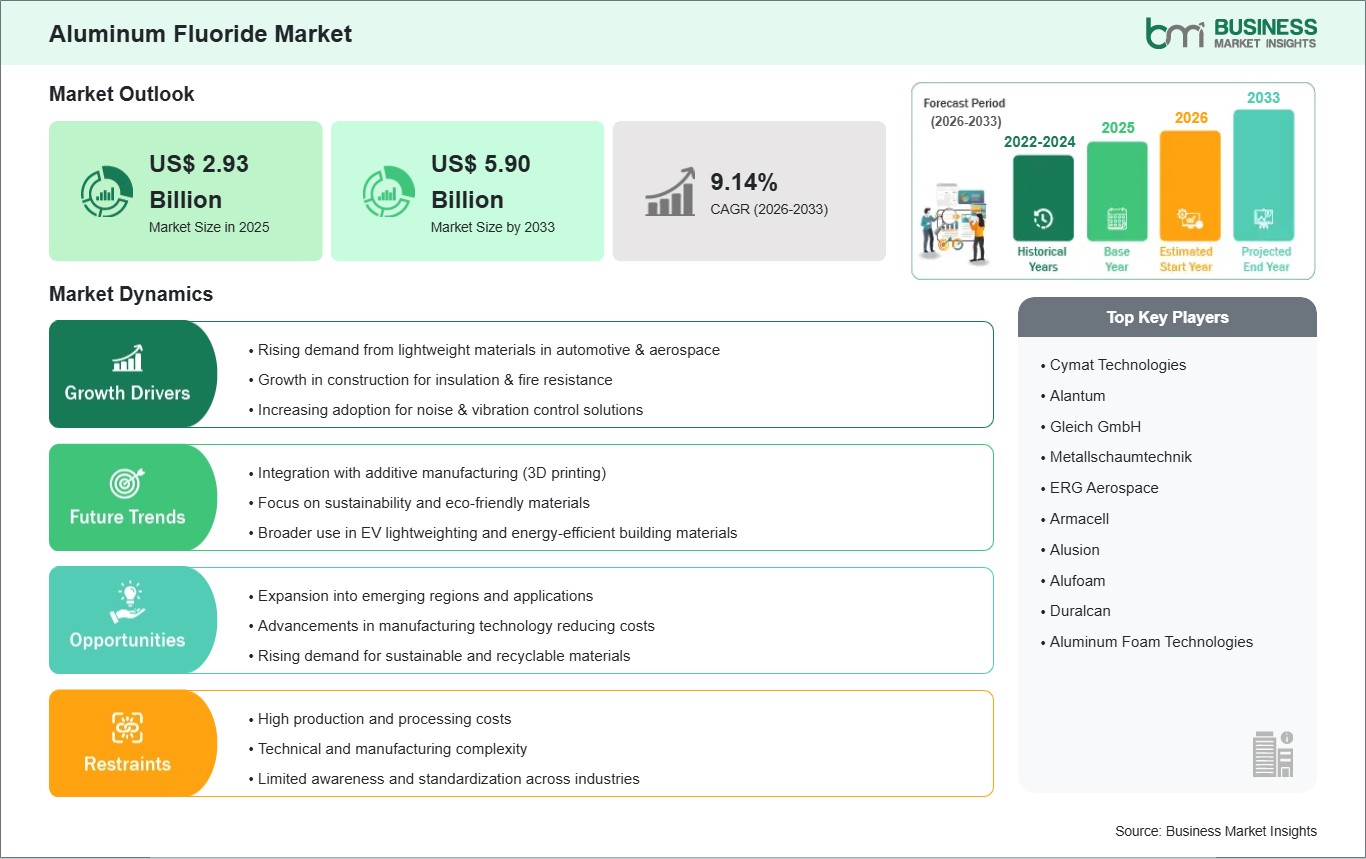
Aluminum fluoride is vital to the global aluminum production chain; it mainly serves as a key flux in the electrolytic smelting of aluminum. Aluminum fluoride lowers the melting point of alumina, improves electrical conductivity, and boosts energy efficiency during aluminum extraction. The market includes several product forms, such as dry aluminum fluoride, hydrated aluminum fluoride, and low-sodium grades. These are used in primary aluminum smelters, ceramics, glass manufacturing, and specialty chemicals. Demand closely follows aluminum use in various sectors like transportation, construction, packaging, electrical work, and renewable energy. Growth is driven by increasing aluminum demand, which comes from lightweighting trends, urbanization, and expanding infrastructure in developing economies.
The market is evolving due to technological advancements focused on energy efficiency, reducing emissions, and cutting costs in aluminum smelting. Manufacturers are investing in process automation, by-product recovery, and sustainable sourcing of raw materials like fluorspar. However, challenges remain, such as fluctuating raw material prices, costs related to environmental regulations, and energy-heavy manufacturing processes. Capacity expansions and new projects in Asia Pacific, the Middle East, and parts of Africa are improving supply dynamics. Over the medium to long term, tighter environmental standards, a shift toward recycling in aluminum production, and innovations aimed at efficiency are expected to influence the growth of the aluminum fluoride market.
Segment Analysis
Aluminum Fluoride Market Segmentation
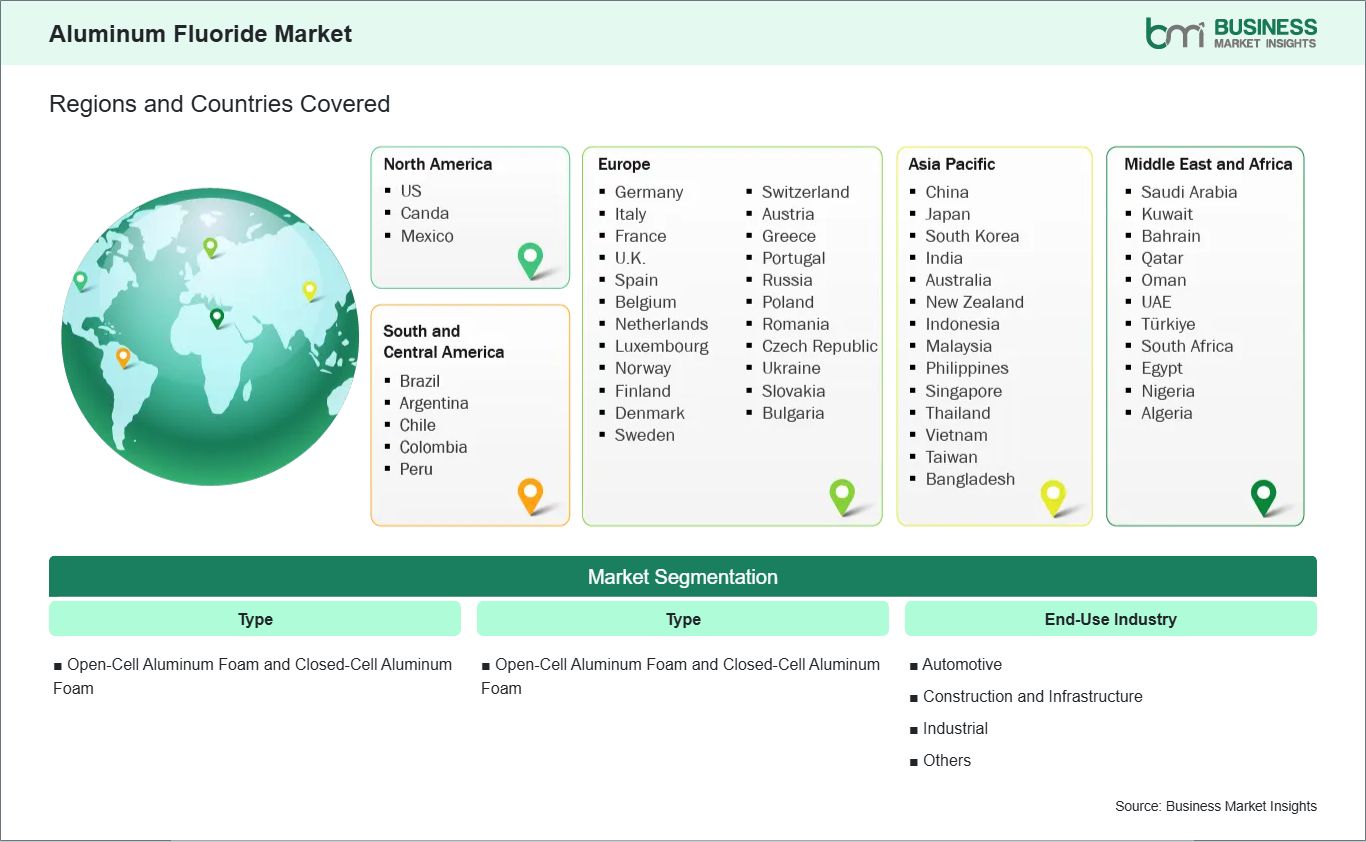
Key segments that contributed to the derivation of the aluminum fluoride market analysis are grade, product type, form, application, and end-use industry.
- By grade, the market is segmented into smelter grade, catalyst grade, technical grade, laboratory grade, and high-purity grade. The smelter grade segment accounted for the largest market share in 2025.
- By product type, the market is segmented into anhydrous, dry, and wet aluminum fluoride. The anhydrous aluminum fluoride segment dominated the market in 2025.
- By form, the market is segmented into powder, granule, and pellet forms. The powder form segment held the largest market share in 2025.
- By application, the market is segmented into electrolyte additives, flux agents, catalysts/catalyst supports, functional additives, optical coating materials, fluoro intermediates, and others. The electrolyte additives segment held the largest market share in 2025.
- By end use, the market is segmented into aluminum, ceramic and glass, chemical and petrochemical, electronics and optics, automotive, aerospace, construction, and others. The aluminum segment held the largest market share in 2025.
Market Forces
Aluminum Fluoride Market Drivers and Opportunities
Rising Aluminum Production Across Primary and Secondary Smelting
Aluminum fluoride plays a vital role in electrolytic aluminum smelting by enhancing bath conductivity, reducing operating temperatures, and improving overall energy efficiency. As industries increasingly adopt lightweight materials to comply with fuel economy targets and emission regulations, aluminum continues to be favored over heavier metals. This rising aluminum consumption directly drives demand for aluminum fluoride, particularly smelter-grade and anhydrous variants.
In developing economies, rapid urbanization, infrastructure development, and industrial growth are accelerating aluminum demand. At the same time, the expansion of renewable energy installations—such as solar and wind power—relies heavily on aluminum-intensive components, further supporting smelting activity. Moreover, ongoing investments by governments and private players to expand and modernize aluminum smelting capacity, aimed at improving efficiency and reducing production costs, are collectively sustaining strong demand for aluminum fluoride.
Adoption of Energy-Efficient and Low-Emission Smelting Technologies
The aluminum fluoride market is undergoing a notable transformation driven by the industry’s shift toward energy‑efficient and environmentally sustainable aluminum smelting technologies. Aluminum producers are increasingly required to reduce greenhouse gas emissions, optimize energy consumption, and lower operating costs while complying with tightening regulatory standards. This environment is accelerating the adoption of advanced electrolytic smelting processes that rely on high‑purity, low‑sodium aluminum fluoride to achieve superior operational performance. Suppliers capable of delivering consistent, high‑quality products tailored to these modern systems stand to gain a competitive advantage.
At the same time, the growing use of recycled aluminum—where controlled fluxing and precise chemical additives remain essential—continues to support demand for specialized aluminum fluoride formulations. Innovations aimed at by‑product recovery, waste minimization, and the integration of digital process controls further open avenues for product differentiation and value‑added solutions.
As global investment in low‑carbon and “green” aluminum production expands, particularly in regions prioritizing decarbonization, aluminum fluoride manufacturers have a significant opportunity to position themselves as strategic partners in the transition toward more sustainable industrial practices.
Size and Share Analysis
Aluminum Fluoride Market Size and Share Analysis
The aluminum fluoride market demonstrates steady growth, with size and share analysis revealing evolving trends and competitive positioning among key players. The report examines subsegments categorized within the grade, form, application, and end use, offering insights into their contribution to overall market performance. By product type, the anhydrous aluminum fluoride segment holds the largest market share. This dominance comes from its high chemical stability, low moisture content, and superior performance in aluminum electrolysis processes. Anhydrous aluminum fluoride is widely used as an electrolyte additive in primary aluminum smelting. It improves conductivity and reduces energy consumption. Its broad use in large-scale smelters supports its strong market position. Growth in this segment is driven by rising global aluminum production, an increasing focus on energy-efficient smelting operations, and ongoing technological improvements aimed at lowering emissions and operational costs in aluminum manufacturing facilities.
Report Coverage
Aluminum Fluoride Market Report Coverage and Deliverables
The " Aluminum Fluoride Market Size and Forecast (2022–2033)" report provides a detailed analysis of the market covering below areas:
- Aluminum fluoride market size and forecast at global, regional, and country levels for all the key market segments covered under the scope
- Aluminum fluoride market trends, as well as market dynamics such as drivers, restraints, and key opportunities
- Aluminum fluoride market analysis covering key market trends, global and regional framework, major players, regulations, and recent market developments
- Industry landscape and competition analysis covering market concentration, heat map analysis, prominent players, and recent developments for the aluminum fluoride market
- Detailed company profiles, including SWOT analysis
Geographic Insights
Aluminum Fluoride Market Geographic Insights
The geographical scope of the aluminum fluoride market report is divided into five regions: North America, Asia Pacific, Europe, the Middle East & Africa, and South & Central America. The aluminum fluoride market in Asia Pacific is expected to grow significantly during the forecast period. This region, with China at the forefront, makes a significant portion of the world's aluminum smelting, where aluminum fluoride is essential for electrolytic processes. The construction, transportation, electrical, and packaging industries drive high demand for aluminum, which directly boosts the need for aluminum fluoride. Additionally, access to raw materials, cost-effective manufacturing, and a solid chemical processing infrastructure give Asia Pacific an edge over other areas. Governments in the region have heavily invested in expanding industry, developing infrastructure, and initiating energy projects, which further support aluminum demand.
The presence of large smelters and integrated producers ensures continuous use of smelter-grade and anhydrous aluminum fluoride. Furthermore, expanding capacity, modernizing smelting facilities, and using process optimization technologies are enhancing output in the region. While environmental regulations are tightening, ongoing investments in energy efficiency and emissions control help maintain operations. Collectively, high production volumes, strong demand from end users, and competitive manufacturing make Asia Pacific the top performer in the global aluminum fluoride market.
Industry Activity
Recent Developments
The aluminum fluoride market is evaluated by gathering qualitative and quantitative data post-primary and secondary research, which includes important corporate publications, association data, and databases. A few of the key developments in the aluminum fluoride market are:
- In June 2025, Orbia Fluor & Energy Materials completed its corporate rebranding from the former Koura identity. This move consolidated its market presence and strengthened its brand across aluminum fluoride and related chemical solutions.
- In April 2024, Fluorsid renewed its long-term aluminum fluoride supply partnership with Norsk Hydro ASA. This agreement secured supply commitments for five European smelters and supported smelting efficiency and continuity.
Trust & Transparency
Research Methodology
The market analysis combines proprietary research with secondary data from government agencies, company disclosures, regulatory filings, industry databases and expert interviews. Market estimates are validated through data triangulation, cross-market benchmarking and analyst
review.
View Full Research Methodology
Key Sources Referred:
World Bank – Global Trade IndicatorsWorld Trade Organization (WTO)International Monetary Fund (IMF)International Trade Administration (ITA)Company WebsitesCompany Annual ReportsCompany Investor PresentationsThe Aluminum Association (AA)International Aluminum Institute (IAI)World Foundry Organization (WFO)Asia Pacific Aluminum Council (APAC)European Foundry Association (CAEF)