Market Summary
Executive Summary and Global Market Analysis
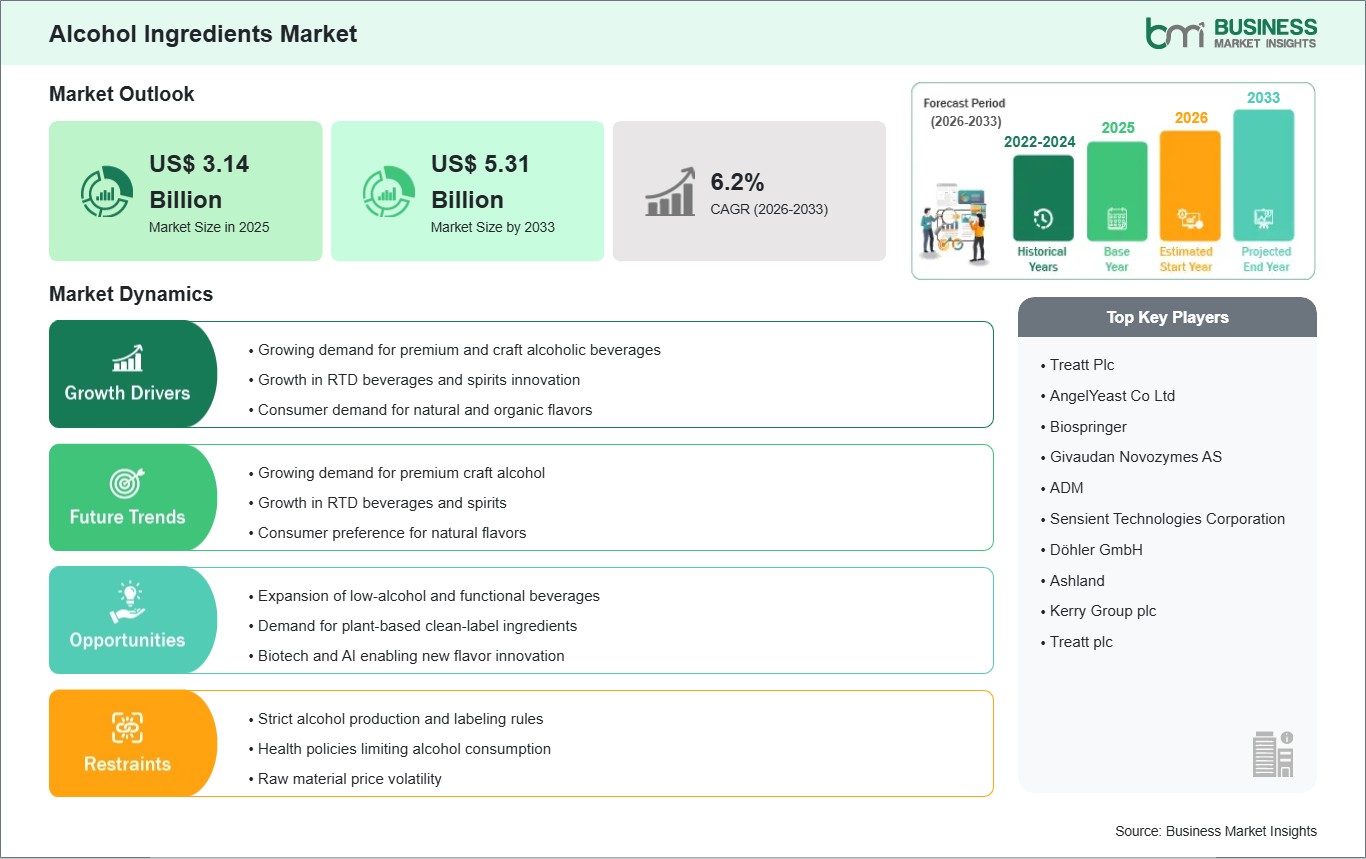
The alcohol ingredients market includes a variety of raw materials, flavorings, and processing aids that are essential for creating, differentiating, and ensuring the quality of alcoholic beverages worldwide. Key ingredients such as ethanol (made from grains, sugarcane, or fruits), malt, hops, yeast, botanicals, spices, fruits, and specialty sugars shape the sensory profile, alcohol content, and character of products in the beer, spirits, wine, and ready-to-drink (RTD) categories. Consumer trends toward premium products, flavor exploration, and health-conscious choices mainly drive market growth. This has increased the demand for craft and artisanal drinks, low-alcohol and non-alcoholic options, and creative flavor infusions using unique botanicals, superfruits, and local ingredients. Additionally, the spread of global beverage trends and the growth of distilleries and breweries in emerging economies are other major factors driving the market.
However, the industry faces challenges such as fluctuations in agricultural commodity prices, strict and differing regional regulations, and growing demands for sustainable and transparent sourcing. Supply chain complexities and the need for consistent quality control also pose ongoing issues. Nevertheless, developing organic and sustainably sourced ingredients, improving fermentation technologies, and adding functional ingredients (like adaptogens and nootropics) that connect with wellness trends are likely to promote market growth during the upcoming years. Innovations in production efficiency and flavor science, along with the ongoing consumer desire for unique and premium drinking experiences, will continue to influence the changing landscape of the global alcohol ingredients market.
Segment Analysis
Alcohol Ingredients Market Segmentation
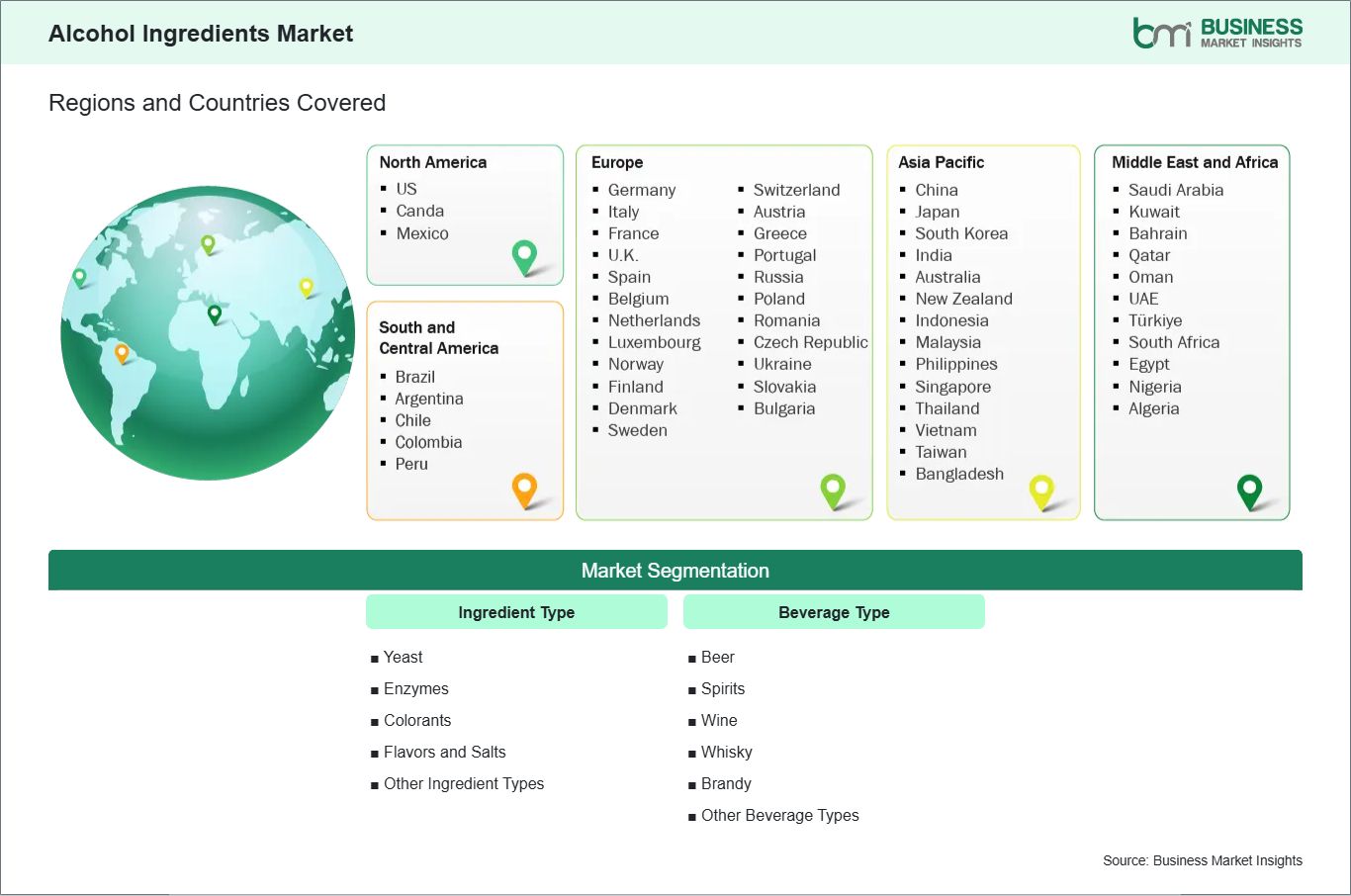
Key segments that contributed to the derivation of the alcohol ingredients market analysis are ingredient type and beverage type.
- By ingredient type, the alcohol ingredients market is segmented into yeast, enzymes, colorants, flavors and salts, and other ingredient types. The flavors and salts segment dominated the market in 2025.
- By beverage type, the market is segmented into beer, spirits, wine, whisky, brandy, and other beverage types. The beer segment dominated the market in 2025.
Market Forces
Alcohol Ingredients Market Drivers and Opportunities
Rising Demand for Premiumization and Flavor Innovation
A main factor driving the alcohol ingredients market is the global consumer shift towards premium and experiential beverages. This trend boosts the demand for high-quality base spirits, unique botanicals, specialty yeast strains, and exotic flavorings, such as smoked woods, rare spices, and superfruit extracts. The growth of the craft movement in spirits and beer requires a variety of sophisticated ingredients that support differentiation and storytelling. At the same time, the rapidly growing ready-to-drink (RTD) cocktail segment needs effective stabilizers, natural flavors, and formulation knowledge to create complex profiles in a convenient format. This, in turn, encourages innovation and adds value to ingredients.
Strategic Focus on Sustainability and Clean Label Production
Growing awareness of environmental and health concerns is reshaping how ingredients are sourced and processed across the industry. Demand is surging for organic raw materials, sustainably cultivated botanicals, and locally produced grains and fruits. This shift is driven not only by stricter regulatory requirements but also by consumers’ increasing insistence on transparency. At the same time, the market for low‑ABV and non‑alcoholic beverages is expanding rapidly. Meeting this demand requires specialized ingredients and advanced dealcoholization techniques capable of preserving mouthfeel, aroma, and overall sensory quality. This broader transformation aligns closely with evolving ESG priorities. Manufacturers are adopting sustainable agricultural practices, optimizing water use, and integrating circular production models to minimize environmental impact. Investments in natural preservation methods and clean‑label formulations are becoming key differentiators, shaping procurement strategies and guiding R&D priorities throughout the sector.
Size and Share Analysis
Alcohol Ingredients Market Size and Share Analysis
The Alcohol Ingredients market demonstrates steady growth, with size and share analysis revealing evolving trends and competitive positioning among key players. The report examines subsegments categorized within ingredient type and beverage type, offering insights into their contribution to overall market performance.
Based on ingredient type, the beer segment dominates the alcohol ingredients market. Beer is the most widely consumed alcoholic drink in the world. Its popularity comes from a large consumer base, cultural acceptance, and affordability in both developed and emerging economies. The industry benefits from established production methods, broad distribution networks, and ongoing product innovation, including craft, premium, and low-alcohol options. Beer's variety in flavor profiles and packaging, along with strong demand both in bars and stores, makes it a favorite among consumers and an important source of revenue for manufacturers in the global alcohol ingredients market.
Report Coverage
Alcohol Ingredients Market Report Coverage and Deliverables
The " Alcohol Ingredients Market Size and Forecast (2022–2033)" report provides a detailed analysis of the market covering below areas:
- Alcohol Ingredients market size and forecast at global, regional, and country levels for all the key market segments covered under the scope
- Alcohol Ingredients market trends, as well as market dynamics such as drivers, restraints, and key opportunities
- Alcohol Ingredients market analysis covering key market trends, global and regional framework, major players, regulations, and recent market developments
- Industry landscape and competition analysis covering market concentration, heat map analysis, prominent players, and recent developments for the Alcohol Ingredients market
- Detailed company profiles, including SWOT analysis
Geographic Insights
Alcohol Ingredients Market Geographic Insights
The geographical scope of the Alcohol Ingredients market report is divided into five regions: North America, Asia Pacific, Europe, the Middle East & Africa, and South & Central America. Europe leads as a mature, high-value hub in the global alcohol ingredients market. This status comes from the strong demand for premium and craft beverages, strict quality and labeling rules, and consumers who are willing to pay more for authenticity and innovation. The region's long-standing brewing, distilling, and winemaking traditions, along with a focus on product differentiation, support the demand for specialty malt, noble hops, heritage yeast strains, and botanical extracts.
Additionally, Europe is at the forefront of the sustainability movement. There is a rising demand for organic-certified raw materials, locally sourced ingredients, and production methods that meet ambitious circular economy and carbon-neutrality goals. This blend of tradition, regulatory influence, and sustainability leadership reinforces Europe's position as a key consumption region and a global standard for quality and innovation in alcohol ingredients.
Industry Activity
Recent Developments
The Alcohol Ingredients market is evaluated by gathering qualitative and quantitative data post-primary and secondary research, which includes important corporate publications, association data, and databases. A few of the key developments in the alcohol ingredients market are:
- In June 2025, Novonesis launched Innova Eclipse-L yeast, Innova Total A6 enzyme for 55+ hour fermentations to boost ethanol yields by 1–2% and cut glycerol by 40%.
- In March 2025, Doehler North America acquired Florida-based Premier Juices, which strengthens natural fruit concentrates for beverages and the North American Supply chain.
Trust & Transparency
Research Methodology
The market analysis combines proprietary research with secondary data from government agencies, company disclosures, regulatory filings, industry databases and expert interviews. Market estimates are validated through data triangulation, cross-market benchmarking and analyst
review.
View Full Research Methodology
Key Sources Referred:
World Bank – Global Trade IndicatorsFood and Agriculture OrganizationInternational Council of Chemical AssociationsInternational Monetary Fund (IMF)World Trade Organization (WTO)International Trade Administration (ITA)Company WebsitesCompany Annual ReportsCompany Investor Presentations