Market Summary
Executive Summary and Global Market Analysis
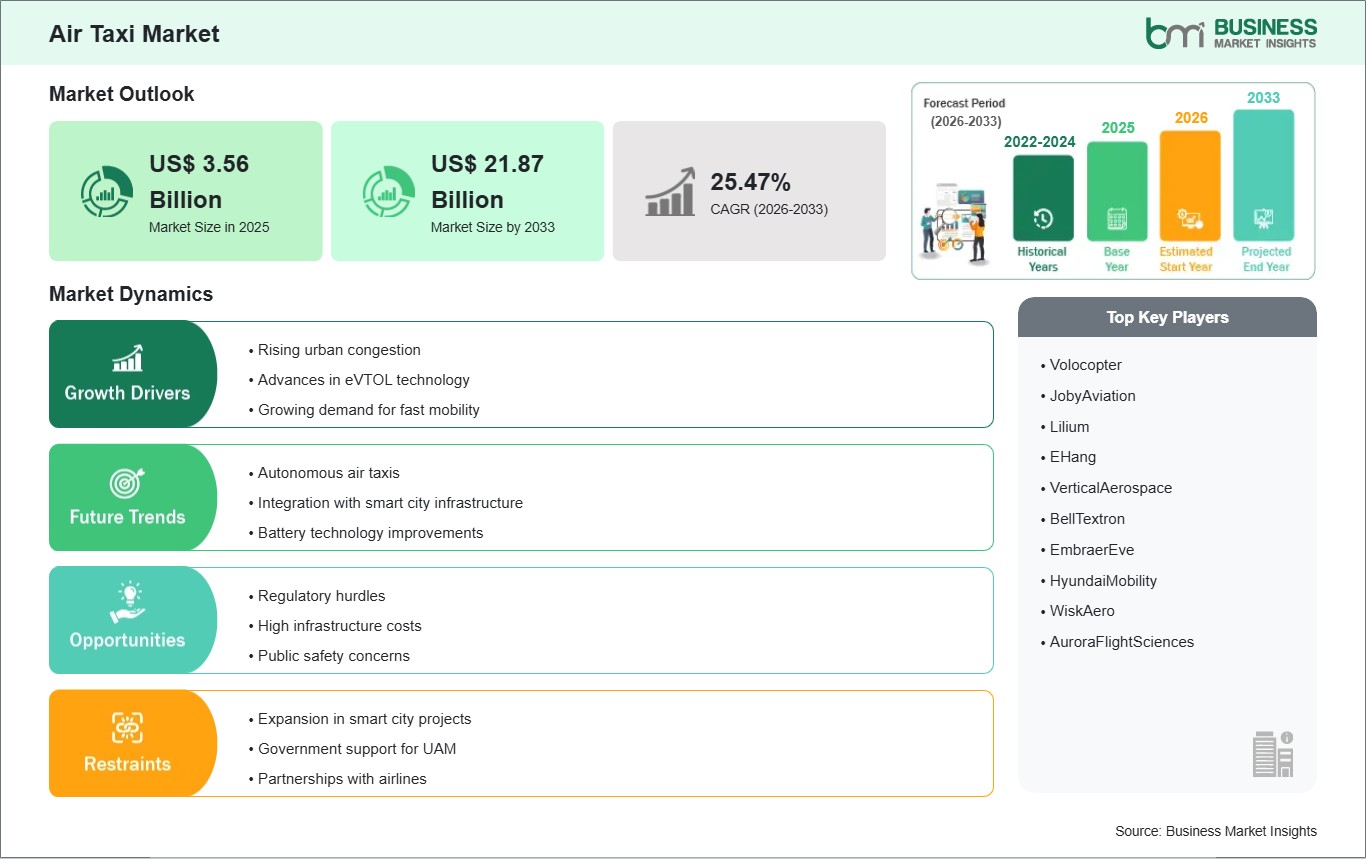
Air taxis are advanced urban air mobility vehicles designed to transport passengers across short and medium distances using vertical takeoff and landing capabilities. These aircraft are developed to reduce urban traffic congestion, improve transportation efficiency, and support faster mobility in densely populated cities. Air taxis commonly use electric, hybrid, or hydrogen propulsion systems and are increasingly integrated with autonomous flight technologies and smart transportation infrastructure. The market is growing as governments, aviation authorities, and transportation providers focus on sustainable mobility solutions and next-generation transportation systems. Increasing urbanization, rising investment in advanced aviation technologies, and growing demand for low-emission transport solutions are supporting the development of the Air Taxi market. Intracity mobility services are receiving strong attention due to the need for efficient transportation in major metropolitan regions.
There are several challenges that could affect the growth of the market during the forecast period. Air taxi operations require strict regulatory approvals, air traffic management systems, and advanced safety certifications before large-scale commercial deployment can occur. Infrastructure limitations such as vertiport development, charging facilities, and urban air traffic integration also remain important concerns for operators and governments. In addition, the high manufacturing and operational costs associated with advanced electric propulsion systems and autonomous flight technologies may slow adoption in some regions. Public acceptance, pilot training requirements, and cybersecurity concerns related to connected aviation platforms also create operational challenges for market participants.
Despite these limitations, the market is expected to expand rapidly due to increasing technological innovation and investment in urban air mobility ecosystems. Opportunities are emerging from advancements in electric propulsion systems, lightweight aircraft materials, and autonomous navigation technologies. Growing partnerships between aviation companies, transportation authorities, and smart city developers are supporting infrastructure development for future air taxi operations. The use of hydrogen propulsion systems and sustainable aviation technologies is also expected to create long-term growth opportunities while supporting environmental goals and reducing transportation emissions across urban mobility networks.
Segment Analysis
Air Taxi Market Segmentation
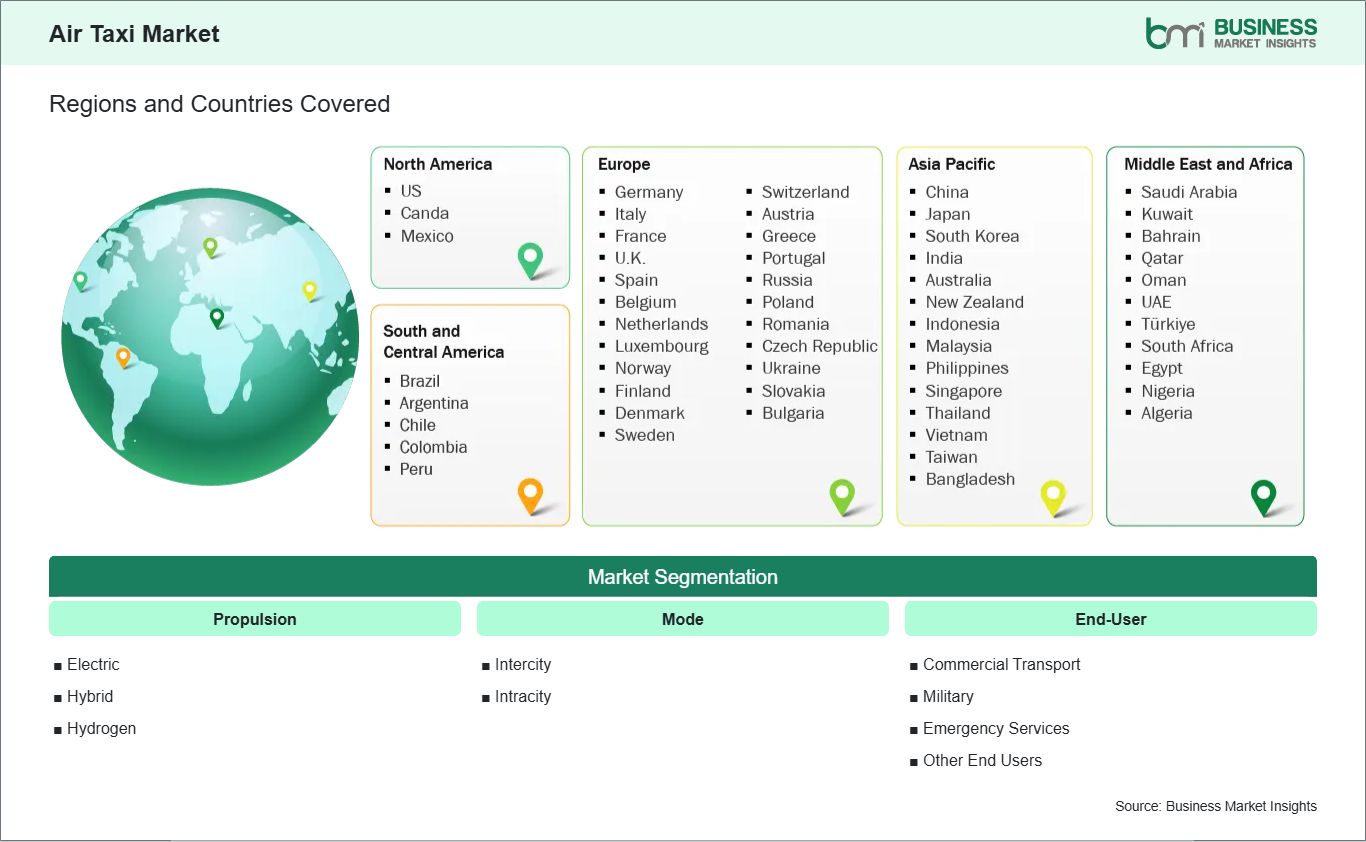
The Air Taxi market is segmented based on propulsion, mode, and end-user. Market growth is influenced by advancements in sustainable aviation technologies, urban mobility demand, and increasing investments in next-generation transportation systems.
By Propulsion
- Electric: Electric propulsion systems are widely adopted due to their lower emissions, quieter operations, and compatibility with sustainable urban mobility initiatives.
- Hybrid: Hybrid propulsion systems provide improved operational flexibility and extended flight range for commercial air taxi applications.
- Hydrogen: Hydrogen-powered air taxis are gaining attention for their potential to support long-range and environmentally friendly aviation operations.
By Mode
- Intercity: Intercity air taxi services are designed for transportation between cities and regional mobility applications.
- Intracity: Intracity operations are witnessing strong demand due to increasing urban congestion and the need for faster transportation within metropolitan areas.
By End-User
- Commercial Transport: Commercial transport represents a major segment due to growing investments in urban mobility and passenger transportation services.
- Military: Military organizations are exploring air taxi technologies for surveillance, logistics, and rapid mobility operations.
- Emergency Services: Emergency service providers are adopting advanced air mobility systems for medical transport and disaster response applications.
- Other End Users: Other end users include tourism operators and private aviation service providers.
Market Forces
Air Taxi Market Drivers and Opportunities
Rising Urban Congestion and Demand for Sustainable Mobility
The increasing level of urban congestion and the growing demand for sustainable transportation solutions are major factors driving the growth of the Air Taxi market. Large metropolitan cities are facing transportation challenges due to rising population density, traffic delays, and pressure on existing public transport infrastructure. Air taxis provide an alternative transportation solution that can reduce travel time and improve urban mobility efficiency. Governments and transportation authorities are increasingly focusing on developing smart mobility systems that support cleaner and faster transportation options.
The market is also benefiting from advancements in electric propulsion technologies and low-emission aviation systems. Electric air taxis are designed to reduce noise pollution and carbon emissions compared to conventional transportation systems, supporting environmental sustainability goals. Aviation regulators and urban planning authorities are gradually establishing operational frameworks for urban air mobility services and vertiport infrastructure development. In addition, rising investment in autonomous aviation systems, battery technologies, and lightweight aircraft manufacturing is contributing to the growth of the market. These factors are encouraging aviation companies and mobility providers to accelerate the commercialization of air taxi services across major urban regions.
Expansion of Smart City and Autonomous Aviation Ecosystems
The growing development of smart cities and autonomous aviation ecosystems is creating significant opportunities for the Air Taxi market. Smart city initiatives increasingly focus on intelligent transportation systems that integrate digital connectivity, automated traffic management, and sustainable infrastructure solutions. Air taxis are becoming an important part of future urban mobility planning because they can improve transportation efficiency while supporting low-emission mobility goals. Governments and infrastructure developers are investing in vertiports, charging stations, and advanced air traffic management systems to support future commercial air taxi operations.
Advancements in autonomous navigation technologies and artificial intelligence are also creating new opportunities for market expansion. Automated flight control systems, real-time communication networks, and predictive maintenance technologies are improving operational safety and reducing pilot workload. Hydrogen propulsion systems and next-generation battery technologies are expected to support longer flight ranges and higher operational efficiency in future air taxi platforms.
The increasing adoption of advanced mobility services in tourism, emergency response, and regional transportation is further supporting market growth. These developments are expected to accelerate the commercialization of urban air mobility services and strengthen the long-term growth potential of the Air Taxi market.
Size and Share Analysis
Air Taxi Market Size and Share Analysis
The Air Taxi Market is projected to grow from US$ 3.56 Billion in 2025 to US$ 21.87 Billion by 2033 , registering a CAGR of 25.47% from 2026 to 2033.
By propulsion, electric systems account for a significant share due to increasing demand for sustainable and low-emission urban transportation solutions. Hybrid propulsion technologies are gaining importance because they provide extended operational range and improved flexibility for commercial applications. Hydrogen propulsion systems are also witnessing growing attention as the aviation industry focuses on long-term sustainable mobility and advanced clean energy solutions.
By mode, intracity air taxi services dominate the market owing to rising urban congestion and the need for rapid transportation within metropolitan regions. Intercity air mobility is also expanding steadily due to increasing investments in regional transportation connectivity and advanced aviation infrastructure. By end-user, commercial transport represents the largest segment as mobility service providers focus on urban passenger transportation and smart mobility ecosystems. Emergency services and military applications are also growing steadily due to increasing use of advanced air mobility technologies in critical operations and rapid response services.
Report Coverage
Air Taxi Market Report Coverage and Deliverables
The "Air Taxi Size and Forecast (2022-2033)" report provides a detailed analysis of the market covering below areas:
- Market size and forecast at global, regional, and country levels for all the key market segments covered under the scope
- Market trends, as well as market dynamics such as drivers, restraints, and key opportunities
- Market analysis covering key market trends, global and regional framework, major players, regulations, and recent market developments
- Industry landscape and competition analysis covering market concentration, heat map analysis, prominent players, and recent developments for the market
- Detailed company profiles, including SWOT analysis
Geographic Insights
Air Taxi Market Geographic Insights
The Air Taxi Market shows diverse regional adoption patterns influenced by urban mobility demand, aviation infrastructure development, and advancements in sustainable transportation technologies.
North America, being a developed region, has a strong aviation ecosystem and significant investments in urban air mobility technologies. The region comprises the United States and Canada, where aviation authorities and transportation agencies are actively supporting the development of advanced air mobility infrastructure and regulatory frameworks. The region focuses on integrating air taxis into smart city transportation systems and improving sustainable urban mobility solutions. It also benefits from strong research capabilities, advanced aerospace manufacturing infrastructure, and rising investment in autonomous aviation technologies, supporting early adoption of commercial air taxi operations.
Asia Pacific is growing significantly, driven by rapid urbanization, increasing transportation demand, and large-scale smart city projects. The region comprises countries such as China, Japan, South Korea, and India, where governments and aviation stakeholders are investing in urban mobility innovation and advanced transportation networks. The region focuses on reducing urban congestion and improving transportation efficiency through next-generation mobility systems. Expanding infrastructure development, increasing technological capabilities, and rising public interest in sustainable transportation are supporting the growth of the Air Taxi Market across the region.
Both regions are contributing significantly to the growth of the Air Taxi Market, focusing on advanced aviation technologies, urban transportation modernization, and sustainable mobility infrastructure development.
Industry Activity
Recent Developments
The Air Taxi Market is analyzed using a mix of primary and secondary research sources, including corporate publications, industry associations, and verified databases. This approach ensures accurate tracking of innovation trends and strategic developments influencing the market.
- In October 2025, Archer Aviation revealed expanded plans for urban air mobility network development and electric air taxi deployment in major metropolitan regions. The update included infrastructure collaboration and advancements in electric propulsion technologies aimed at supporting sustainable passenger transportation services. The announcement highlights the growing focus on commercial air taxi ecosystem development and advanced aviation integration.
- In February 2024, Joby Aviation announced progress in its electric air taxi certification and commercial readiness activities, including continued flight testing and infrastructure development for urban air mobility operations. The company focused on advancing electric vertical takeoff and landing aircraft technologies and expanding partnerships related to future passenger transport services. The development reflects increasing momentum toward commercial deployment of air taxi systems.
Trust & Transparency
Research Methodology
The market analysis combines proprietary research with secondary data from government agencies, company disclosures, regulatory filings, industry databases and expert interviews. Market estimates are validated through data triangulation, cross-market benchmarking and analyst
review.
View Full Research Methodology
Key Sources Referred:
World Bank - Global Trade Indicators World Trade Organization (WTO) International Monetary Fund (IMF) International Trade Administration (ITA) Company Websites Company Annual Reports Company Investor Presentations