Market Summary
Executive Summary and Global Market Analysis
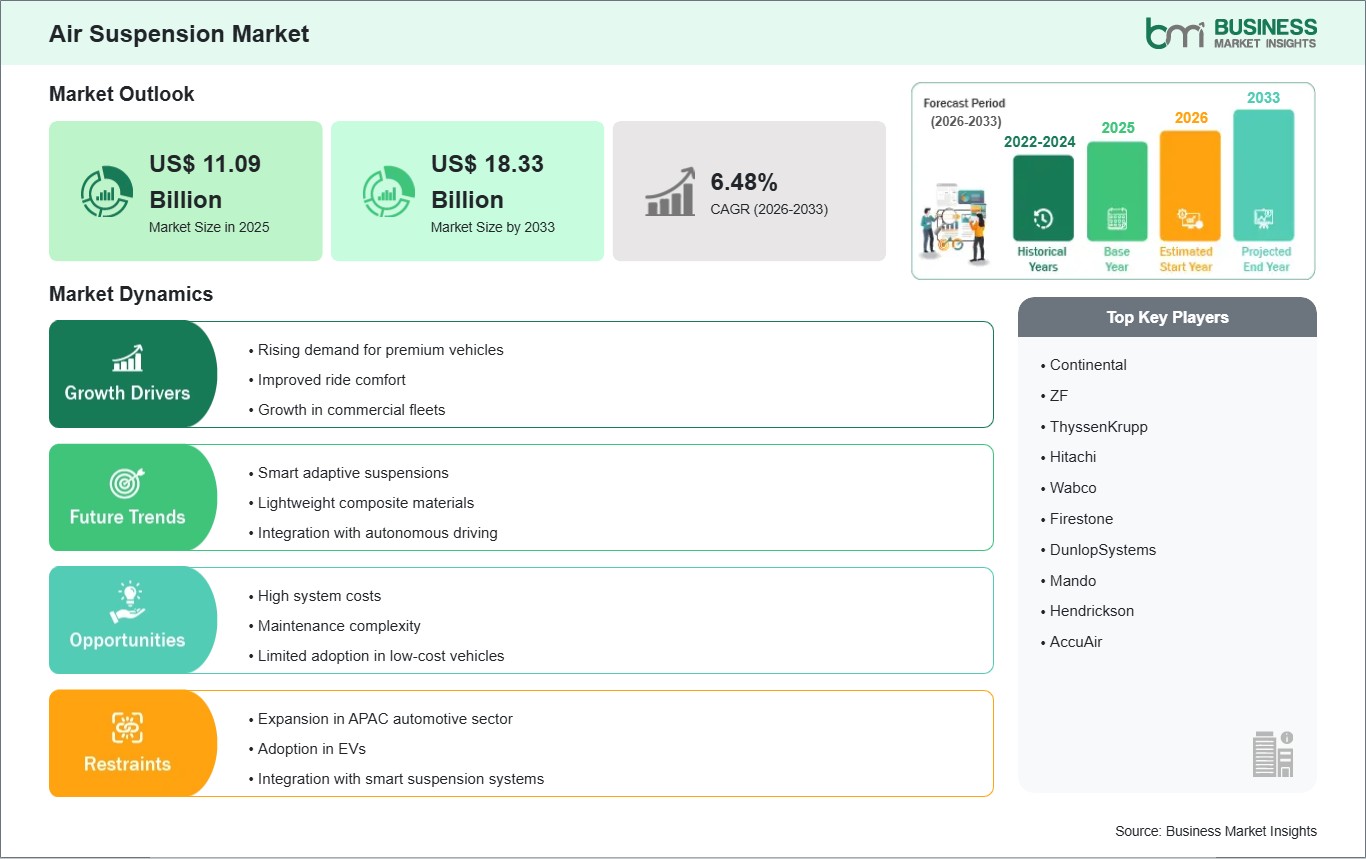
Air suspension systems are advanced vehicle suspension technologies that use air springs, compressors, and electronic controls to improve ride comfort, vehicle stability, and load management. These systems replace conventional steel spring suspensions in various vehicle categories, particularly passenger cars and commercial vehicles. Air suspension systems help reduce vibration, improve handling performance, and maintain consistent vehicle height under different load conditions. The market is growing as automotive manufacturers increasingly focus on vehicle comfort, safety, and fuel efficiency. Rising adoption of luxury vehicles, electric vehicles, and heavy commercial vehicles is supporting demand for advanced suspension technologies. Electronically controlled air suspension systems are gaining significant attention because they provide adaptive ride control and improved driving performance across varying road conditions.
There are several challenges that could affect market growth during the forecast period. Air suspension systems involve higher installation and maintenance costs compared to conventional suspension systems, which can limit adoption in cost-sensitive vehicle segments. The complexity of electronic control systems and air compressor components may also increase repair and servicing requirements. In commercial vehicle applications, exposure to harsh operating conditions and long-distance transportation can affect component durability and maintenance frequency. In addition, fluctuations in raw material prices and supply chain disruptions may impact manufacturing costs and product availability for automotive manufacturers and aftermarket suppliers.
Despite these challenges, the market is expected to grow steadily due to increasing technological advancements and rising consumer preference for enhanced driving comfort. Opportunities are emerging from the development of lightweight air suspension components, smart electronic suspension systems, and advanced vehicle automation technologies. Growing adoption of electric vehicles and connected automotive platforms is also creating new demand for intelligent suspension systems with real-time performance adjustment capabilities. Expanding investments in commercial transportation infrastructure and automotive innovation are expected to support long-term growth in the Air Suspension market.
Segment Analysis
Air Suspension Market Segmentation
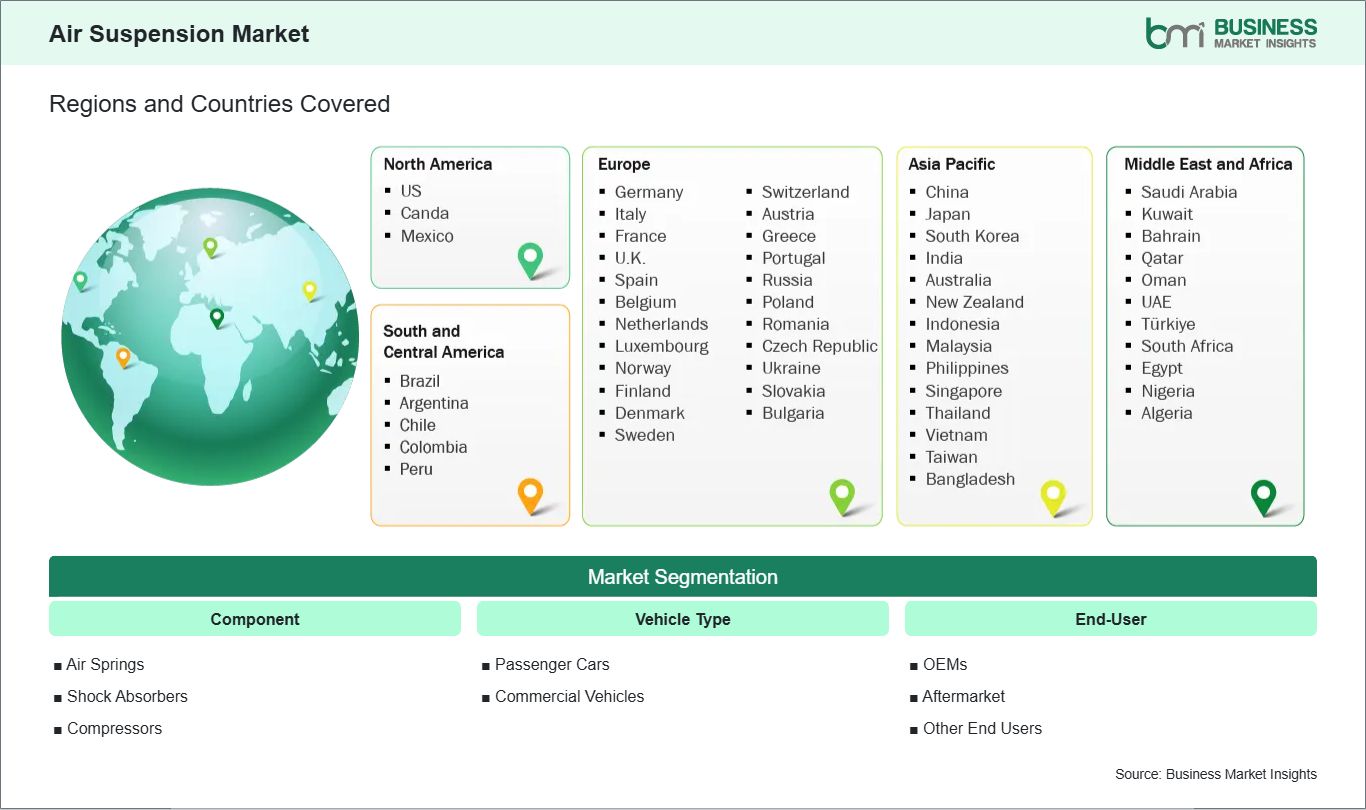
The Air Suspension market is segmented based on component, vehicle type, and end-user. Automotive manufacturers and fleet operators adopt air suspension systems according to vehicle performance requirements, comfort preferences, and operational efficiency needs.
By Component
- Air Springs: Air springs are widely used because they provide ride comfort, vibration reduction, and load-carrying support across different vehicle categories.
- Shock Absorbers: Shock absorbers help improve vehicle stability and control by reducing the impact of road irregularities and sudden movements.
- Compressors: Compressors are essential components that regulate air pressure and maintain proper suspension performance.
By Vehicle Type
- Passenger Cars: Passenger cars increasingly adopt air suspension systems to improve ride quality, luxury features, and driving comfort.
- Commercial Vehicles: Commercial vehicles use air suspension systems for load balancing, vehicle stability, and improved long-distance transportation performance.
By End-User
- OEMs: Original equipment manufacturers account for major adoption due to increasing integration of advanced suspension technologies in new vehicle models.
- Aftermarket: The aftermarket segment is growing steadily due to rising demand for replacement components and suspension upgrades.
- Other End Users: Other end users include specialty vehicle manufacturers and transportation service providers.
Market Forces
Air Suspension Market Drivers and Opportunities
Rising Demand for Vehicle Comfort and Advanced Ride Control
The increasing demand for vehicle comfort, stability, and advanced ride control systems is one of the major factors driving the growth of the Air Suspension market. Automotive manufacturers are focusing on improving driving experience and passenger comfort through advanced suspension technologies that reduce vibration and enhance vehicle handling. Consumers are increasingly preferring vehicles equipped with intelligent suspension systems that provide smoother rides and adaptive performance across varying road conditions. This trend is particularly strong in luxury passenger vehicles, electric vehicles, and premium commercial transportation segments.
Commercial vehicle operators are also adopting air suspension systems to improve cargo protection, reduce vehicle wear, and enhance driver comfort during long-distance transportation. Growing investments in transportation infrastructure and logistics services are supporting the expansion of commercial vehicle fleets equipped with advanced suspension technologies. Regulatory focus on vehicle safety and fuel efficiency is further encouraging manufacturers to develop lightweight and electronically controlled air suspension systems. In addition, advancements in automotive electronics and smart vehicle technologies are contributing to the integration of adaptive suspension systems with connected vehicle platforms and automated driving functions.
Expansion of Electric and Intelligent Vehicle Technologies
The growing adoption of electric vehicles and intelligent automotive technologies is creating significant opportunities for the Air Suspension market. Electric vehicles require advanced suspension systems that can support battery weight distribution while maintaining ride comfort and vehicle efficiency. Air suspension technologies are increasingly being integrated into electric and hybrid vehicles because they improve aerodynamics, reduce vibration, and support better vehicle stability. This trend is encouraging automotive manufacturers to invest in electronically controlled and lightweight suspension systems.
The increasing development of autonomous and connected vehicles is also supporting demand for smart suspension systems capable of real-time performance adjustment. Advanced air suspension technologies integrated with sensors and control modules can automatically adapt to road conditions and vehicle load requirements, improving operational safety and passenger comfort. In addition, innovations in lightweight materials, compact compressors, and energy-efficient suspension components are helping reduce system complexity and maintenance requirements.
Size and Share Analysis
Air Suspension Market Size and Share Analysis
The Air Suspension Market is projected to grow from US$ 11.09 Billion in 2025 to US$ 18.33 Billion by 2033 , registering a CAGR of 6.48% from 2026 to 2033.
By component, air springs account for a significant share due to their essential role in maintaining ride comfort, vehicle stability, and load support across passenger and commercial vehicles. Shock absorbers continue to witness strong demand because they improve handling performance and reduce road impact during vehicle operation. Compressors are also gaining steady adoption as advanced electronically controlled suspension systems require efficient air pressure management and automated adjustment capabilities.
By vehicle type, commercial vehicles dominate the market owing to the increasing use of air suspension systems in trucks, buses, and logistics fleets for load balancing and driver comfort. Passenger cars are also witnessing rising adoption, particularly in luxury and electric vehicle categories where advanced ride quality and adaptive suspension performance are important purchasing factors. By end-user, OEMs hold a major market share due to the growing integration of intelligent suspension technologies in newly manufactured vehicles, while the aftermarket segment continues to expand with increasing demand for component replacement and vehicle performance upgrades.
Report Coverage
Air Suspension Market Report Coverage and Deliverables
The "Air Suspension Size and Forecast (2022-2033)" report provides a detailed analysis of the market covering below areas:
- Market size and forecast at global, regional, and country levels for all the key market segments covered under the scope
- Market trends, as well as market dynamics such as drivers, restraints, and key opportunities
- Market analysis covering key market trends, global and regional framework, major players, regulations, and recent market developments
- Industry landscape and competition analysis covering market concentration, heat map analysis, prominent players, and recent developments for the market
- Detailed company profiles, including SWOT analysis
Geographic Insights
Air Suspension Market Geographic Insights
The Air Suspension Market shows diverse regional adoption patterns influenced by automotive production growth, transportation infrastructure development, and increasing demand for advanced vehicle comfort technologies.
North America, being a developed region, has a well-established automotive industry and a high adoption rate of advanced suspension technologies. The region comprises the United States and Canada, where demand for luxury vehicles, commercial transportation fleets, and premium automotive features is supporting the growth of air suspension systems. The region focuses on improving vehicle safety, driving comfort, and fuel efficiency through advanced automotive engineering solutions. It also benefits from strong automotive manufacturing capabilities and established transportation infrastructure, allowing wider integration of electronically controlled suspension systems across passenger and commercial vehicle segments.
Asia Pacific is growing significantly, driven by rising vehicle production, expanding transportation infrastructure, and increasing consumer demand for improved driving comfort. The region comprises countries such as China, India, Japan, and South Korea, where automotive manufacturers are increasing investments in advanced vehicle technologies and electric mobility solutions. The region focuses on strengthening automotive manufacturing and expanding commercial transportation networks through modern vehicle systems. Growing adoption of electric vehicles and premium passenger cars is also contributing to the expansion of the Air Suspension Market across the region.
Both regions are contributing significantly to the growth of the Air Suspension Market, focusing on automotive modernization, vehicle performance improvement, and adoption of intelligent suspension technologies.
Industry Activity
Recent Developments
The Air Suspension Market is analyzed using a mix of primary and secondary research sources, including corporate publications, industry associations, and verified databases. This approach ensures accurate tracking of innovation trends and strategic developments influencing the market.
- In September 2025, ZF introduced new air suspension solutions for commercial vehicles aimed at improving ride stability, cargo protection, and operational efficiency in long-distance transportation applications. The systems were designed with lightweight components and advanced electronic controls to support next-generation commercial mobility requirements. The development highlights ongoing innovation in adaptive suspension technologies for fleet modernization.
- In March 2024, Continental announced advancements in electronically controlled air suspension technologies designed to improve vehicle comfort, handling performance, and energy efficiency in electric and premium vehicles. The development focused on intelligent suspension control systems integrated with advanced vehicle electronics and adaptive driving technologies. The update reflects growing demand for smart suspension systems in modern automotive platforms.
Trust & Transparency
Research Methodology
The market analysis combines proprietary research with secondary data from government agencies, company disclosures, regulatory filings, industry databases and expert interviews. Market estimates are validated through data triangulation, cross-market benchmarking and analyst
review.
View Full Research Methodology
Key Sources Referred:
World Bank - Global Trade Indicators World Trade Organization (WTO) International Monetary Fund (IMF) International Trade Administration (ITA) Company Websites Company Annual Reports Company Investor Presentations