Rising demand for non-invasive aesthetic treatments
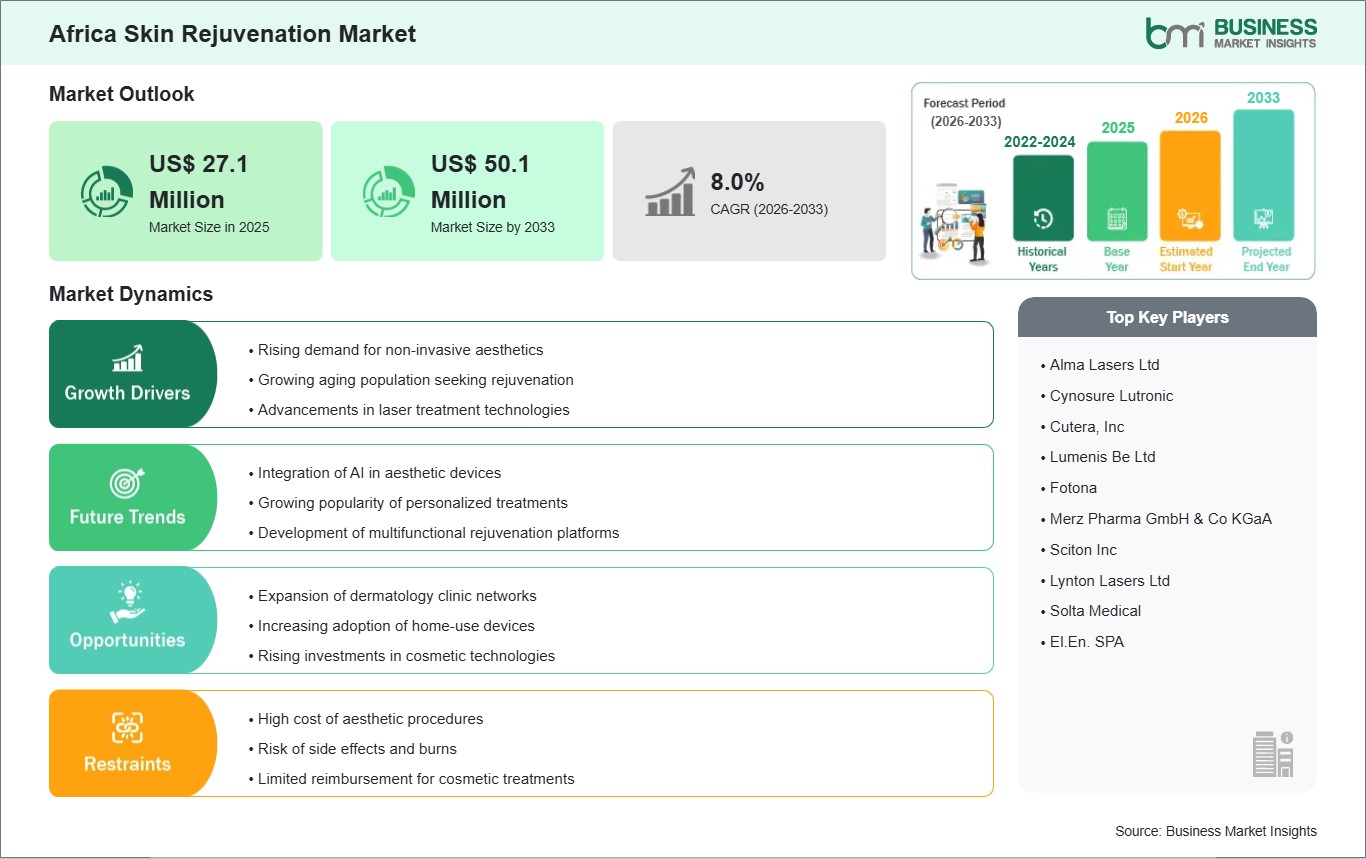
The Africa skin rejuvenation market is experiencing a steady shift toward non-invasive aesthetic treatments as consumers increasingly prioritize convenience, safety, and subtle results. Non-invasive procedures are becoming increasingly popular, owing to the fact that they offer quick healing and lower risks. In many ways, such non-surgical procedures suit people who lead extremely hectic lives. People living in urban areas within such nations as South Africa, Kenya, and Nigeria seem to be the main players here, since the effects of global beauty trends and rising disposable incomes play their role here too.
The cultural acceptance of aesthetic procedures is also changing, which has been one of the factors for the rising demand. While the previous generations used to consider such procedures as luxury or unnecessary, today’s generation has become more aware of them and is embracing this trend. The skin issues that affect people of African descent such as dark spots or lack of evenness have driven people to opt for non-surgical methods that deliver visible changes without looking fake.
In addition, the rising number of private dermatological clinics and spas is contributing to market development by providing better access to advanced procedures. The increase in their locations in urban and semi-urban regions is also increasing availability outside large cities. Collaboration with foreign companies and the training of local healthcare professionals are also boosting the service quality and trust of customers. Hence, non-surgical skin rejuvenation procedures are slowly turning into an integral element of people’s daily routines rather than a premium service in Africa.
Integration of artificial intelligence in skincare diagnostics
The adoption of artificial intelligence in skincare diagnostics is gradually transforming how skin conditions are identified and managed across Africa. Because of a lack of availability of dermatological care in many locations, AI is being used to help bridge that gap by providing remote evaluations and assessments. The use of mobile applications and online platforms can assist people in assessing their skin issues without the need for physical visits right away.
Moreover, artificial intelligence has enabled more customized solutions for skincare, something that is very important to customers today. Based on the analysis of pictures taken and consumer information, artificial intelligence programs can provide custom treatment suggestions that are suitable for one's particular skin type. Such a level of customization fits perfectly into the needs of African consumers because of their different skin types. In addition, more consumers become acquainted with technology, and, therefore, they are attracted by convenient and personalized skincare solutions.
However, the inclusion of AI in skincare diagnosis is still at its nascent stages and is facing some hurdles. One of the primary priorities would be ensuring that the algorithms are accurate for different skin types, given that past data collection biases have been an obstacle in achieving accuracy across all skin types. Moreover, issues of data privacy and user trust should also be considered to facilitate acceptance. However, continued innovation and cooperation within both tech and health sectors will help to facilitate the expansion of AI in skincare on the African continent.