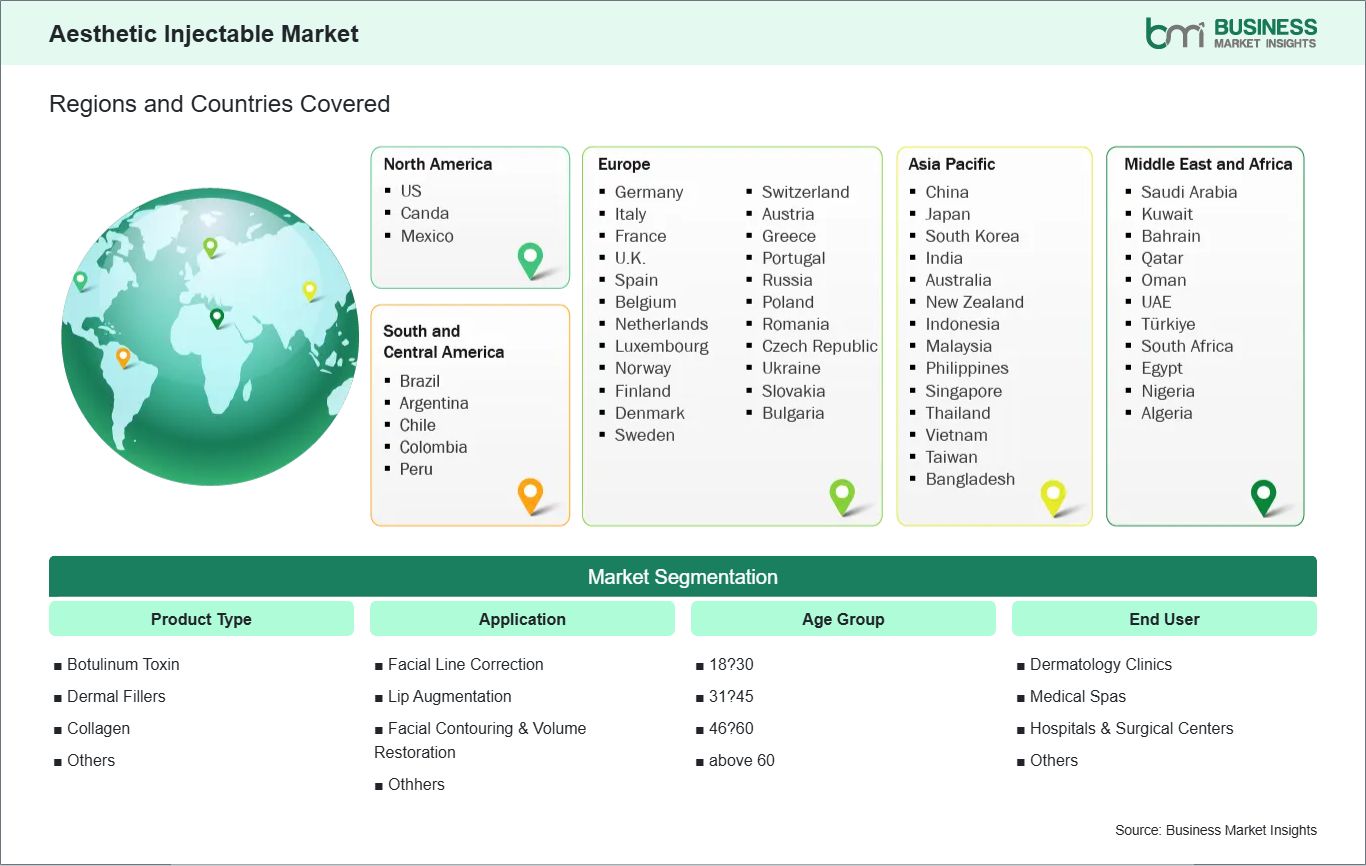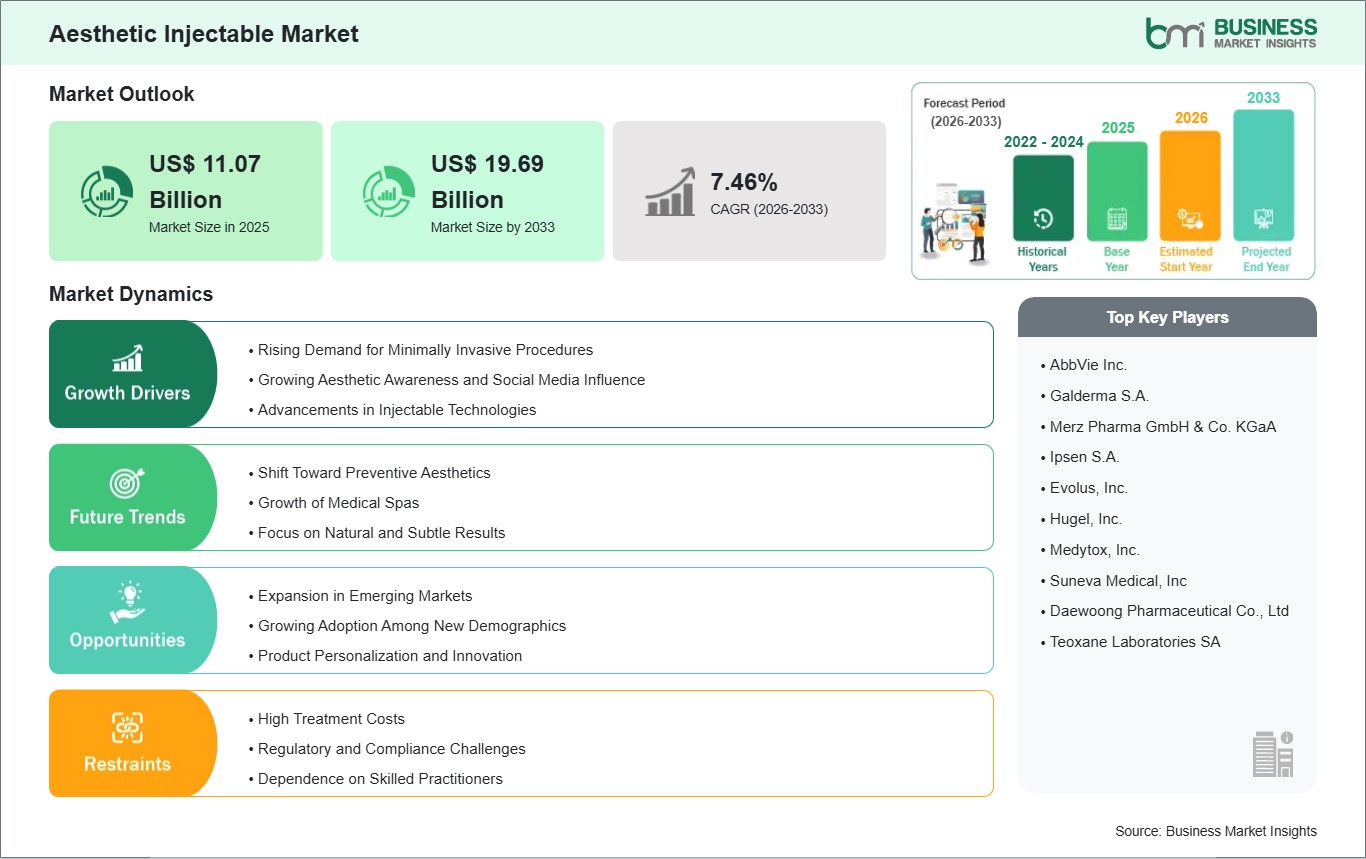
Aesthetic Injectable Market Regional Highlights
North America Aesthetic Injectable Market
North America remains the leading regional market with 44.1% Aesthetic Injectable Market share in 2025 and an anticipated 12.2% CAGR through 2033. The region benefits from high consumer awareness, advanced practitioner expertise, favorable product availability, and strong spending on cosmetic procedures. Demand is supported by aging populations seeking facial rejuvenation and younger consumers pursuing preventive aesthetic treatments. Extensive medical spa expansion and premium treatment adoption continue supporting overall regional development while encouraging manufacturers to launch differentiated injectable products.
- High procedure frequency and established reimbursement-independent spending patterns continue supporting sustained demand for cosmetic injectables across dermatology clinics and aesthetic centers.
- Manufacturers prioritize North America for product launches due to practitioner training networks, advanced clinical infrastructure, and strong consumer awareness regarding minimally invasive procedures.
- Growing influence of social media and digital consultations continues increasing treatment consideration among younger demographic groups seeking aesthetic enhancement.
- Preventive treatments, combination therapy protocols, and repeat toxin procedures are creating recurring revenue opportunities for providers and product manufacturers.
US Aesthetic Injectable Market
The United States accounts for 91.6% share within North America and is expected to expand at a 12.5% CAGR. Strong demand for botulinum toxin procedures, premium filler treatments, and advanced facial rejuvenation techniques continues supporting market expansion. The country's aesthetic industry benefits from extensive practitioner networks, continuous product innovation, and increasing consumer willingness to invest in appearance-related treatments. The presence of leading manufacturers further strengthens commercialization opportunities and competitive product development activities.
- Botulinum toxin treatments remain among the most frequently performed non-surgical cosmetic procedures nationwide.
- Medical spa expansion continues improving treatment accessibility beyond major metropolitan markets.
- Male aesthetic procedures are increasing as treatment stigma declines and consumer awareness improves.
- Digital marketing and virtual consultations support higher patient conversion rates and recurring treatment engagement.
Europe Aesthetic Injectable Market
Europe represents 26.4% Aesthetic Injectable Market share in 2025 and is forecast to record a 8.3% CAGR through 2033. Germany leads regional revenue generation, while Spain demonstrates particularly strong growth momentum supported by cosmetic tourism and clinic expansion. Growing demand for non-surgical facial rejuvenation procedures and increasing acceptance of aesthetic enhancements continue supporting market development. Strong regulatory oversight, practitioner expertise, and premium product adoption further contribute to treatment uptake across key European countries.
- Germany leads regional demand due to strong healthcare infrastructure, high disposable income, and significant adoption of advanced aesthetic procedures.
- Spain is emerging as a high-growth destination supported by international medical tourism and expanding clinic investments.
- Increasing preference for subtle, natural-looking facial enhancements supports demand for premium filler and toxin products.
- Aging populations across Western Europe continue generating recurring treatment demand among mature consumer groups.
Asia Pacific Aesthetic Injectable Market
Asia Pacific holds 21.3% Aesthetic Injectable Market share in 2025 and is projected to register the fastest expansion at 14.1% CAGR through 2033. China remains the largest regional market, while South Korea demonstrates particularly strong growth driven by advanced cosmetic procedure adoption and aesthetic innovation. Rising disposable income, increasing beauty consciousness, social media influence, and expanding clinic infrastructure continue accelerating treatment volumes.
- China benefits from a large consumer base, expanding middle-class spending, and increasing adoption of facial rejuvenation procedures.
- South Korea remains a global aesthetic innovation hub, supported by strong practitioner expertise and high procedure penetration rates.
- Medical tourism continues attracting international patients seeking advanced cosmetic treatments at competitive costs.
- Product availability is expanding through regulatory approvals and stronger distribution partnerships across major Asian markets.
Rest of World Aesthetic Injectable Market
Rest of World accounts for 8.2% share in 2025 and is expected to advance at a 6.2% CAGR during the forecast period. South and Central America recorded 5.8% global share in 2025 and is forecast at 6.8% CAGR through 2033, while Middle East and Africa recorded 2.5% and 5.5% CAGR, respectively. Brazil remains the leading market in South and Central America, while the United Arab Emirates demonstrates strong momentum in the Middle East. Increasing urbanization, rising disposable income, and growing awareness of non-surgical cosmetic enhancements continue supporting procedure adoption. Investments in premium aesthetic clinics and practitioner training programs are also strengthening market accessibility across emerging economies.
- Brazil benefits from a strong cosmetic culture and one of the world's most active aesthetic procedure markets.
- The UAE is emerging as a regional center for premium aesthetic services and medical tourism activities.
- Private healthcare investments are increasing access to modern cosmetic treatment facilities.
- Social media engagement continues influencing consumer decision-making and treatment awareness throughout developing markets.