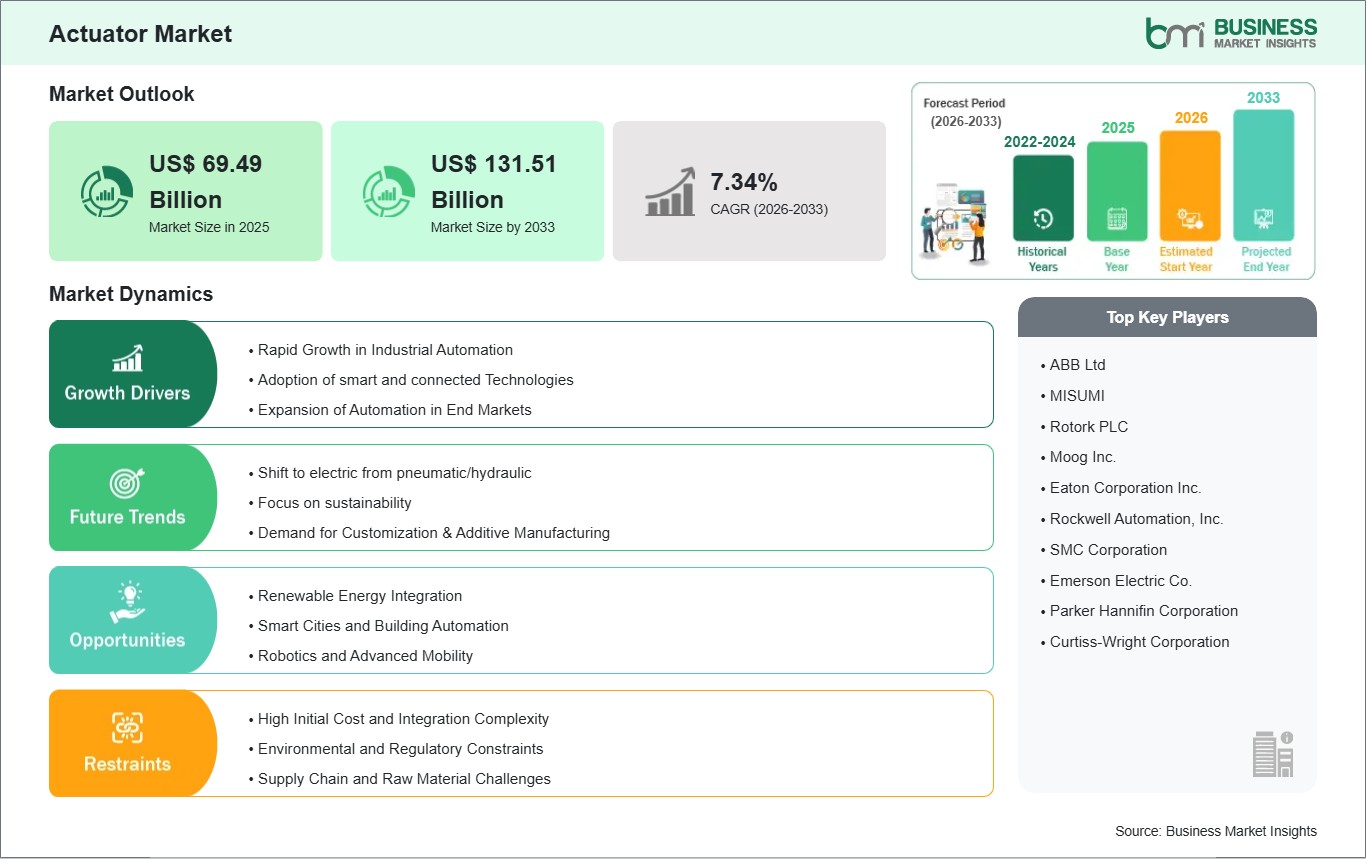
The actuator market size is expected to reach US$ 131.51 billion by 2033 from US$ 69.49 billion in 2025. The market is estimated to record a CAGR of 7.34% from 2026 to 2033.
An actuator is a critical component in mechanical and electronic systems, designed to convert energy—typically electrical, hydraulic, or pneumatic—into physical motion, enabling precise control of machinery, devices, or processes. Actuators are widely used across industries such as automotive, aerospace, robotics, industrial automation, and healthcare, where their ability to deliver accurate and reliable movement is essential. The benefits of actuators include enhanced operational efficiency, automation of repetitive tasks, improved precision, and reduced human intervention, making processes faster, safer, and more cost-effective.
The demand for actuators is primarily driven by the increasing adoption of automation technologies, the rise of electric and autonomous vehicles, smart manufacturing, and industrial Internet of Things (IIoT) applications. However, market growth faces restraints such as high initial investment costs, complex maintenance requirements, and dependence on advanced technologies, which may limit adoption in small-scale operations. On the other hand, opportunities exist in emerging markets, renewable energy applications, robotics, and advanced medical devices, where the need for precision and reliability is growing. Trends influencing the actuator market include miniaturization, energy-efficient designs, integration with AI and IoT systems, and the development of smart actuators with self-diagnostic capabilities, all of which are expected to significantly drive future market growth.

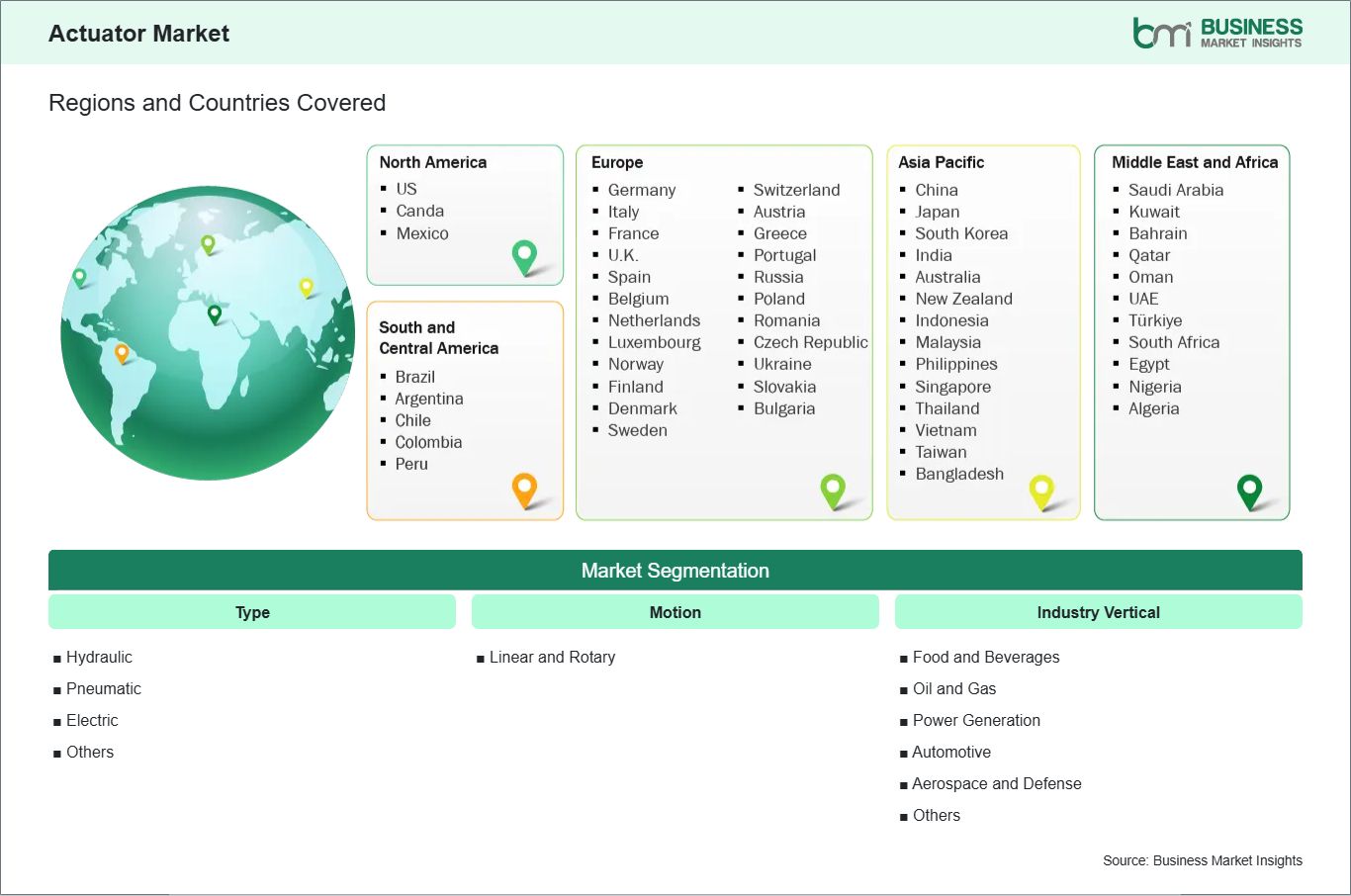
Key segments that contributed to the derivation of the actuator market analysis are type, motion, and industry vertical.
The industrial automation sector is experiencing unprecedented growth, driven by the increasing integration of advanced technologies in manufacturing, automotive, aerospace, and process industries. As companies strive to enhance operational efficiency, reduce human error, and optimize productivity, actuators have emerged as critical components in automated systems. Actuators, which convert energy into mechanical motion, are essential for precise control of machinery, robotic arms, conveyor systems, and process valves, enabling smoother, faster, and more reliable operations. In manufacturing, for instance, the adoption of robotics and automated assembly lines has significantly increased the need for electric, pneumatic, and hydraulic actuators capable of handling diverse tasks with high accuracy. Similarly, the automotive industry’s shift toward electric vehicles and advanced driver-assistance systems (ADAS) has heightened demand for compact and responsive actuators that manage steering, braking, and throttle systems. In aerospace, actuators are crucial for controlling flight surfaces, landing gear, and cabin systems, ensuring both safety and efficiency in increasingly sophisticated aircraft. Furthermore, process industries such as oil and gas, chemicals, and pharmaceuticals rely heavily on actuators for precise control of valves and pumps, ensuring consistent product quality and compliance with stringent regulatory standards.
The convergence of Industry 4.0 technologies, including IoT, AI, and predictive maintenance, further fuels actuator demand by enabling real-time monitoring and optimization of automated systems. As automation adoption continues to accelerate globally, the actuator market is projected to witness substantial growth, reflecting the critical role these components play in enabling smarter, faster, and more efficient industrial operations. The global actuator market, valued at several billion dollars, is expected to maintain a robust growth trajectory over the coming decade, driven by industrial modernization and the growing emphasis on operational excellence.
Actuators are increasingly pivotal in the renewable energy sector, particularly in applications such as wind turbine pitch control and solar tracking systems. In wind turbines, pitch control is essential for optimizing blade angles to maximize energy capture while ensuring structural safety under varying wind conditions. Precision actuators allow for rapid and accurate adjustments, enhancing efficiency and extending turbine lifespan. Similarly, in solar energy systems, actuators enable single- or dual-axis solar trackers to follow the sun’s path, significantly increasing photovoltaic energy generation compared to fixed-tilt installations. The growing global emphasis on sustainability and the transition to low-carbon energy sources is driving accelerated deployment of wind and solar infrastructure, directly boosting demand for reliable, high-performance actuators. Moreover, advancements in actuator technologies, including electric, hydraulic, and smart actuators with embedded sensors and IoT connectivity, are opening new growth avenues by enabling predictive maintenance, real-time monitoring, and energy-efficient operation. The expansion of offshore wind projects, particularly in Europe and Asia-Pacific, alongside large-scale solar installations in emerging markets, further underscores the critical role of actuators in supporting renewable energy integration.
As governments implement stricter carbon reduction targets and incentivize green energy, the actuator market is positioned to benefit from increased investment in renewable energy systems. Additionally, the trend toward hybrid energy systems, combining wind, solar, and energy storage, requires sophisticated actuator solutions to optimize system performance and reliability. Overall, the renewable energy sector represents a compelling growth opportunity for actuator manufacturers, linking technological innovation with sustainability objectives and creating significant market potential for advanced, durable, and energy-efficient actuator solutions.

By type, the market is segmented into hydraulic, pneumatic, electric, and others. The electric segment held the largest share of the market in 2025. An electric actuator is a device that converts electrical energy into mechanical motion, enabling precise control of valves, dampers, and machinery. Its adoption is surging due to increasing automation, energy efficiency demands, stringent environmental regulations, and growing industrial IoT integration. Reliability, low maintenance, and precise control also drive market growth.
By motion, the market is divided into linear and rotary. The linear segment held the largest share of the market in 2025. A linear actuator is a device that creates motion in a straight line, converting electrical, hydraulic, or pneumatic energy into mechanical movement. The market adoption of linear actuators is surging due to increasing automation, demand for precision in robotics, industrial machinery, automotive applications, and growing investments in smart manufacturing technologies.
By industry vertical, the market is segmented into food and beverages, oil and gas, power generation, automotive, aerospace and defense, and others. The automotive segment held the largest share of the market in 2025. The adoption of actuators in the automotive industry is surging due to rising demand for automation, enhanced vehicle safety, and improved fuel efficiency. Technological advancements in sensors, electric powertrains, and smart control systems drive integration. Regulatory pressures, consumer preference for comfort, and the shift toward electric and autonomous vehicles further accelerate actuator implementation.
| Report Attribute | Details |
|---|---|
| Market size in 2025 | US$ 69.49 Billion |
| Market Size by 2033 | US$ 131.51 Billion |
| Global CAGR (2026 - 2033) | 7.34% |
| Historical Data | 2022-2024 |
| Forecast period | 2026-2033 |
| Segments Covered | By Type
|
| Regions and Countries Covered | North America
|
| Market leaders and key company profiles |
|
The "Actuator Market Size and Forecast (2022–2033)" report provides a detailed analysis of the market covering below areas:
The geographical scope of the actuator market report is divided into five regions: North America, Asia Pacific, Europe, Middle East & Africa, and South & Central America. The actuator market in Asia Pacific is expected to grow significantly during the forecast period.
The Asia-Pacific actuator market is segmented into China, Japan, South Korea, India, Australia, New Zealand, Indonesia, Malaysia, the Philippines, Singapore, Thailand, Vietnam, Taiwan, Bangladesh, and the Rest of Asia. The demand factor driving the growth of the actuator market in the Asia Pacific region is driven by rapid industrial transformation and technological progress. One of the primary drivers is the widespread adoption of industrial automation and smart manufacturing, as manufacturers in countries such as China, Japan, South Korea, and India increasingly integrate actuators into robotics, assembly lines, and automated production systems to boost productivity, reduce labor costs, and improve precision. This trend is closely tied to the rise of Industry 4.0 technologies, where actuators form a critical component of automated solutions enhanced by the Internet of Things (IoT) and artificial intelligence (AI) for real-time monitoring, predictive maintenance, and improved operational flexibility.
Another significant factor driving the market is government support and industrial policy initiatives. Programs such as China’s “Made in China-2025” and similar manufacturing modernization plans across the region encourage investments in automation, robotics, and high-tech production facilities, stimulating actuator deployment across key sectors. Supportive regulatory frameworks and infrastructure investments further enhance the attractiveness of these technologies for both domestic and multinational firms operating in Asia Pacific.
The expansion of key end-use industries also fuels actuator demand. The automotive sector, especially with its shift toward electric and hybrid vehicles and advanced driver assistance systems (ADAS), increasingly relies on advanced actuators for precise control and enhanced vehicle functions. Meanwhile, growth in electronics, consumer goods manufacturing, and aerospace applications underscores the need for varied actuator solutions tailored to specific performance requirements.
Additionally, infrastructure development and logistics automation stimulated by booming e-commerce create strong demand for robotic actuators in material handling and warehousing systems. The emphasis on energy efficiency and sustainability pushes industries to adopt electric and energy-efficient actuator technologies that reduce carbon footprints while maintaining high performance.

The actuator market is evaluated by gathering qualitative and quantitative data post primary and secondary research, which includes important corporate publications, association data, and databases. A few of the key developments in the actuator market are:
The Actuator Market is valued at US$ 69.49 Billion in 2025, it is projected to reach US$ 131.51 Billion by 2033.
As per our report Actuator Market, the market size is valued at US$ 69.49 Billion in 2025, projecting it to reach US$ 131.51 Billion by 2033. This translates to a CAGR of approximately 7.34% during the forecast period.
The Actuator Market report typically cover these key segments-
The historic period, base year, and forecast period can vary slightly depending on the specific market research report. However, for the Actuator Market report:
The Actuator Market is populated by several key players, each contributing to its growth and innovation. Some of the major players include:
The Actuator Market report is valuable for diverse stakeholders, including:
Essentially, anyone involved in or considering involvement in the Actuator Market value chain can benefit from the information contained in a comprehensive market report.
Please tell us your area of interest
(Market Segments/ Regions and Countries/ Companies)