Key Market Drivers
Rising Demand for Wear-Resistant Engineering Materials
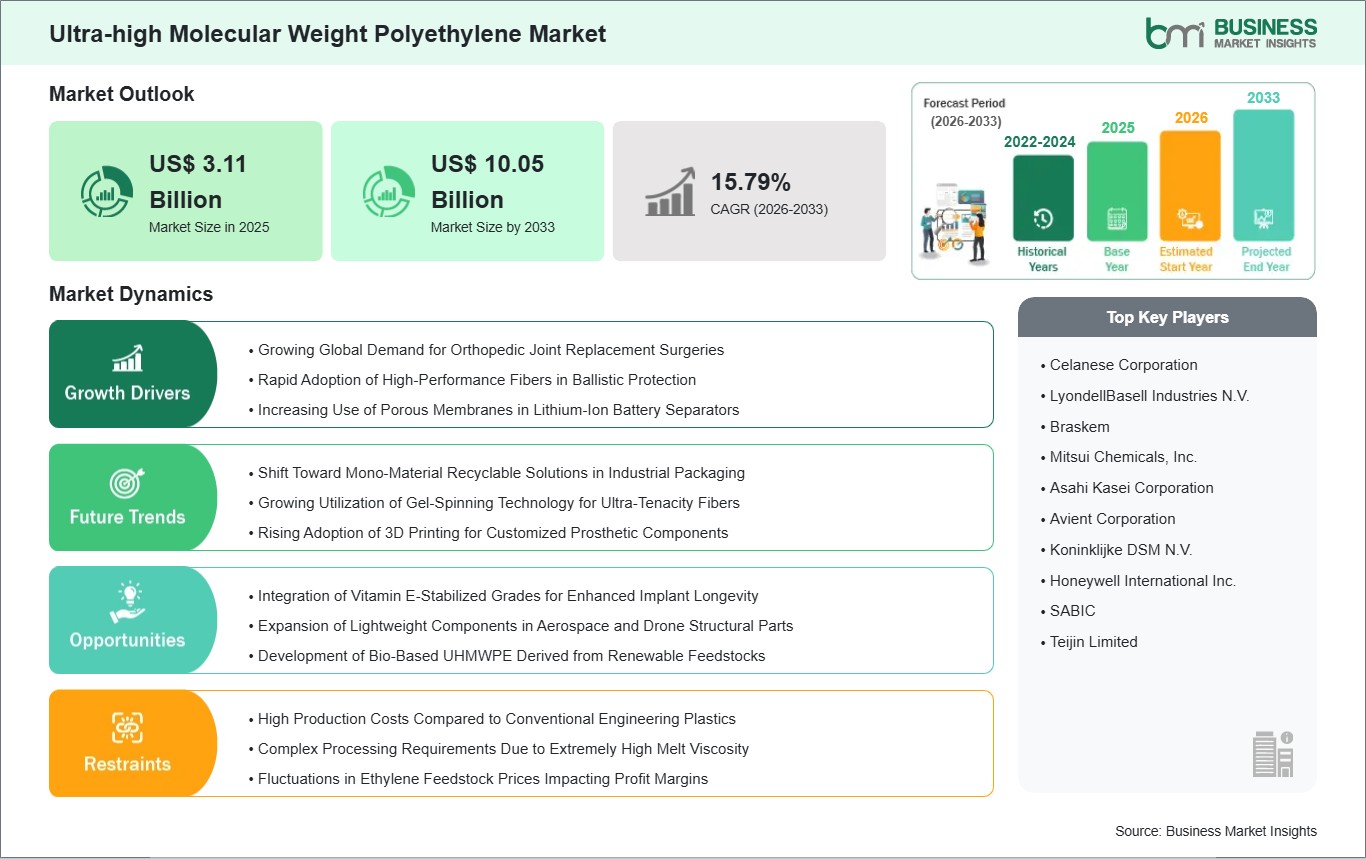
UHMWPE is increasingly selected for components exposed to repeated abrasion, impact, sliding contact, and mechanical stress. Its low coefficient of friction and durability can support longer component service intervals in demanding environments. Industrial users apply the material in liners, guides, bearings, wear strips, chutes, and other components where conventional materials can require more frequent replacement. The Ultra-High Molecular Weight Polyethylene Market growth is reinforced by efforts to improve equipment reliability and reduce maintenance interruptions. Product development is also targeting greater process consistency and application-specific performance. As manufacturers seek lightweight alternatives to metal components, UHMWPE can provide an attractive material option where low weight, chemical resistance, and mechanical durability need to be combined in one component.
Expansion of Medical and Prosthetic Applications
Medical-grade UHMWPE remains an important material in orthopedic and prosthetic applications because wear characteristics, mechanical performance, and biocompatibility are central to product design. Manufacturers are emphasizing material purity, oxidation stability, processing control, and long-term performance. Greater focus on implant durability is encouraging the development of improved material formulations and processing methods. Healthcare manufacturers also require dependable supply and consistent specifications because medical components operate under stringent quality conditions. The broader Ultra-High Molecular Weight Polyethylene Market trend therefore includes continued specialization of medical grades alongside established industrial applications. Suppliers with controlled production environments and application-specific technical support can address increasingly demanding healthcare requirements while supporting product development across different implant and prosthetic designs.
Growing Adoption of High-Strength UHMWPE Fibers
UHMWPE fibers combine high tensile strength with low weight, making them suitable for protective fabrics, ropes, cables, specialized sporting products, and selected aerospace and defense applications. Their performance characteristics can help reduce product weight while maintaining mechanical integrity under demanding conditions. Fiber producers continue to improve spinning, consolidation, coating, and processing techniques to optimize performance for individual applications. Demand can also benefit from the replacement of heavier materials in systems where weight efficiency has a direct operational value. The Ultra-High Molecular Weight Polyethylene Market forecast is therefore influenced by continued development of high-strength fibers and their integration into advanced textile, composite, protection, marine, and industrial products.
Key Market Opportunities
Expansion of UHMWPE in Battery-Related Applications
Battery-related applications provide an opportunity to extend UHMWPE into advanced energy-storage systems. The material can support specialized separator and related applications where durability, chemical resistance, and controlled physical properties are important. As battery manufacturers evaluate materials according to safety, performance, processing, and cost requirements, specialized polymer grades can create new opportunities for suppliers. Development depends on compatibility with battery production processes and the ability to meet application-specific specifications. The Ultra-High Molecular Weight Polyethylene Market report can therefore benefit from greater attention to energy-storage applications as manufacturers diversify beyond conventional medical and industrial uses. Partnerships between polymer producers, separator developers, and battery-material companies can help accelerate material qualification and commercialization.
Development of Application-Specific UHMWPE Grades
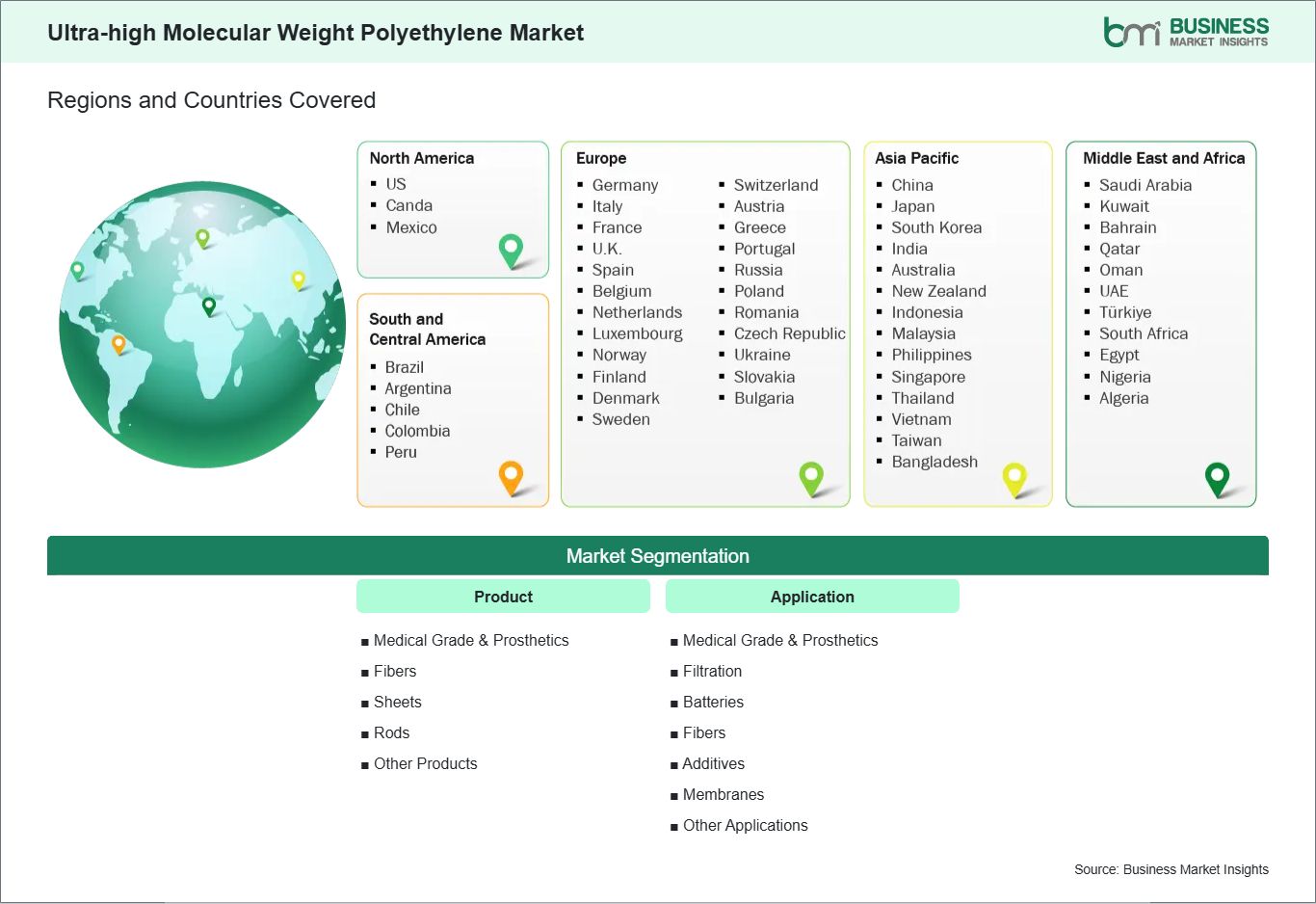
Different end-use sectors require distinct combinations of toughness, wear resistance, chemical resistance, purity, friction characteristics, and processability. This creates an opportunity for suppliers to develop grades tailored to specific operating environments rather than relying on standardized formulations. Medical users may prioritize controlled purity and oxidation stability, while industrial customers can emphasize machinability and wear performance. Fiber producers require material properties that support high-strength processing, whereas filtration and membrane applications may require controlled structures and permeability characteristics. The Ultra-High Molecular Weight Polyethylene Market analysis increasingly centers on such application-led differentiation. Customized grades can create higher-value product positions while strengthening relationships between material suppliers and downstream manufacturers.
Increasing Use in Advanced Filtration and Membrane Systems
Filtration and membrane applications present opportunities where chemical resistance, durability, and structural stability are important. UHMWPE can support specialized porous or engineered structures used in demanding fluid and separation environments. Growth depends on material design, pore control, manufacturing consistency, and integration with existing filtration systems. Suppliers can expand their addressable opportunities by developing grades and forms suited to specific pressure, chemical, temperature, and flow conditions. The material's durability may also support applications where longer service life is commercially valuable. Broader interest in efficient filtration and resource management can create additional demand for advanced polymer components, particularly when system operators prioritize reliability and reduced maintenance requirements.
Market Restraints and Challenges
High Processing Complexity Limits Broader Adoption
Factor: UHMWPE has very high molecular weight and unusual melt-processing behavior, requiring specialized processing techniques and equipment compared with many conventional thermoplastics. Impact: Processing challenges can result in increased production demands, reduced flexibility in processing, and constraints on those manufacturers who do not have specific expertise. It is vital that suppliers and converters fine-tune forming, machining, consolidation, and finishing processes for particular material grades and forms. Medical products and high-strength applications often necessitate more stringent processing controls due to dependency on material properties. Specialization in the equipment and the knowledge base could be used to raise entry barriers and encourage concentration among the processors with experience. Processability improvement without sacrificing wear, impact, or mechanical properties is a goal in product development as suppliers aim to diversify the uses of UHMWPE.
Higher Material Costs Can Restrict Price-Sensitive Applications
Factor: Specialized UHMWPE grades, high-strength fibers, medical materials, and advanced forms can require higher manufacturing and qualification costs than standard polymer alternatives. Impact: Cost sensitivity may act as a limiting factor, especially when consumers value lower material cost at first usage over performance in the long run. Consumers may have to make use of justifications such as longevity of service, less downtime, less maintenance, or lightness of parts. Medical and specialized applications can support higher material value because performance requirements are stringent, while commodity-oriented applications remain more price sensitive. Manufacturers can address the constraint through process efficiency, scale, optimized product design, and application-specific formulations. Demonstrating lifecycle value can also support substitution decisions where conventional polymers or metals remain established.