01
Market Summary
Executive Summary and Market Analysis
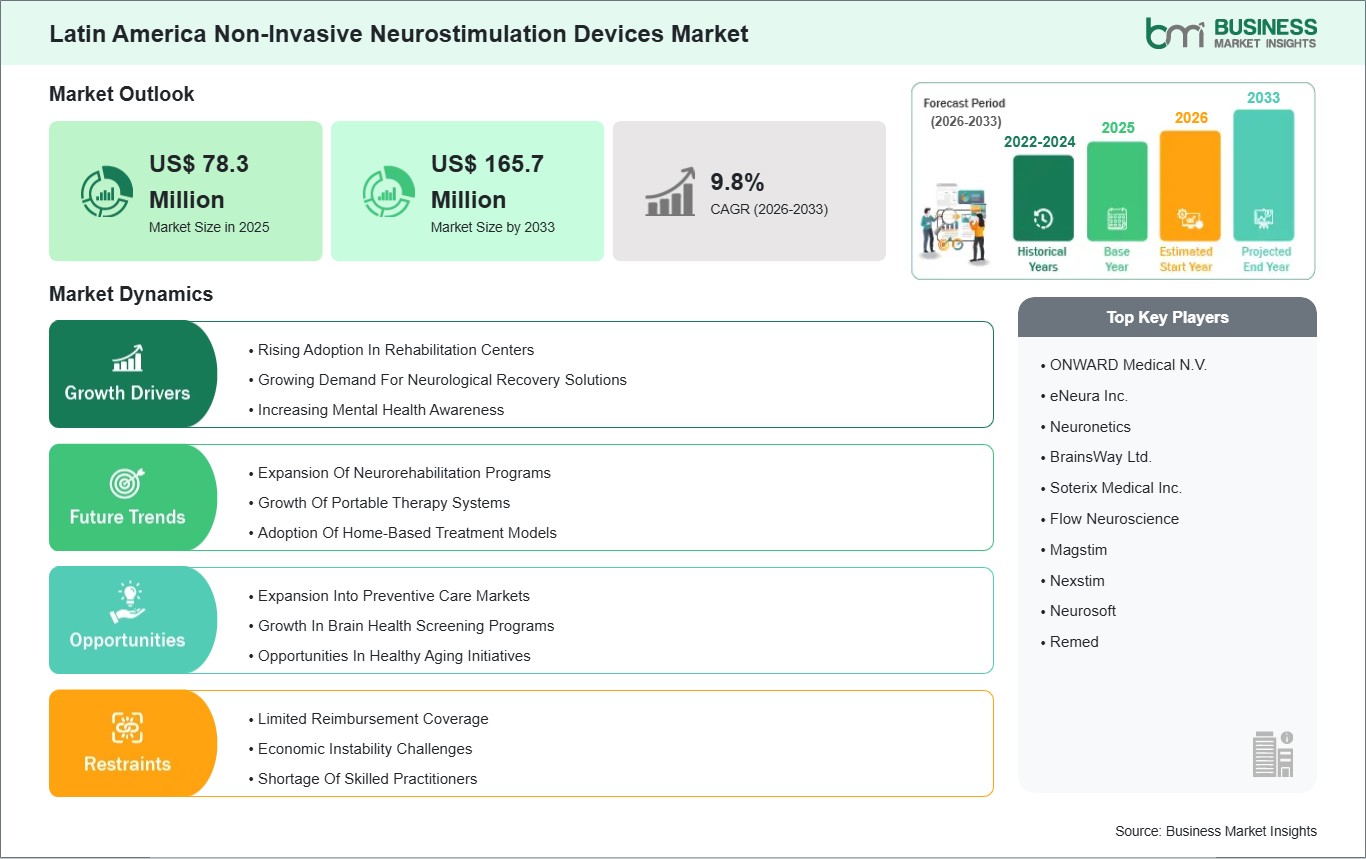
The market for non-invasive neurostimulation devices in Latin America is evolving as neurorehabilitation practices change and brain stimulation technologies like transcranial magnetic stimulation and transcranial direct current stimulation gain wider clinical acceptance in psychiatric and neurological care. A major factor driving growth is the increasing number of people with depression, anxiety, and chronic pain, which leads clinicians to use non-invasive brain modulation when medications are not effective. The expansion of neurology and psychiatry services, especially in private healthcare and specialized clinics, is also encouraging more use of device-based neuromodulation for rehabilitation and cognitive disorders. However, challenges remain, such as a shortage of trained professionals and the high costs of advanced neurostimulation systems, which can make it difficult to use these devices outside large urban hospitals. Differences in regulations and reimbursement policies across countries also affect how quickly hospitals, research centers, and outpatient providers adopt these technologies. Interest in non-drug psychiatric treatments is growing, leading to more research partnerships and pilot programs that test portable neuromodulation devices in outpatient and home care. Manufacturers are working with hospitals and universities to show the benefits of these devices, train clinicians, and include neuromodulation in treatment plans for neurology, psychiatry, and rehabilitation. They are also addressing challenges related to purchasing and after-sales service, which are important for healthcare providers looking for cost-effective, evidence-based neurotechnology solutions for complex neurological conditions in a wide range of patients.
03
Segment Analysis
Latin America Non-Invasive Neurostimulation Devices Market Segmentation
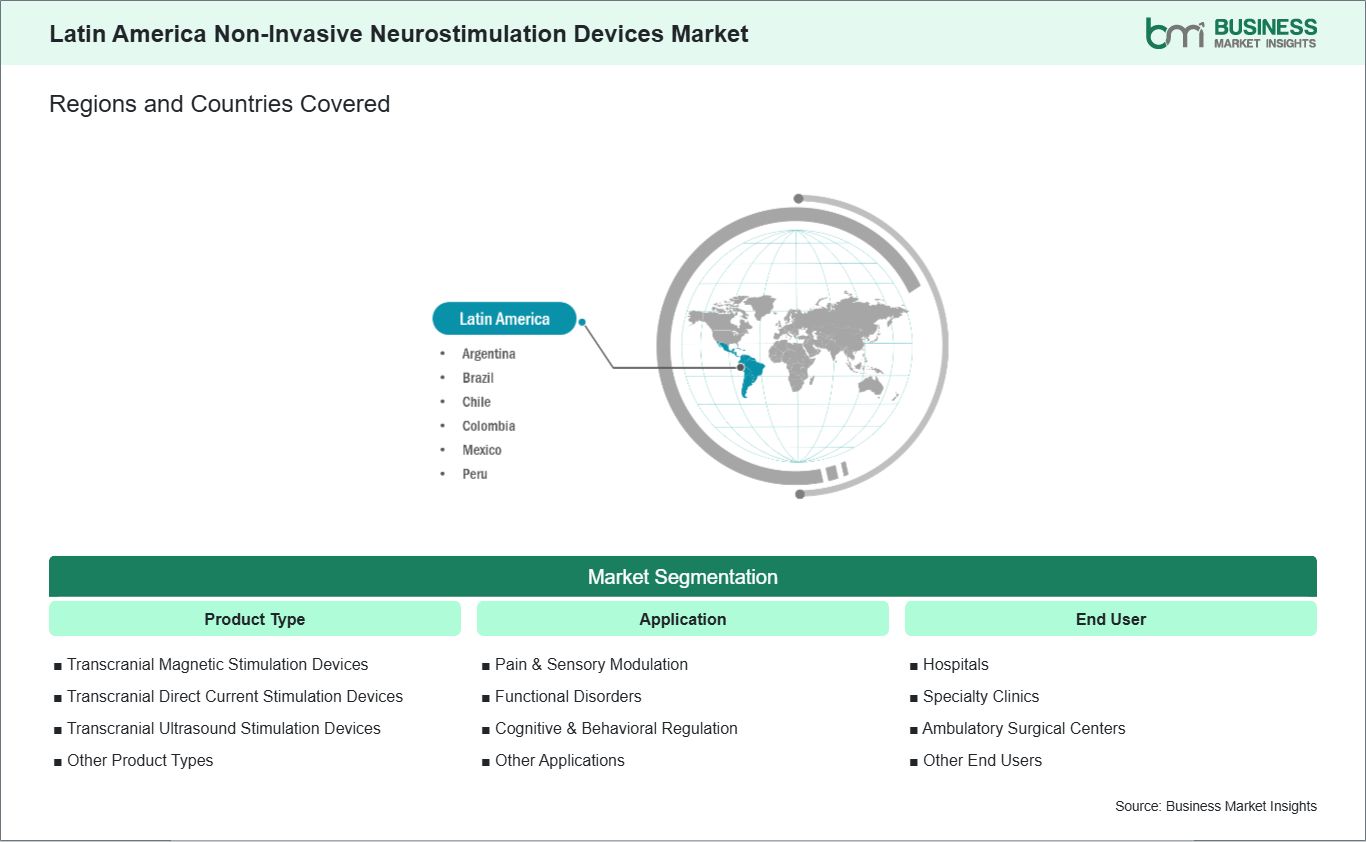
Key segments that contributed to the derivation of the Latin America non-invasive neurostimulation devices market analysis are product type, application and end user.
- By product type, the non-invasive neurostimulation devices market is segmented into transcranial magnetic stimulation devices, transcranial direct current stimulation devices, transcranial ultrasound stimulation devices, and other product types. The transcranial magnetic stimulation devices segment dominated the market in 2025.
- Based on application, the non-invasive neurostimulation devices market is categorized into pain & sensory modulation, functional disorders, cognitive & behavioral regulation, and other applications. The cognitive & behavioral regulation segment dominated the market in 2025.
- In terms of end user, the non-invasive neurostimulation devices market is categorized into hospitals, specialty clinics, ambulatory surgical centers, and other end users. The hospitals segment dominated the market in 2025.
04
Market Forces
Latin America Non-Invasive Neurostimulation Devices Market Drivers and Opportunities
Rising Adoption in Rehabilitation Centers
In rehabilitation centers across Latin America, non-invasive neurostimulation devices are increasingly being embedded into structured recovery protocols for patients recovering from stroke, spinal injuries, and orthopedic surgeries. Instead of relying solely on repetitive physical exercises, clinicians are combining stimulation sessions with task-specific motor training to reinforce neuromuscular signaling. This integration reflects a shift toward therapy designs that actively pair external stimulation with voluntary movement to improve coordination outcomes.
Mid-sized rehabilitation centers often prefer flexible, multi-use neurostimulation systems instead of highly specialized equipment. Administrators look for devices that can be shared among patients and easily adjusted for different neurological needs. Vendors usually provide hands-on training, so physiotherapists can add stimulation to therapy sessions without slowing down schedules or making treatments more complicated.
Therapists are changing their routines to add short periods of neurostimulation before or during movement exercises. This helps reduce early fatigue and allows patients to handle longer rehab sessions. More clinicians now see neurostimulation as a regular part of motor recovery, not just an extra option.
Expansion into Preventive Care Markets
In Latin America's wellness sector, non-invasive neurostimulation devices are now being used for recovery and cognitive balance, not just clinical rehab. Fitness studios and wellness centers are adding short stimulation sessions to stretching, breathing exercises, and mobility work to help people feel mentally refreshed and relaxed after exercise.
Premium wellness clubs and spas are also starting to offer neurostimulation as a way to improve focus or manage stress. They provide short, repeatable sessions that fit into their membership services. Urban wellness fans are also trying out these technology-based self-care practices outside of regular healthcare settings.
Manufacturers are making devices more portable, easier to use, and customizable for users. Their marketing now focuses on comfort, convenience, and the overall experience instead of just medical benefits. This shift helps place neurostimulation devices in more lifestyle and wellness settings, not just clinics.
05
Size and Share Analysis
Latin America Non-Invasive Neurostimulation Devices Market Size and Share Analysis
The Latin America non-invasive neurostimulation devices market demonstrates steady growth, with size and share analysis highlighting evolving trends and competitive dynamics among key players. The report examines subsegments categorized within product type, application and end user, offering insights into their contribution to overall market performance.
By product type, the transcranial magnetic stimulation devices subsegment dominated the market in 2025, driven by its established clinical efficacy, growing adoption for neurological and psychiatric disorders, and increasing availability across healthcare facilities.
Based on application, the cognitive & behavioral regulation subsegment dominated the market in 2025, driven by the rising prevalence of mental health disorders and increasing use of neurostimulation therapies for depression, anxiety, and cognitive enhancement.
In terms of end user, the hospitals subsegment dominated the market in 2025, driven by the availability of advanced neurostimulation technologies, skilled healthcare professionals, and growing patient volumes requiring specialized neurological care.
07
Report Coverage
Latin America Non-Invasive Neurostimulation Devices Market Report Coverage and Deliverables
The "Latin America Non-Invasive Neurostimulation Devices Market Size and Forecast (2022-2033)" report provides a detailed analysis of the market covering below areas:
- Market segments covered under the scope
- Market dynamics such as drivers, restraints, and key opportunities
- Market concentration, heat map analysis, prominent players, and recent developments
- Detailed company profiles, including SWOT analysis
08
Geographic Insights
Latin America Non-Invasive Neurostimulation Devices Market Geographic Insights
The geographical scope of the Latin America Non-Invasive Neurostimulation Devices Market report is divided into Mexico, Brazil, Argentina, Peru, Chile, Colombia. Brazil held the largest share in 2025.
Brazil remains the dominant market in Latin America for non-invasive neurostimulation devices, supported by its extensive network of tertiary hospitals, concentration of neurology and psychiatry specialists, and adoption of neuromodulation for pain management, depression, and rehabilitation across public and private systems. Strong distributor presence and clinical familiarity with transcranial techniques reinforce its leadership. Mexico is witnessing steady expansion driven by medical technology transfer from the United States, growth of neurorehabilitation centers in urban hubs, and rising demand for non-pharmacological chronic pain therapies within orthopedic and sports medicine practices. Argentina's growth is shaped by its established neuroscience academic base and selective adoption in private healthcare, where cost-sensitive providers favor non-invasive neuromodulation as an alternative to long-term psychiatric pharmacological care. Peru is advancing through modernization of urban private hospitals, rising awareness of neurorehabilitation needs from traumatic injuries, and integration of non-invasive brain stimulation into emerging outpatient neurological services. Chile benefits from structured healthcare financing, early acceptance of innovative neurological therapies, and incorporation of neuromodulation into psychiatric and cognitive wellness programs. Colombia is gaining traction through expanding hospital infrastructure, stronger emphasis on mental health access, and trauma-related rehabilitation demand, with private clinics increasingly exploring neuromodulation therapies.
10
Industry Activity
Recent Developments
The Latin America Non-Invasive Neurostimulation Devices Market is evaluated by gathering qualitative and quantitative data post primary and secondary research, which includes important corporate publications, association data, and databases. A few of the key developments in the Latin America non-invasive neurostimulation devices market are:
- In April 2025, Nexalin Technology announced that its Gen-2 Deep Intracranial Frequency Stimulation (DIFS) device received Institutional Review Board (IRB) approval in Brazil and initiated a clinical trial for anxiety and insomnia. The study is being conducted at a leading psychiatric research institution in Sao Paulo, marking a key regulatory and clinical expansion of non-invasive neurostimulation in Latin America.
- In January 2023, Neuronetics announced that it entered a six-year exclusive partnership with Greenbrook TMS to expand access to its NeuroStar TMS therapy system. The agreement strengthened commercialization of non-invasive transcranial magnetic stimulation (TMS) across clinic networks, supporting indirect expansion into international markets.
11
Trust & Transparency
Research Methodology
The market analysis combines proprietary research with secondary data from government agencies, company disclosures, regulatory filings, industry databases and expert interviews. Market estimates are validated through data triangulation, cross-market benchmarking and analyst
review.
View Full Research Methodology
Key Sources Referred:
U.S. Food and Drug Administration (FDA)National Institutes of Health (NIH)National Institute of Neurological Disorders and Stroke (NINDS)Centers for Medicare & Medicaid Services (CMS)Medical Device Innovation Consortium (MDIC)World Health Organization (WHO)International Organization for Standardization (ISO)International Neuromodulation Society (INS)North American Neuromodulation Society (NANS)Company WebsitesCompany Annual ReportsCompany Investor Presentations