Rising Prevalence of Respiratory Illnesses
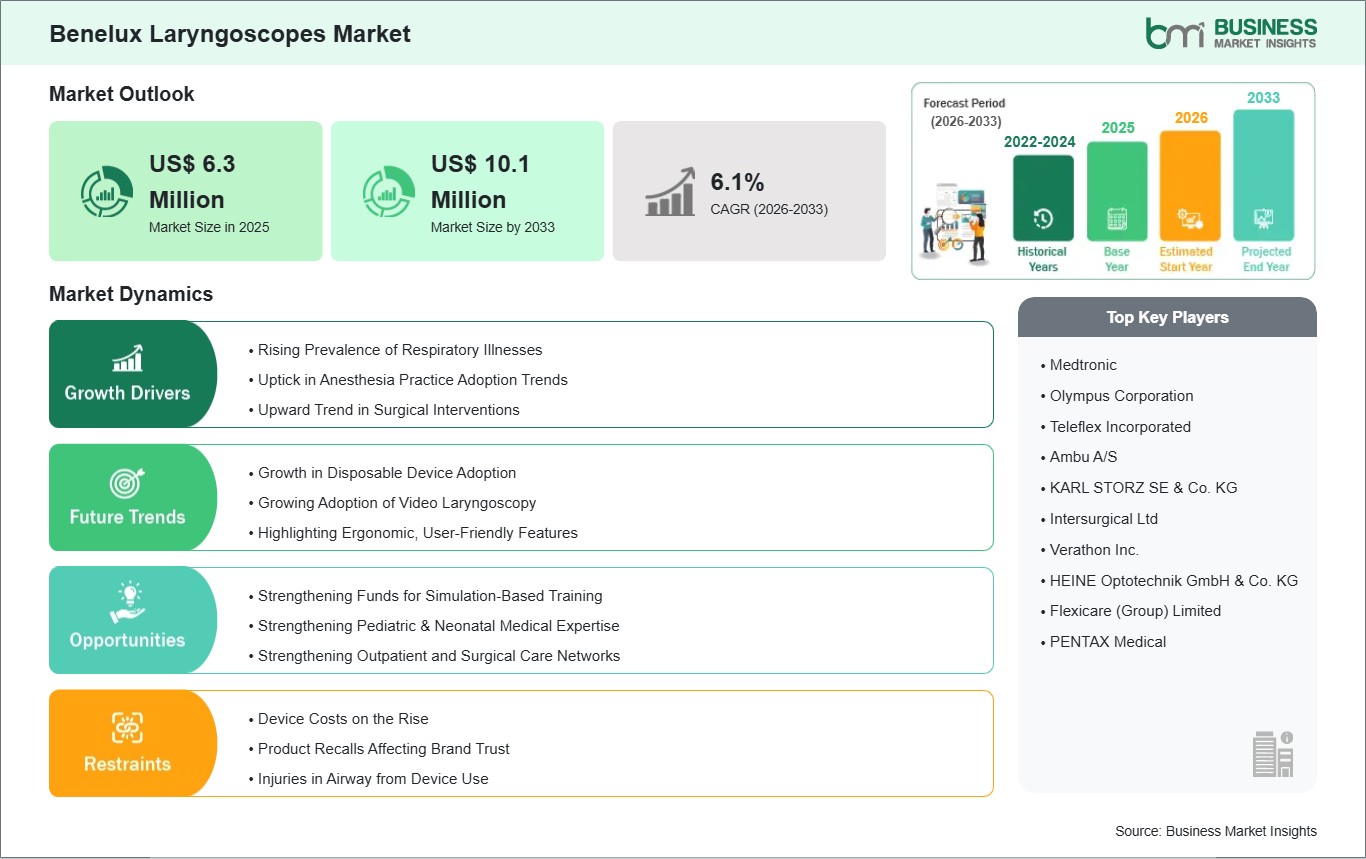
The Benelux region is witnessing a steady rise in respiratory illnesses driven by urban density, industrial emissions, and aging demographics. Rotterdam, Brussels, and Luxembourg City experience periodic air quality concerns linked to traffic congestion and port-related industrial activity, which contributes to increased cases of asthma and chronic respiratory irritation. These conditions often escalate into emergency airway complications, reinforcing the clinical reliance on laryngoscopes in hospitals and emergency departments.
Besides environmental considerations, the growing number of elderly people in the area contributes to the burden of respiratory diseases. Elderly patients in Belgium and the Netherlands are especially vulnerable to diseases such as pneumonia, COPD, and post-surgery complications, requiring airway treatment. The growth in the percentage of the elderly increases the need for intubation procedures; thus, a laryngoscope becomes a common medical device used in critical care and anesthesiology departments.
Finally, another driving force behind the use of a laryngoscope is the prevalence of chronic respiratory diseases in the healthcare system. Although the region boasts an advanced healthcare system with preventive measures in place, the number of hospitalizations due to respiratory diseases is still quite high, especially around flu season.
Strengthening Funds for Simulation-Based Training
Healthcare systems in the Benelux region are increasingly investing in simulation-based medical education as part of broader efforts to improve clinical outcomes and patient safety. Teaching hospitals in Leuven, Amsterdam, and Utrecht are expanding simulation labs where clinicians practice airway management techniques using realistic patient mannequins and digital feedback systems. This structured training environment is particularly important for mastering intubation procedures, where precision and timing are critical.
Funding for medical education innovation in Belgium and the Netherlands is taking place at both hospital university networks and through public-private partnerships. This funding has helped facilitate the introduction of innovative airway management instruments that will allow medical practitioners to get acquainted with new laryngoscopes before using them in clinical practice. This practice is leading to gradual improvement of skills related to the procedure and minimizing the variability between the procedures at different hospitals.
Finally, regional collaboration in healthcare, alongside the use of European Union-funded initiatives in education, is facilitating the standardization of training procedures in the area. Increasingly, simulation training has been used not only by specialists but also by emergency medicine residents and paramedics. Moreover, during the course of education, the use of video-assisted and fiber-optic laryngoscopy is being promoted, which also accelerates the spread of such innovations in practical work.