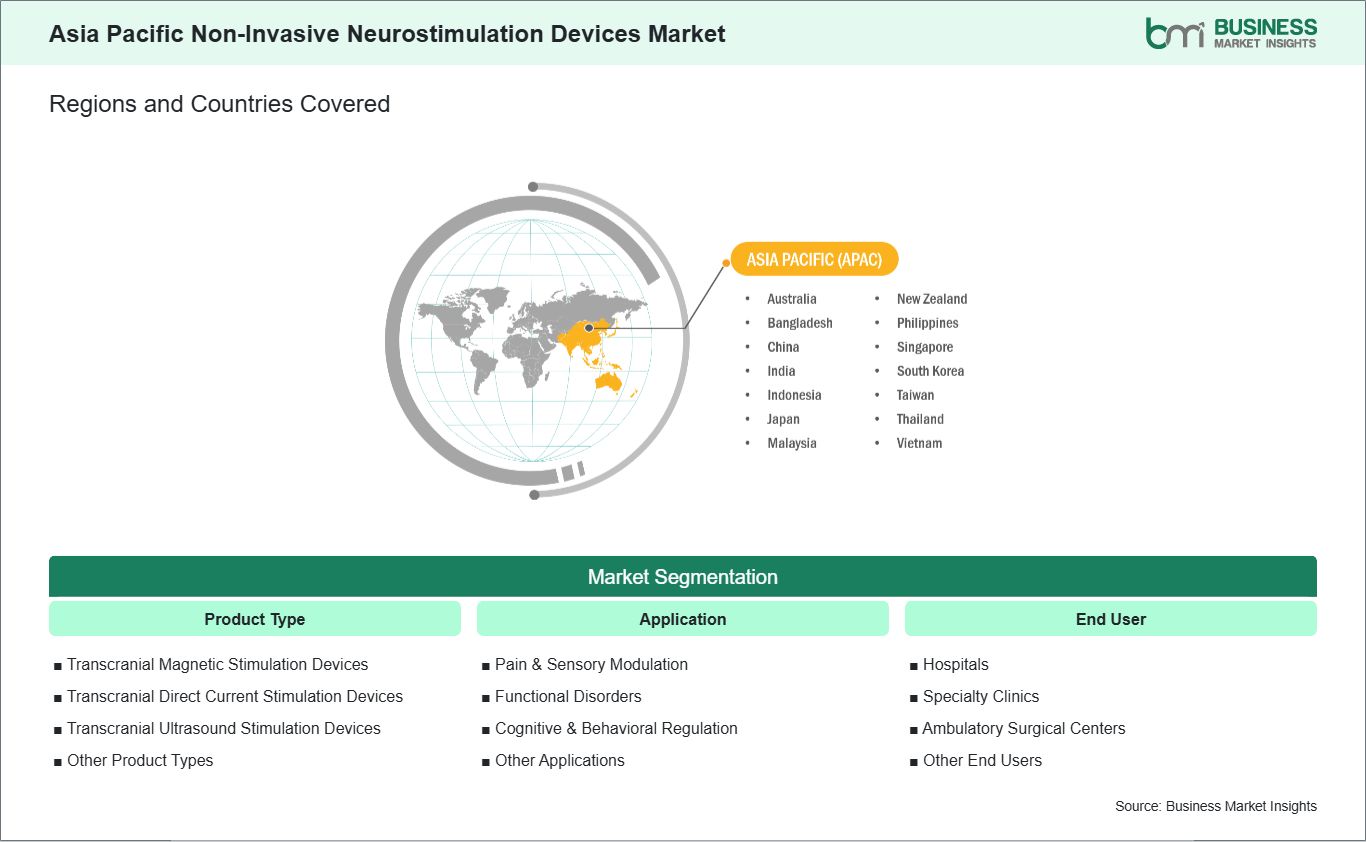
The geographical scope of the Asia Pacific Non-Invasive Neurostimulation Devices Market report is divided into China, Japan, South Korea, India, Australia, New Zealand, Indonesia, Malaysia, Philippines, Singapore, Thailand, Vietnam, Taiwan, Bangladesh. China held the largest share in 2025.
China dominates the Asia Pacific non-invasive neurostimulation devices market because of its huge hospital networks, robust manufacturing, and rapid uptake of cutting-edge neuro tech. The government fuels this growth through health care initiatives. Japan's market grows steadily, owing to its aging population and push for precise rehab therapies. South Korea is advancing by blending digital health with neuro gadgets and vigorous medical tech research. In India, the sector expands due to increasing neurological issues, affordable demands, and fast-growing private health care. Australia thrives from its solid clinical ties, early use of brain-modulating treatments, and organized ways to cover costs. New Zealand sees steady growth, due to expanding telehealth, better rural care access, and a shortage of specialists. Indonesia's growth is fueled by more urban hospitals, upgraded health infrastructures, and increased awareness about neurological care. In Malaysia, they benefit from medical tourists, modernizing healthcare led by the government, and more advanced devices being used. The Philippines sees growth due to bigger private hospital networks, greater mental health awareness, and healthcare spending funded by remittances. Singapore is advancing as a top medtech hub in the region - they have efficient regulations, an innovative healthcare scene, and early tech adopters. Thailand grows through its strength in medical tourism, new rehab centers, and the rising need for neuro care after strokes. Vietnam is seeing healthcare expand because of fast-growing infrastructure, a youthful population, and more neurological issues popping up. In Taiwan, the medtech industry is booming due to its strong chip-making abilities, high-tech device production, and firms that export healthcare tech. Finally, Bangladesh is showing potential demand despite major affordability issues, with more basic health access and support from NGOs for neurorehabilitation.