
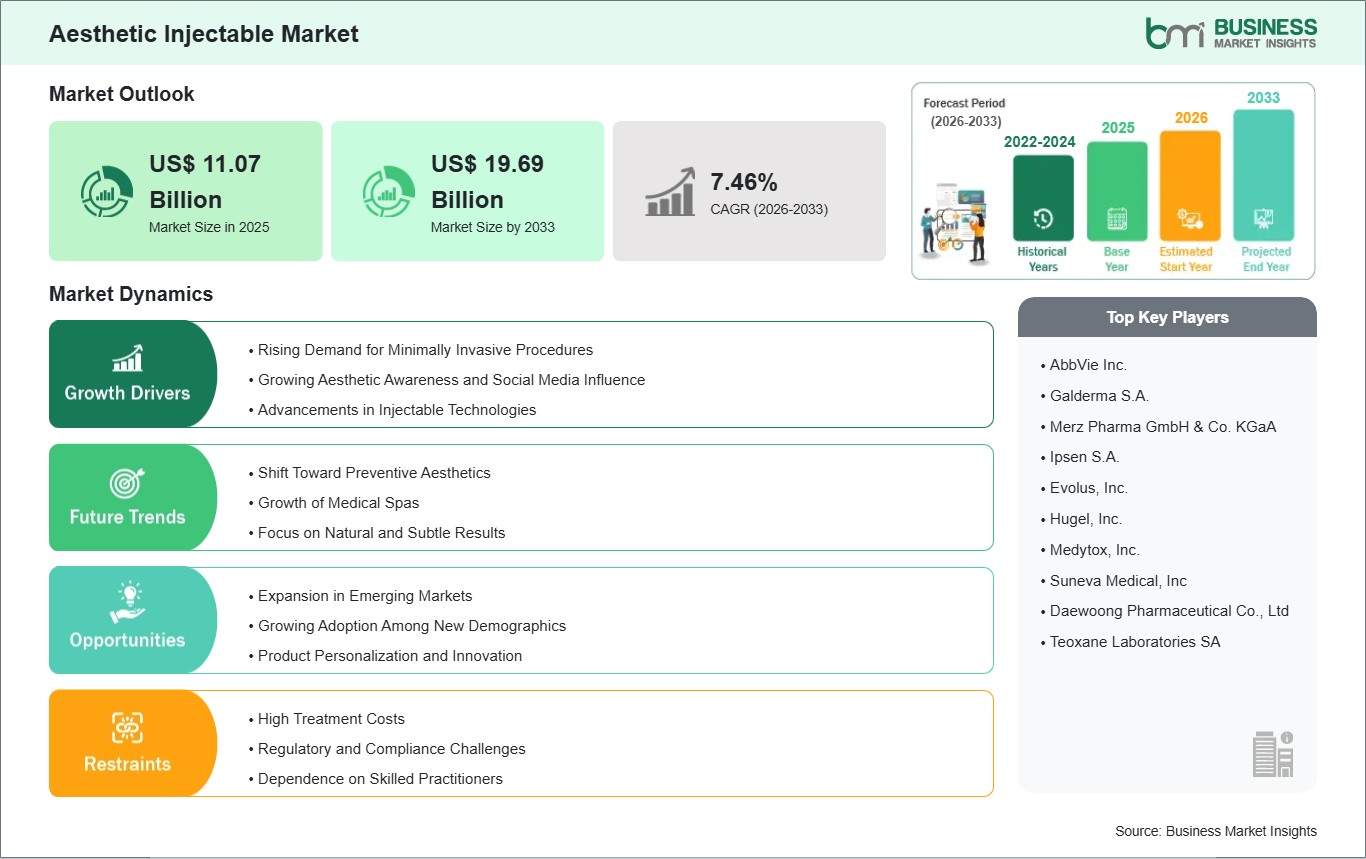
Aesthetic Injectable Market Outlook: Size, Share, Trends, Growth Analysis, Competitive Landscape & Forecast, 2026-2033

The Aesthetic Injectable Market size was valued at US$ 11.55 Billion in 2025 and is projected to reach US$ 27.15 Billion by 2033, growing at a CAGR of 11.3% during 2026–2033. Rising demand for minimally invasive cosmetic procedures, increasing aesthetic awareness, expanding medical spa networks, product innovation, and growing acceptance among male consumers continue creating attractive growth opportunities.

Report Coverage
  • Product Type: Botulinum Toxin, Hyaluronic Acid Fillers, Calcium Hydroxylapatite Fillers, Poly-L-Lactic Acid Fillers
  • Gender: Women, Men
  • Application: Wrinkle Correction, Facial Volume Restoration, Facial Contouring, Lip Augmentation, Scar Treatment
  • End User: Dermatology Clinics, Medical Spas, Hospitals
US$ 11.55 Bn Market size in 2025
US$ 27.15 Bn Market Size by 2033
11.3% CAGR, 2026 - 2033
2026-2033 Forecast Period

01 AI Overview

Aesthetic Injectable Market Summary

  • North America Region: North America holds a market share of 44.1% in 2025, growing with a CAGR of 12.2% during 2026–2033. Demand is supported by high procedure volumes, strong physician adoption, premium product penetration, aging demographics, and increasing consumer spending on facial rejuvenation treatments. The U.S. market benefits from strong brand penetration and clinic expansion, advancing at a 12.5% CAGR.
  • Fastest Growing Region: Asia Pacific accounts for 21.3% share in 2025 and is projected to grow at a 14.1% CAGR. Rising disposable income, beauty-conscious populations, medical tourism growth, and expanding aesthetic clinic infrastructure continue accelerating treatment adoption.
  • Leading Segment: Botulinum Toxin represents 50.8% share in 2025 and is expected to register a 10.7% CAGR. Strong clinical familiarity, repeat treatment cycles, expanding indications, and broad consumer acceptance continue driving segment leadership.
  • High Growth Segment: Men account for 11.6% share in 2025 and are forecast to grow at a 16.1% CAGR. Growing aesthetic awareness, professional appearance concerns, social media influence, and increasing treatment accessibility continue encouraging adoption.
  • Key Market Opportunity: Preventive aesthetics, combination injectable therapies, personalized treatment plans, and emerging market clinic expansion are creating significant opportunities for manufacturers, practitioners, distributors, and specialty healthcare investors globally.
  • Major Market Players: AbbVie Inc.; Galderma SA; Merz Pharma GmbH & Co. KGaA; Sinclair Pharma PLC; Evolus, Inc.; Hugel, Inc.; Mastelli S.r.l.; Medytox, Inc.; Tiger Aesthetics Medical, LLC; Ipsen S.A.; Revance Therapeutics, Inc.; Croma-Pharma GmbH.
02 Strategic Insights

Aesthetic Injectable Market: Strategic Insights

Aesthetic Injectable Market Strategic Framework
FREE PDF
Request your free sample
Request free sample
03 Stakeholder View

Key Takeaways

  • The value chain increasingly integrates manufacturers, distributors, dermatologists, plastic surgeons, medical spas, and digital consultation platforms to support efficient product delivery and patient acquisition.
  • Facial contouring, wrinkle correction, and facial volume restoration remain key revenue-generating applications, while male aesthetics presents one of the strongest expansion opportunities.
  • Product innovation is shifting toward longer-duration toxin formulations, combination therapies, personalized treatment regimens, and advanced injection techniques designed to improve patient satisfaction.
  • Asia Pacific offers a compelling investment case due to expanding middle-class populations, rising beauty expenditures, and increasing numbers of qualified aesthetic practitioners.
  • Strategic partnerships, brand licensing agreements, and clinic network expansion remain important competitive strategies for accelerating geographic penetration and revenue growth.
  • Growing demand for preventive aesthetic procedures among consumers aged 25–40 is creating new opportunities beyond traditional aging-related treatment markets.
04 Geographic Outlook

Aesthetic Injectable Market Regional Highlights

North America Aesthetic Injectable Market

North America remains the leading regional market with 44.1% Aesthetic Injectable Market share in 2025 and an anticipated 12.2% CAGR through 2033. The region benefits from high consumer awareness, advanced practitioner expertise, favorable product availability, and strong spending on cosmetic procedures. Demand is supported by aging populations seeking facial rejuvenation and younger consumers pursuing preventive aesthetic treatments. Extensive medical spa expansion and premium treatment adoption continue supporting overall regional development while encouraging manufacturers to launch differentiated injectable products.

  • High procedure frequency and established reimbursement-independent spending patterns continue supporting sustained demand for cosmetic injectables across dermatology clinics and aesthetic centers.
  • Manufacturers prioritize North America for product launches due to practitioner training networks, advanced clinical infrastructure, and strong consumer awareness regarding minimally invasive procedures.
  • Growing influence of social media and digital consultations continues increasing treatment consideration among younger demographic groups seeking aesthetic enhancement.
  • Preventive treatments, combination therapy protocols, and repeat toxin procedures are creating recurring revenue opportunities for providers and product manufacturers.

US Aesthetic Injectable Market

The United States accounts for 91.6% share within North America and is expected to expand at a 12.5% CAGR. Strong demand for botulinum toxin procedures, premium filler treatments, and advanced facial rejuvenation techniques continues supporting market expansion. The country's aesthetic industry benefits from extensive practitioner networks, continuous product innovation, and increasing consumer willingness to invest in appearance-related treatments. The presence of leading manufacturers further strengthens commercialization opportunities and competitive product development activities.

  • Botulinum toxin treatments remain among the most frequently performed non-surgical cosmetic procedures nationwide.
  • Medical spa expansion continues improving treatment accessibility beyond major metropolitan markets.
  • Male aesthetic procedures are increasing as treatment stigma declines and consumer awareness improves.
  • Digital marketing and virtual consultations support higher patient conversion rates and recurring treatment engagement.

Europe Aesthetic Injectable Market

Europe represents 26.4% Aesthetic Injectable Market share in 2025 and is forecast to record a 8.3% CAGR through 2033. Germany leads regional revenue generation, while Spain demonstrates particularly strong growth momentum supported by cosmetic tourism and clinic expansion. Growing demand for non-surgical facial rejuvenation procedures and increasing acceptance of aesthetic enhancements continue supporting market development. Strong regulatory oversight, practitioner expertise, and premium product adoption further contribute to treatment uptake across key European countries.

  • Germany leads regional demand due to strong healthcare infrastructure, high disposable income, and significant adoption of advanced aesthetic procedures.
  • Spain is emerging as a high-growth destination supported by international medical tourism and expanding clinic investments.
  • Increasing preference for subtle, natural-looking facial enhancements supports demand for premium filler and toxin products.
  • Aging populations across Western Europe continue generating recurring treatment demand among mature consumer groups.

Asia Pacific Aesthetic Injectable Market

Asia Pacific holds 21.3% Aesthetic Injectable Market share in 2025 and is projected to register the fastest expansion at 14.1% CAGR through 2033. China remains the largest regional market, while South Korea demonstrates particularly strong growth driven by advanced cosmetic procedure adoption and aesthetic innovation. Rising disposable income, increasing beauty consciousness, social media influence, and expanding clinic infrastructure continue accelerating treatment volumes.

  • China benefits from a large consumer base, expanding middle-class spending, and increasing adoption of facial rejuvenation procedures.
  • South Korea remains a global aesthetic innovation hub, supported by strong practitioner expertise and high procedure penetration rates.
  • Medical tourism continues attracting international patients seeking advanced cosmetic treatments at competitive costs.
  • Product availability is expanding through regulatory approvals and stronger distribution partnerships across major Asian markets.

Rest of World Aesthetic Injectable Market

Rest of World accounts for 8.2% share in 2025 and is expected to advance at a 6.2% CAGR during the forecast period. South and Central America recorded 5.8% global share in 2025 and is forecast at 6.8% CAGR through 2033, while Middle East and Africa recorded 2.5% and 5.5% CAGR, respectively. Brazil remains the leading market in South and Central America, while the United Arab Emirates demonstrates strong momentum in the Middle East. Increasing urbanization, rising disposable income, and growing awareness of non-surgical cosmetic enhancements continue supporting procedure adoption. Investments in premium aesthetic clinics and practitioner training programs are also strengthening market accessibility across emerging economies.

  • Brazil benefits from a strong cosmetic culture and one of the world's most active aesthetic procedure markets.
  • The UAE is emerging as a regional center for premium aesthetic services and medical tourism activities.
  • Private healthcare investments are increasing access to modern cosmetic treatment facilities.
  • Social media engagement continues influencing consumer decision-making and treatment awareness throughout developing markets.
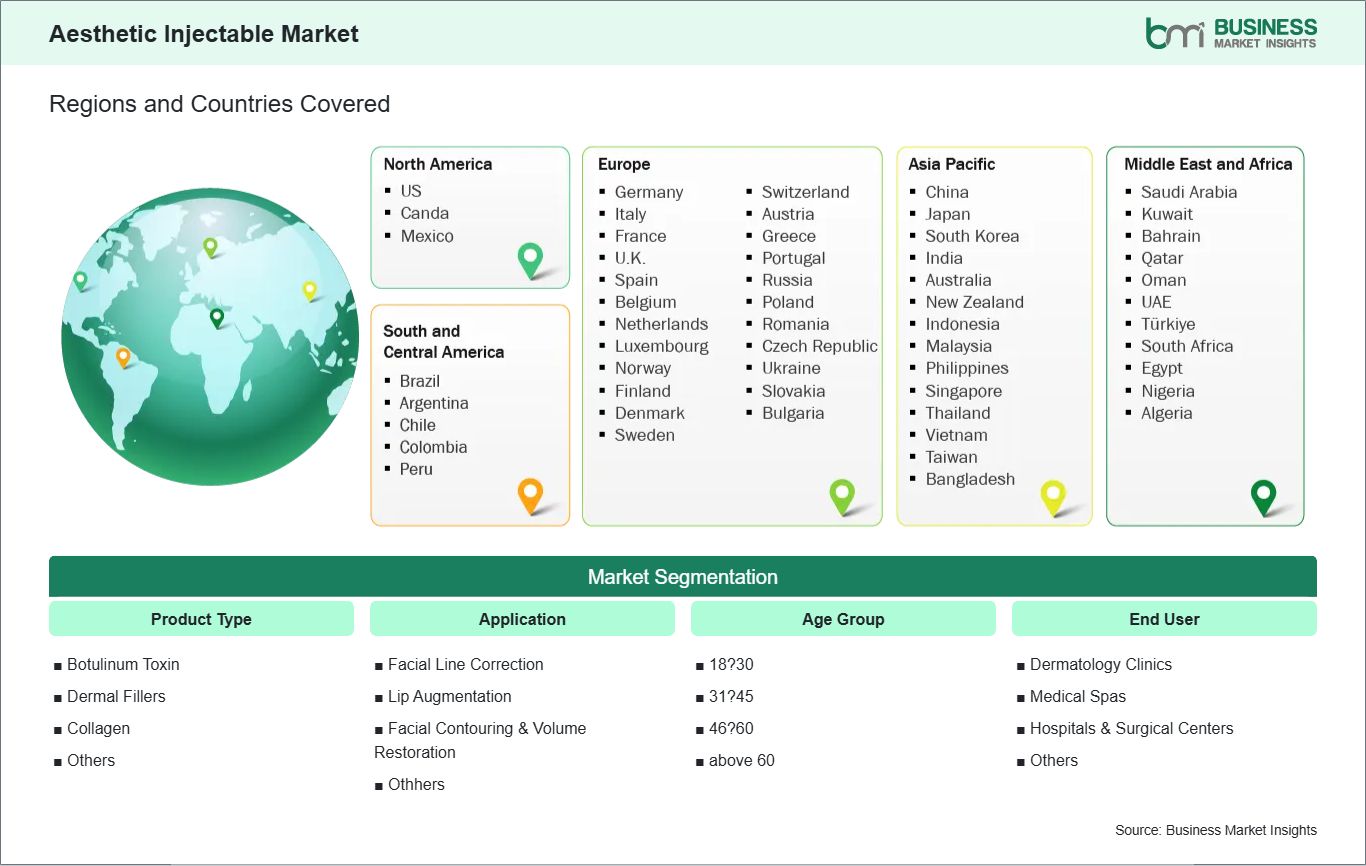
Global Market Geography
FREE PDF
Request your free sample
Request free sample
05 Segment Analysis

Aesthetic Injectable Market Segmentation

Product Type

Botulinum toxin remains the dominant category, accounting for 50.8% share in 2025 and expanding at 10.7% CAGR. Strong physician familiarity, repeat-treatment demand, and broad consumer awareness support category leadership. The Aesthetic Injectable Market scope continues expanding as manufacturers introduce advanced toxin formulations and differentiated treatment approaches designed to improve patient satisfaction and clinical outcomes.

  • Botulinum Toxin: Widely used for wrinkle reduction and preventive aesthetic procedures due to predictable outcomes, strong safety profiles, and recurring treatment cycles.
  • Hyaluronic Acid (HA) Fillers: Popular for facial rejuvenation, hydration enhancement, and contouring applications where natural-looking results and reversibility are highly valued.
  • Calcium Hydroxylapatite (CaHA) Fillers: Utilized for structural support and deeper facial volume correction, particularly among consumers seeking longer-lasting enhancement outcomes.
  • Poly-L-Lactic Acid (PLLA) Fillers: Stimulates collagen production gradually, making it attractive for patients prioritizing progressive and natural facial rejuvenation effects.

Gender

Women continue leading demand with approximately 88.4% share in 2025 and growth of 10.5% CAGR. However, male participation is rising steadily as treatment awareness improves and aesthetic procedures become increasingly mainstream. The segment benefits from changing beauty standards, broader treatment accessibility, and improved practitioner outreach strategies.

  • Women: Strong demand stems from anti-aging procedures, facial enhancement treatments, preventive aesthetics, and growing acceptance of minimally invasive cosmetic interventions.
  • Men: Adoption is increasing as professionals seek appearance enhancement, facial refinement, and age-management treatments with minimal recovery requirements.

Application

Wrinkle correction accounts for approximately 34.7% share in 2025 and is expected to advance at 10.6% CAGR. Consumers increasingly favor injectable treatments that deliver visible improvements without surgery. Growing procedure sophistication and personalized treatment plans continue driving demand across multiple aesthetic applications.

  • Wrinkle Correction: Represents the most common aesthetic indication due to widespread demand for facial rejuvenation and prevention of visible aging signs.
  • Facial Volume Restoration: Increasingly adopted to address age-related volume loss and support balanced facial aesthetics.
  • Facial Contouring: Strong demand among younger consumers seeking enhanced facial definition and profile refinement.
  • Lip Augmentation: Supported by social media influence, beauty trends, and growing consumer interest in non-surgical appearance enhancement.
  • Scar Treatment: Expanding use in aesthetic medicine as practitioners integrate injectables into comprehensive skin improvement programs.

End User

Dermatology clinics represent the leading end-user segment with 42.9% share in 2025 and projected growth of 11.9% CAGR. Specialized expertise, strong patient trust, and access to premium injectable products support segment leadership. The Aesthetic Injectable Market trends increasingly indicate broader treatment availability across alternative aesthetic care settings.

  • Dermatology Clinics: Preferred due to specialist expertise, personalized treatment planning, and comprehensive aesthetic consultation services.
  • Medical Spas: Growing rapidly through convenient access, premium consumer experiences, and broader appeal among younger aesthetic patients.
  • Hospitals: Demand is supported by integrated cosmetic services, physician oversight, and access to advanced treatment technologies.
06 Market Forces

Aesthetic Injectable Market Dynamics

Key Market Drivers

Growing Demand for Minimally Invasive Cosmetic Procedures

Consumers increasingly prefer non-surgical aesthetic procedures that offer visible improvements with limited recovery time and lower procedural risks than traditional cosmetic surgery. Injectables like botulinum toxins and dermal fillers have been on the rise due to the predictability of the results, shorter appointment times, and their easy integration into contemporary lifestyles. The rise in Aesthetic Injectable Market growth will be heavily influenced by an increased knowledge about facial rejuvenation procedures by young as well as aging consumers. With more practitioners and the development of new injectables, accessibility will be improved further still.

Rising Influence of Social Media and Digital Aesthetic Awareness

Social media platforms have significantly increased consumer awareness regarding cosmetic enhancement procedures and facial aesthetics. The impact of influencer marketing, virtual consultations, and pre/post treatment visibility has lowered informational barriers for potential patients. The trend toward discreet and natural results means that there is a growing tendency to use injections as the initial cosmetic procedure. Young beauty-oriented demographics are now entering the market at a younger age than their predecessors, especially when it comes to the prevention of wrinkles and contouring.

Continuous Product Innovation and Expanded Clinical Indications

Manufacturers continue investing in research and development to improve treatment longevity, safety profiles, and patient satisfaction. New toxin preparations, high-quality hyaluronic acid fillers, and collagen stimulators through injections have opened up new possibilities in the area. Regulatory approval of expanded indications has helped practitioners to treat a variety of cosmetic problems through injection treatments. This is one of the most significant Aesthetic Injectable Market trends, which help in achieving premium prices, repeat treatments, and better retention of patients. With growing product differentiation, practitioners will find more options to provide personalized treatment to their patients according to their unique facial features.

Key Market Opportunities

Expansion of Preventive Aesthetic Treatments

Preventive aesthetics is emerging as a major growth opportunity as younger consumers seek to delay the appearance of visible aging signs. In their late twenties and thirties, individuals are seeking injectable procedures prior to having obvious wrinkles or volume loss. The behavior changes results in increasing the lifetime value of patients for aesthetics practices as well as the creation of ongoing need for treatment. Programs of education are being created by manufacturers and clinics on ways of maintaining the face. With changes in consumers thinking regarding prevention over correction, there is going to be an increase in treatment frequency.

Growth of Combination Injectable Therapies

Aesthetic practitioners are increasingly combining toxins, fillers, collagen stimulators, and complementary cosmetic treatments to achieve comprehensive facial rejuvenation results. Integrated procedures present better levels of personalization and clinical performance than single-procedure therapies. Increasing need for customization of treatment protocols has prompted companies to add more products and training courses to their range of offerings. This trend provides room for premium pricing and greater value from each procedure. Providers able to offer a complete package for facial enhancement therapies are likely to gain from consumer preferences for personalized and aesthetically effective treatment options.

Emerging Market Clinic Expansion and Medical Tourism

Developing markets continue presenting strong opportunities due to increasing disposable income, rising urbanization, and expanding aesthetic awareness. Injections from premium dermatology clinics and medical spas are increasing access to innovative injection procedures. According to the Aesthetic Injectable Market Forecasts, there will be a high demand for the upcoming years for Asia Pacific, Middle East, and Latin America because the penetration rate of procedures is lower compared to the more mature regions. The medical tourism factor is also promoting growth by bringing in patients interested in getting good-quality cosmetic treatments at affordable prices.

Market Restraints and Challenges

Regulatory Variations and Practitioner Qualification Requirements

Factor: Regulatory frameworks and practitioner certification requirements differ substantially across countries and regions.

Impact: Manufacturers and providers must navigate complex approval pathways, training standards, and compliance obligations before commercializing products or offering treatments. Regulatory variations in terms of labeling, eligibility of practitioners, and registration of products lead to increased time for market penetration and operational expenses. Investments in compliance will be essential to ensure the safety of the product and the credibility of the regulation. For small businesses, such regulations can become obstacles that restrict international business expansion. Inconsistent regulations may lead to difficulties in the process of product standardization.

Potential Adverse Events and Consumer Safety Concerns

Factor: Injectable procedures involve risks related to product administration, treatment outcomes, and practitioner expertise.

Impact: Although generally safe when performed correctly, adverse events such as swelling, bruising, asymmetry, or vascular complications can affect consumer confidence. There is an impact of negative experiences with treatments on brand reputation and unwillingness of patients to participate in further procedures. Training, consultations, and patient education are necessary for providers in order to reduce the risks. There are also mandatory safety monitoring and post-market surveillance for manufacturers.

07 Company Analysis

Competitive Landscape

The competitive environment remains highly innovation-driven, with companies focusing on differentiated toxin formulations, advanced dermal fillers, practitioner training initiatives, and geographic expansion strategies. Current Aesthetic Injectable Market analysis indicates that leading manufacturers are strengthening market positions through product innovation, regulatory approvals, and strategic partnerships.

Company Name

Overview

Products and Services relevant to this market

AbbVie Inc.

Global biopharmaceutical company with strong aesthetics portfolio and worldwide commercialization capabilities.

Botox Cosmetic, Juvederm filler portfolio, aesthetic education programs, facial rejuvenation solutions.

Galderma SA

Major dermatology-focused company serving aesthetic practitioners across global markets.

Restylane fillers, aesthetic injectables, skincare products, practitioner support services.

Merz Pharma GmbH & Co. KGaA

Established aesthetic medicine company with broad injectable treatment expertise.

Xeomin neurotoxin, Radiesse fillers, facial rejuvenation solutions, physician training programs.

Sinclair Pharma PLC

International aesthetics specialist focused on minimally invasive cosmetic procedures.

Injectable aesthetics products, collagen stimulation treatments, practitioner education services.

Evolus, Inc.

Fast-growing aesthetics company focused on facial wrinkle treatment markets.

Jeuveau botulinum toxin products, aesthetic treatment solutions, provider programs.

Hugel, Inc.

South Korean aesthetic company expanding toxin product presence internationally.

Botulinum toxin products, aesthetic medicine solutions, clinical support services.

Mastelli S.r.l.

Healthcare company active in regenerative and aesthetic medicine applications.

Injectable aesthetic therapies, regenerative treatment products, skin rejuvenation solutions.

Medytox, Inc.

Biopharmaceutical company recognized for neurotoxin development and commercialization.

Botulinum toxin formulations, aesthetic treatment products, research and development services.

Tiger Aesthetics Medical, LLC

Specialized aesthetics company supporting cosmetic treatment providers.

Injectable aesthetic products, clinical support solutions, provider-focused services.

Ipsen S.A.

Global biopharmaceutical company with expertise in neurotoxin-based therapies.

Dysport injectable treatments, physician support services, medical aesthetics solutions.

Revance Therapeutics, Inc.

Innovative aesthetics company focused on differentiated neuromodulator technologies.

Daxxify injectable treatment solutions, aesthetic medicine services, clinical innovation programs.

Croma-Pharma GmbH

European aesthetics company with extensive filler and skincare portfolio.

Hyaluronic acid fillers, injectable facial enhancement products, aesthetic practice solutions.

10 Trust & Transparency

Research Methodology

The market analysis combines proprietary research with secondary data from government agencies, company disclosures, regulatory filings, industry databases and expert interviews. Market estimates are validated through data triangulation, cross-market benchmarking and analyst review.

View Full Research Methodology

11 Questions Answered

Frequently Asked Questions

What information does an Aesthetic Injectable Market Report provide?

A report evaluates market size, competitive dynamics, regional trends, product innovation, consumer behavior, growth opportunities, regulatory developments, and future industry outlook.

How are male consumers influencing industry development?

Men are increasingly seeking wrinkle correction, facial contouring, and age-management treatments, creating a rapidly expanding consumer segment and encouraging clinics to develop targeted aesthetic service offerings.

Why is Asia Pacific considered the fastest-growing regional Aesthetic Injectable Market?

The region benefits from increasing beauty consciousness, growing middle-class populations, medical tourism expansion, improved clinic infrastructure, and rising adoption of non-surgical cosmetic enhancement procedures.

Which product category accounts for the largest market share?

Botulinum toxin products represent the leading category due to strong physician familiarity, broad aesthetic applications, recurring treatment requirements, and high consumer awareness across developed and emerging markets.

What factors are driving demand for aesthetic injectables worldwide?

Growing preference for minimally invasive procedures, increasing social media influence, rising disposable income, aging populations, and continuous innovations in toxin and filler formulations are supporting global treatment demand.

Access the Full Aesthetic Injectable Market Report

Get segment-level forecasts, regional estimates, competitive benchmarking, company profiles and downloadable Excel datasets.

Access the full Aesthetic Injectable Market Report
400 pages PDF & Excel | 2026-10-06
Similar Research

Related Market Reports